
The Government Tightens Supervision of Basic Food Supplies and Takes Firm Action Against Price Manipulation Ahead of the New Year Holidays

By: Rachmat Fajar Ramadhan)*
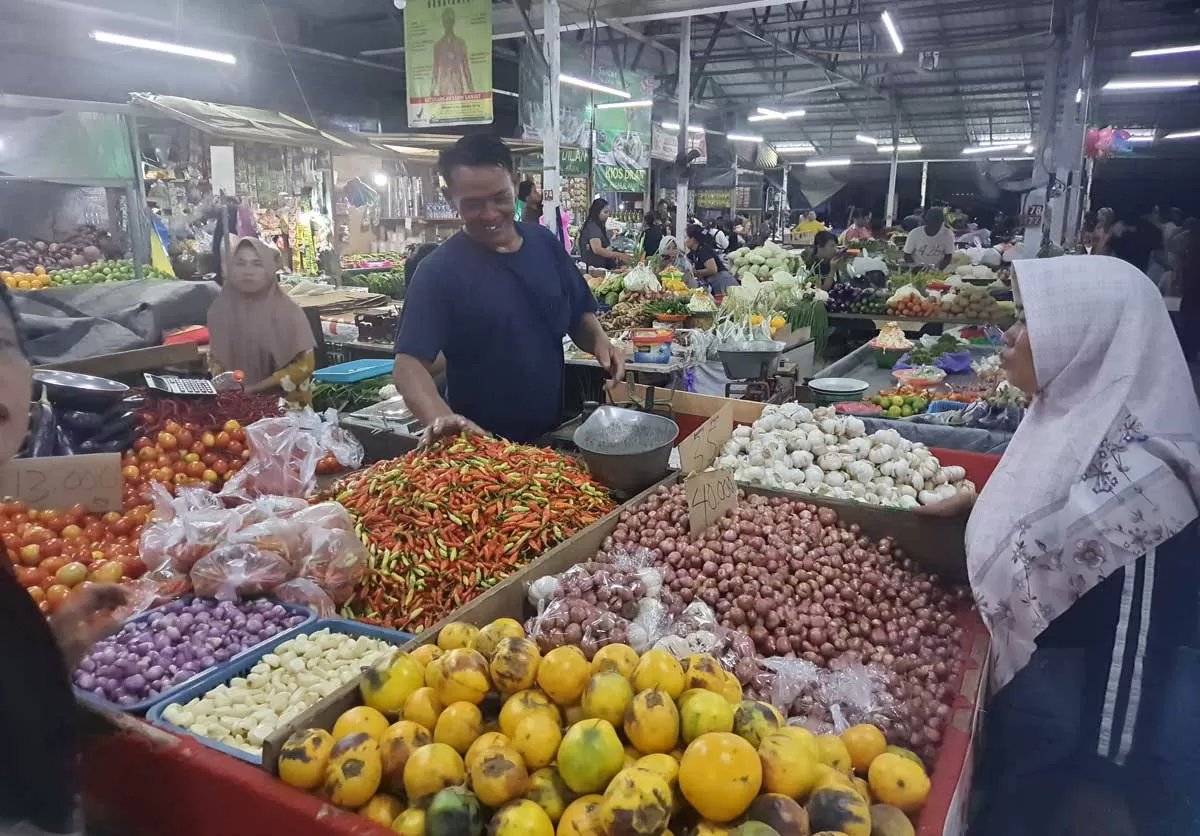
As the 2025/2026 Christmas and New Year holidays approach, the issue of price stability and food availability has once again become a public concern. The end-of-year period is often accompanied by increased demand for staple foods, which can potentially be exploited by certain individuals to manipulate prices. This situation not only disrupts market stability but also directly suppresses public purchasing power. Therefore, the government’s move to tighten oversight of the supply of nine staple foods (sembako) and take firm action against price violations is a strategic policy worthy of appreciation. This policy reflects the state’s role in maintaining social order and economic security.
The government understands that food is not simply an economic commodity, but a basic need that determines people’s quality of life. Unreasonable increases in staple food prices ahead of religious holidays can trigger unrest and injustice, especially for low-income groups. In this context, price monitoring is a crucial instrument for maintaining a balance between market mechanisms and consumer protection. The state has a responsibility to ensure fair and affordable food distribution. This tightened monitoring policy underscores the government’s commitment to fulfilling this mandate.
Agriculture Minister Andi Amran Sulaiman emphasized that monitoring of the highest retail prices (HET) for food is being tightened to maintain price stability and public peace of mind during the Christmas and New Year celebrations. This measure is necessary to protect public purchasing power and ensure equitable food distribution. Amran believes the practice of speculative price increases ahead of major holidays is extremely burdensome for the public. Therefore, the government will not tolerate violations that harm consumers. Regulation enforcement is being carried out firmly but carefully to avoid disrupting a healthy business climate.
All levels of the Ministry of Agriculture, along with the National Food Agency, have been deployed directly to the field. The presence of government officials at production, distribution, and market centers is a concrete step to strengthen oversight. Field findings will be promptly followed up to prevent broader price fluctuations. This swift action demonstrates the government’s commitment to anticipating potential violations early. With intensive oversight, national food stability is expected to be maintained during the long holiday period.
The National Food Agency is also strengthening oversight through various price stabilization instruments. Maino Dwi Hartono, Director of the National Food Agency’s Price Stabilization Service (SPHP), emphasized that the government maintains strategic food prices in line with the reference sales price and the highest retail price (HET). This policy aims to ensure consumers receive food at fair prices. Price stabilization relies not only on market intervention but also on strict oversight of the distribution chain. Cross-sector synergy is key to the policy’s effectiveness.
One commodity of particular concern is Minyakita, a popular cooking oil. The government, along with the Food Task Force and the Ministry of Home Affairs, is actively conducting field inspections. This measure was taken after public reports of Minyakita being sold above the stipulated price. The swift response to public reports demonstrates that oversight is not merely symbolic but is truly implemented. A public complaints mechanism is also a crucial part of the food price monitoring system. This ensures that price controls are participatory and transparent.
The State Logistics Agency (Bulog) also plays a central role in maintaining price stability and food supply ahead of Christmas and New Year. Bulog President Director Ahmad Rizal Ramdhani emphasized the importance of firm action against the sale of Minyakita and broiler chicken eggs above the highest retail price (HET). Price stability is a key requirement for protecting public purchasing power. Bulog discovered broiler chicken eggs being sold for up to IDR 32,000 per kilogram, exceeding the maximum price of IDR 30,000. The findings were immediately submitted to the Food Task Force for follow-up.
Enforcement measures are not merely repressive, but aim to restore market balance. Price adjustments must be implemented immediately to prevent consumer losses, especially during religious holidays. Furthermore, Bulog is actively monitoring and conducting simultaneous market operations. These activities are carried out in collaboration with the Coordinating Ministry for Food and the National Food Agency. This cross-agency synergy ensures a swift and coordinated government response.
Upstream and downstream monitoring is becoming an increasingly relevant approach in addressing food market dynamics. From production and distribution to retail sales, the entire supply chain must be thoroughly monitored. This policy prevents supply congestion at one point, which could trigger a false shortage. With accurate data and field monitoring, the government can make decisions based on real-world conditions. This approach strengthens the effectiveness of price stabilization policies.
The government’s firm action also sends a strong signal to businesses to comply with applicable regulations. Fair and consistent law enforcement creates business certainty while protecting consumers. The government emphasizes that price stability is not intended to stifle businesses, but rather to maintain healthy competition. It is hoped that deterrents for violators will prevent similar practices in the future. This will ensure the national food ecosystem can grow sustainably.
In the long term, this strict monitoring policy also strengthens national food security. The government demonstrates that price stability is not a seasonal phenomenon, but rather part of the national strategic agenda. Policy consistency is crucial in addressing fluctuations in demand and supply. The synergy that has been established between institutions must be maintained and strengthened. This will ensure that national food management becomes more adaptive and responsive.
)* The author is an economic observer.
