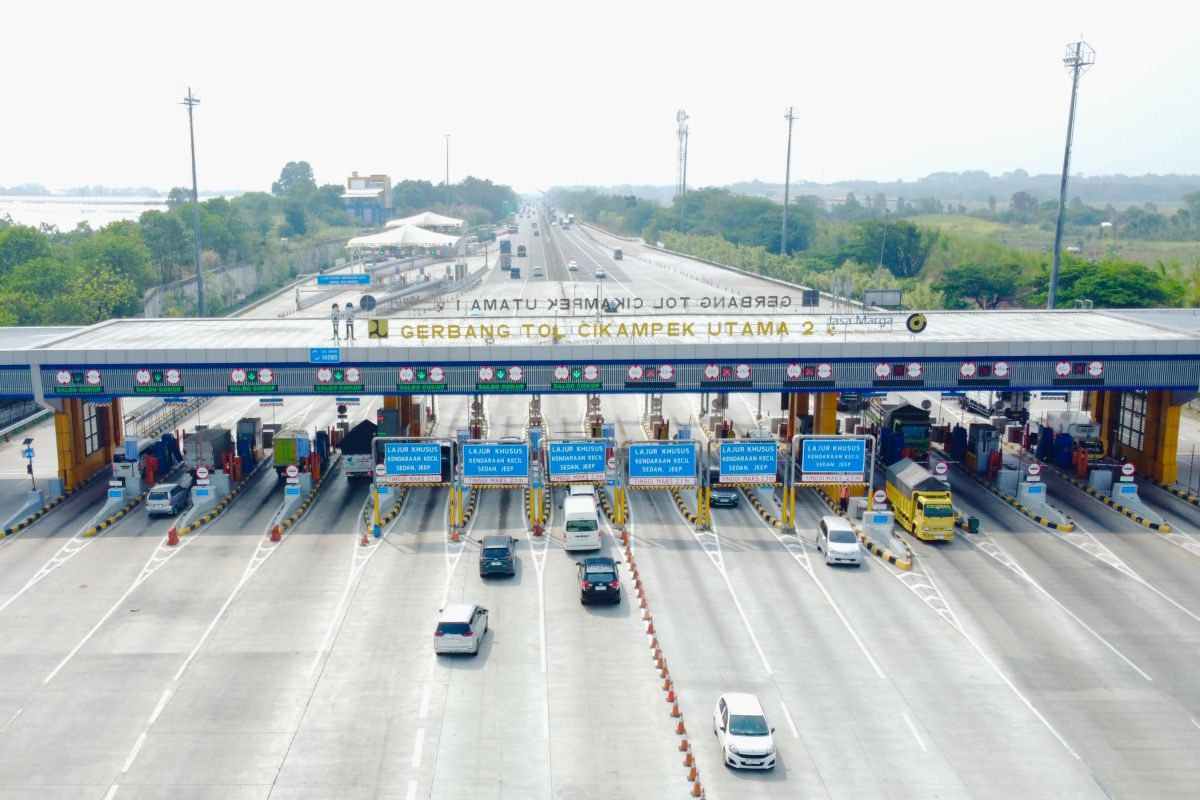
The Government’s Readiness for the 2026 Eid Homecoming Reflects the Maturity of the Infrastructure System

By: Andromeda Sucipto )*
The tradition of going home for Eid al-Fitr (mudik) is a crucial moment that showcases the capacity and progress of the national transportation and infrastructure system. The annual movement of millions of people to their hometowns demonstrates the continued strengthening of national connectivity and mobility. In recent years, the government has consistently implemented increasingly well-planned, integrated, and safety-based strategic measures. Readiness for the 2026 Eid al-Fitr homecoming (mudik) reflects the maturity of the increasingly modern and adaptive national infrastructure system, while also underscoring the government’s commitment to ensuring safe, comfortable, and smooth travel for the public as part of excellent public service.
In this context, road infrastructure remains the backbone of public mobility. Minister of Public Works (PU) Dody Hanggodo emphasized that the readiness of the homecoming routes is a primary government priority. He stated that the Pantura (North Coast) route, in both the western and eastern regions, is currently being managed through a long-term reservation program. This means that management is no longer patchwork, but rather a systematic approach focused on quality and long-term durability. This policy demonstrates a paradigm shift in infrastructure development, from a reactive to a proactive and sustainable approach.
While the long-term program continues, the government continues to prepare anticipatory measures ahead of the peak exodus. The Ministry of Public Works (PU) is implementing various technical measures, from sealing potholes and addressing vulnerable points to deploying heavy equipment and personnel along strategic national exodus routes. Each year, through the Directorate General of Highways, the government also holds special discussions regarding infrastructure readiness, both for Christmas and New Year, as well as Eid al-Fitr. This demonstrates that exodus management is no longer a one-off event but has become a routine, professionally managed event.
On the land transportation side, the Ministry of Transportation also demonstrated increasing readiness. Acting Secretary of the Directorate General of Land Transportation, Ernita Titis Dewi, stated that preparations for the 2026 Eid al-Fitr transportation program had been underway. One of the flagship programs being reinstated is the free homecoming program, which has previously proven effective in reducing private vehicle congestion and improving travel safety.
The free homecoming program is not just an additional facility, but part of a national traffic management strategy. By shifting some travelers to mass transit, road congestion can be reduced, the risk of accidents reduced, and travel becomes more efficient. Furthermore, the Ministry of Transportation ensures the readiness of transportation facilities through vehicle inspections, or ramp checks, before operation. This step is crucial to ensure all public transportation is roadworthy.
In terms of infrastructure, terminals, as transportation hubs, also receive special attention. Improving terminal readiness demonstrates the government’s focus not only on roads but also on the overall transportation ecosystem. Well-organized terminals will improve comfort, safety, and orderly passenger flow during the homecoming period.
The safety aspect is also strengthened through Jasa Raharja’s role as a state-owned enterprise providing basic protection for traffic accident victims. Jasa Raharja’s President Director, Muhammad Awaluddin, stated that his company is ready to fully support security during Eid al-Fitr 2026 through ongoing synergy with the police, toll road operators, and related agencies. These efforts demonstrate that public protection is not merely a reactive approach but also through a transparent system oriented toward the public interest.
Jasa Raharja’s presence in the homecoming ecosystem reflects the importance of a social protection approach in the transportation system. Good infrastructure must be accompanied by guaranteed safety and protection for road users. With synergy between agencies, the process of handling accident victims can be carried out more quickly, accurately, and transparently.
On the other hand, traffic security is the responsibility of the police, particularly the Traffic Corps. The Head of the National Police Traffic Corps, Inspector General Agus Suryonugroho, emphasized that securing the 2026 Eid al-Fitr homecoming and return traffic is a national priority. According to him, the success of homecoming management depends heavily on collaboration between all parties, from ministries, regional governments, state-owned enterprises, and toll road operators.
This cross-sectoral coordination is realized through the implementation of Operation Safety and Operation Ketupat 2026. Infrastructure readiness, security, and traffic management are key to ensuring smooth travel for the public. This collaborative approach demonstrates that mudik management has evolved into a structured national operation, not just an annual routine.
Overall, preparations for the 2026 Eid homecoming (mudik) reflect the transformation of Indonesia’s infrastructure system. The government is not only building roads and transportation facilities but also strengthening management, safety, and social protection. The synergy between the Ministry of Public Works, the Ministry of Transportation, the police, and Jasa Raharja (Service Raharja) demonstrates that infrastructure development is now proceeding within an integrated system.
Going forward, the success of the homecoming journey will not only be measured by smooth traffic flow, but also by the level of safety, comfort, and public satisfaction. A mature infrastructure is one that can serve large-scale mobility safely, orderly, and efficiently.
Therefore, the public also plays a crucial role in ensuring the success of the 2026 Eid homecoming. Compliance with traffic regulations, use of public transportation, and careful travel planning will significantly contribute to ensuring a smooth flow of traffic. With the support of all elements of the nation, the Eid homecoming will not only become an annual tradition but also a momentum to demonstrate the progress of an increasingly reliable and high-class national infrastructure system.
(* The author is an Infrastructure and Transportation Observer
