The Handover of the Acid Case from the Police to the Indonesian National Armed Forces (TNI) Proves Military Justice Complies with Regulations

By: Rizky Adhiguna Santoso
The developments in the handling of the acid attack on KontraS activist Andrie Yunus represent a significant milestone in demonstrating how the Indonesian legal system operates in accordance with applicable regulations. The handover of the case from the Jakarta Metropolitan Police (Polda Metro Jaya) to the Indonesian National Armed Forces (TNI) Military Police Center is not only a procedural step but also reflects the application of appropriate legal principles in determining the authority to handle the case. Amid public scrutiny, this step demonstrates that law enforcement officers are striving to maintain professionalism while ensuring that the legal process proceeds according to established guidelines.
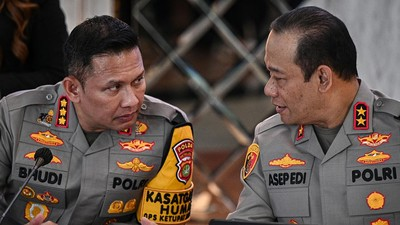
Since receiving the report, the Jakarta Metropolitan Police, through the Director of General Criminal Investigation, Senior Commissioner Iman Imanuddin, has conducted a series of thorough investigations. This process includes gathering evidence, examining witnesses, and further analyzing the facts related to the incident involving Andrie Yunus. In a public hearing with Commission III of the Indonesian House of Representatives (DPR RI) at the Parliament Complex in Senayan, Central Jakarta, Iman Imanuddin presented the progress of the investigation, which will serve as a crucial basis for determining the next steps. He explained that the investigation uncovered significant facts pointing to the involvement of individual soldiers, leading to the official transfer of the case to the Indonesian Military Police Center (Puspom TNI).
This transfer is not without basis, but rather part of a legal mechanism expressly stipulated in Indonesian law. The Head of the Indonesian National Armed Forces Information Center, Major General Aulia Dwi Nasrullah, emphasized that the investigation into the four soldiers suspected of involvement is currently underway intensively. Investigators from the Indonesian National Armed Forces Military Police Center are conducting this process with a systematic and professional approach. This demonstrates that the military institution is not remaining idle but is instead taking swift action to ensure that any alleged violations are seriously pursued.
The handling of the case by the Indonesian National Armed Forces Military Police reflects a strong commitment to maintaining internal discipline and institutional accountability. Every alleged violation by a soldier is not only processed legally but also closely monitored to prevent any irregularities. The public is expected to place their trust in law enforcement officials to resolve this case thoroughly, given that the mechanism used has a clear and strong legal basis.
From a legal perspective, legal expert Fransiscus Xaverius Tangkudung explained that the transfer of this case is an implementation of the principle of lex specialis, namely, special rules that override general rules. In this context, any military member suspected of committing a crime falls under the jurisdiction of military justice. This provision is expressly stipulated in Law Number 31 of 1997 concerning Military Justice, which grants military institutions the authority to examine, try, and decide criminal cases involving soldiers.
Furthermore, the existence of the Military Criminal Code and various regulations regarding soldier discipline further strengthen the legitimacy of the military justice system. With clear rules, the potential for overlapping authority between law enforcement agencies can be avoided. This is crucial for ensuring that every case handling process is more effective, focused, and provides legal certainty for all parties.
Military justice is also known for its high disciplinary standards. Its internal mechanisms allow for more focused and decisive case handling. The characteristics of military institutions, which differ from those of civilians, mean that the approach used in law enforcement also has its own unique characteristics. In practice, sanctions imposed are not only criminal penalties, but can also include administrative sanctions such as dishonorable discharge, demotion, and even revocation of military status.
The track record of military justice in handling various previous cases also demonstrates consistency in imposing penalties for serious violations. This indicates that the military institution does not hesitate to act decisively against its own members to maintain the integrity and honor of the institution. This approach also strengthens public confidence that the legal system within the military is capable of operating objectively and professionally.
On the other hand, the assumption that military courts are closed is not entirely accurate. In principle, military trials remain open to the public, except in certain cases related to strategic interests or state secrets. This openness provides space for the public to conduct oversight and ensure that the legal process is conducted in accordance with the principles of justice and transparency.
Deputy Minister of Human Rights Mugiyanto emphasized that the government continues to promote just law enforcement, including in cases involving officers. He stated that transparency and accountability are key to maintaining public trust. He also emphasized that human rights principles must be the foundation of every stage of the legal process, so that there are no practices that undermine the sense of justice.
Over the past year, the government has also recorded several successes in strengthening the legal system and governance. Bureaucratic reform efforts continue to improve the quality of public services, while coordination between law enforcement agencies is being strengthened to ensure effective case handling. Furthermore, the government has succeeded in maintaining conducive national stability, allowing the law enforcement process to proceed more optimally without significant disruption.
Ultimately, the transfer of the acid attack case serves as proof that the military justice system operates in accordance with applicable regulations. This step is not a shift of responsibility, but rather part of a legal mechanism designed to ensure that each case is handled by the authorized institution. Therefore, public support and trust are essential for the legal process to run smoothly, transparently, and produce a just verdict.
*) Military Justice System Observer
