
By: Ricky Rinaldi
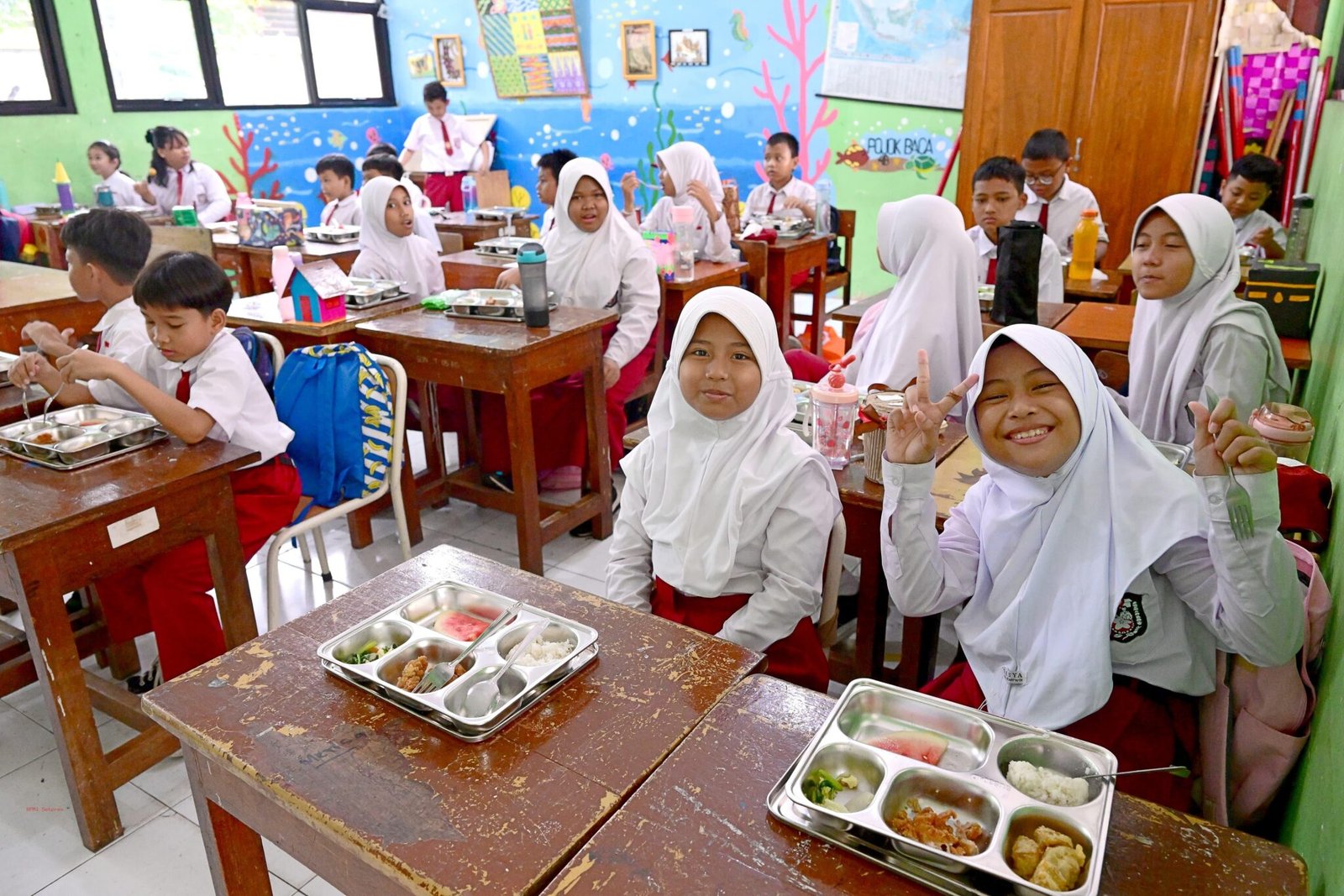
The Free Nutritious Meals (MBG) program launched by the Indonesian government is currently in the international spotlight. Since its inception and implementation, the program has shown significant results in a relatively short time. Various global figures have begun to pay attention and appreciate the significant efforts made by the Indonesian government to ensure adequate and equitable nutrition for the public, particularly children and pregnant women.
Indonesian President Prabowo Subianto stated that the MBG program has become a topic of discussion in international forums. He emphasized that no other country has implemented a free meal program on such a large scale. He stated that the international community is paying attention to Indonesia’s bold and measured steps. He added that more than six million beneficiaries have directly benefited from the MBG, and that number is expected to increase to twenty to twenty-five million in the near future.
Based on government monitoring, the MBG not only impacts public health and nutrition but also has a multiplier effect on the local economy. Through the presence of food pantries in each region, MSMEs, local farmers, and other food suppliers are involved in the program’s supply chain. Thus, the program is able to stimulate economic activity at the village and sub-district levels, while simultaneously creating new jobs.
Support for this program has also come from international institutions. The Head of the United Nations (UN) Mission in Indonesia, Gita Sabharwal, stated that the MBG program is a key pillar of the UN’s cooperation with Indonesia. In her statement, she stated that the UN views the MBG as a concrete example of a country’s strategic approach to addressing nutrition issues and unequal access to food. “This program addresses not only health aspects, but also education, economics, and social justice,” she said.
Gita further explained that the program’s implementation has shown encouraging results. Thousands of service kitchens have been established and are operating across various provinces, reaching millions of beneficiaries. She described Indonesia as a pioneering country in integrating social policies with sustainable development. She believes Indonesia’s cross-sectoral approach should serve as an example for other developing countries.
Appreciation for the MBG program has also come from the global philanthropic world. Bill Gates, founder of the Bill & Melinda Gates Foundation, expressed his support for Indonesia’s efforts to improve public nutrition. During his visit to an elementary school in Jakarta participating in the MBG program, Gates expressed his impression of the Indonesian government’s commitment and commitment. He highlighted the importance of paying attention to the “first thousand days of life,” a golden period for child development.
According to Bill Gates, ensuring adequate nutrition for pregnant women, breastfeeding mothers, and young children is a fundamental step in breaking the cycle of poverty and creating a healthy and productive future generation. He stated that Indonesia’s approach is closely aligned with global development goals, particularly in the health and education pillars.
The MBG program is designed not only to reduce stunting, a major health problem in Indonesia, but also to foster healthy eating habits from an early age. The menus served in this program are designed by nutritionists and tailored to the age and health needs of the recipients. With close supervision from various parties, including local governments, health services, and community volunteers, the quality of service is continuously improved.
The government is also working to ensure this program is not merely short-term. In various statements, President Prabowo Subianto emphasized that the MBG is part of a long-term investment to develop superior Indonesian human resources. He believes that a strong nation is one with healthy citizens, and that health begins with nutritious and affordable food for all.
As a national priority program, the MBG continues to expand its reach. The government is targeting the construction of over 30,000 food service kitchens, reaching over 80 million beneficiaries. This initiative is being implemented in stages, involving relevant ministries, local governments, the private sector, and civil society organizations.
The initial success of this program is a positive signal that Indonesia is capable of implementing major policies with concrete results. Challenges certainly remain, particularly in terms of logistics distribution, quality control, and budget sustainability. However, with close collaboration between stakeholders, optimism for achieving greater results remains.
Support from global figures like Gita Sabharwal and Bill Gates not only adds to the program’s international legitimacy but also provides added encouragement for those implementing it on the ground. Both emphasized that Indonesia’s efforts are worthy of emulation and support as part of a global movement to improve people’s quality of life.
Ultimately, the MBG program is a concrete manifestation of the Indonesian government’s commitment to nation-building through a people-centered approach. With growing global attention, Indonesia demonstrates that with a strong vision, broad collaboration, and the courage to act, significant change is possible.
*) Strategic Issue Observer
