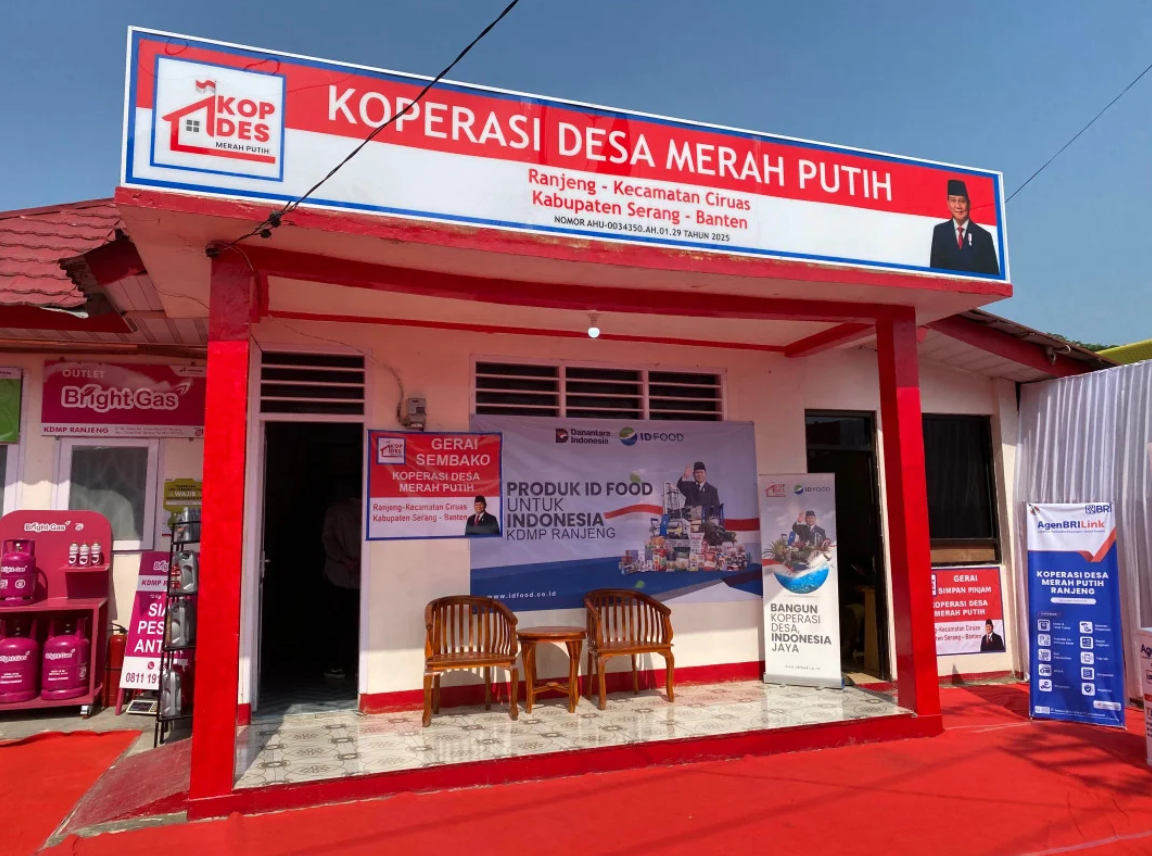

Jakarta — The Red and White Village/Village Warehouse has once again demonstrated its strategic role in strengthening the rural economy through the construction of outlets and warehousing facilities. The physical construction of the Red and White Village/Village Warehouse, which officially began with the laying of the first stone in Bontomate’ne village, Maros Regency, South Sulawesi, is projected to be the first step in restructuring the supply chain for the village’s flagship products.
The Kopdes warehouse was created to store the village’s superior products, particularly agricultural commodities. The system allows farmers to sell their grain directly to the cooperative, where it undergoes drying, milling, and further processing before being marketed to the community.
According to the Deputy Minister of Cooperatives (Wamenkop), Farida Farichah, farmers will be able to sell their unhusked rice and have it purchased by Kopdes, then dried, milled, and then sold again to the community.
“As a result, the community can enjoy affordable rice and doesn’t need to buy it from outside. Therefore, food security in Bontomatene village will be sovereign and independent in the future,” explained the Deputy Minister of Cooperatives and SMEs.
The importance of the Kopdes warehouse extends beyond storage. The Red and White Kopdes warehouse and outlet structure allows for more organized management of local products, from storage and processing to redistribution.
Village cooperatives are also being prepared to serve as off-taker centers for community agricultural products, a mechanism whereby village products are collected, collectively processed by the cooperative, and then resold to the wider community. Under this scheme, the cooperative’s year-end profits can be distributed to members in the form of Business Surplus (SHU), thus directly benefiting village residents.
In line with the commitment to equitable village development, Kopdes is expected to not only act as an economic player but also as a driving force for village independence. Through warehouse and outlet facilities, villages gain space to collectively, professionally, and integratedly process local potential, including agricultural and fishery products, as well as processed products.
“The success of this village cooperative is considered to be born from local potential and strategic partnerships. Therefore, it is expected to become a driving force for innovation, job creation, and improving community welfare,” said the Minister of Cooperatives (Menkop), Ferry Juliantono.
Thus, the existence of the Kopdes warehouse is not merely physical infrastructure, but rather a representation of the transformation of economic patterns in the village: from vulnerable individual production, to a more resilient, independent, and competitive collective economy.
Through synergy between farmers, cooperatives, and the government, superior village products have a greater opportunity to be promoted to a wider market, provide added value, and improve the welfare of village communities as a whole.
