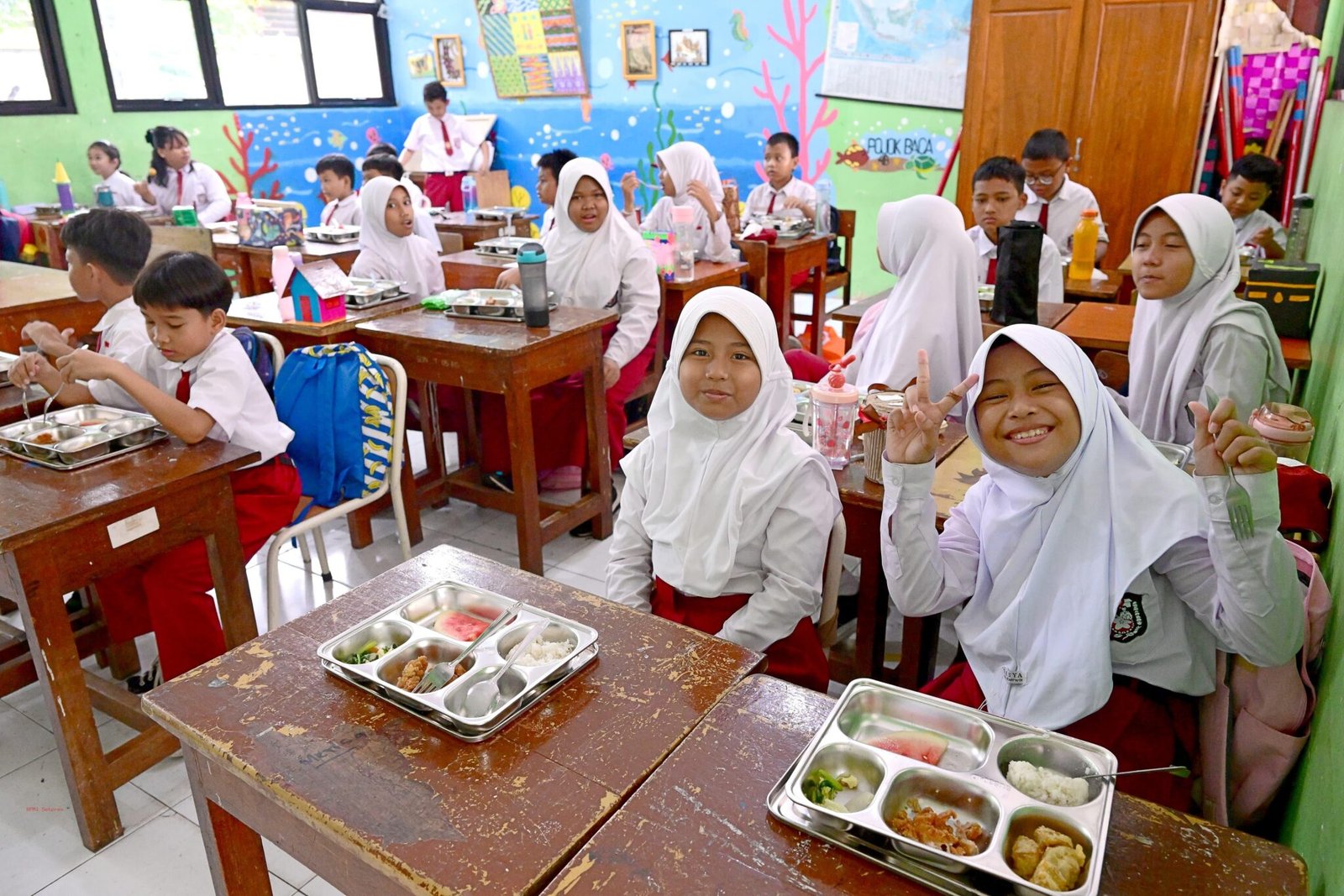

Jakarta – The Free Nutritional Meals (MBG) Program will continue to expand across Indonesia in 2025. Not only focusing on fulfilling nutritional needs for schoolchildren, toddlers, pregnant and breastfeeding mothers, MBG now actively sources products from local farmers and livestock breeders, a strategy that helps stimulate the village economy. Data as of November 2025 shows that program organizers have requested that each MBG kitchen or Nutrition Fulfillment Service Unit (SPPG) involve farmers, small-scale livestock breeders, MSMEs, and cooperatives as food suppliers.
An example of this is seen at the Margomulyo Food and Beverage Service (SPPG) in Seyegan District, Sleman Regency, Yogyakarta Special Region. This kitchen partners with local farmers and livestock breeders as the main suppliers of food ingredients. Khairul Hidayati, Head of the Legal & Public Relations Bureau of the National Nutrition Agency (BGN), emphasized that this collaboration is an important part of the MBG ecosystem.
“We appreciate the Margomulyo SPPG because it not only ensures the quality of food ingredients but also empowers local farmers and livestock breeders. Local agricultural products are purchased at good prices, thus benefiting the community,” she said. She added that some of the MBG’s animal protein needs are also met by local livestock breeders through village business units.
The impact of this mechanism extends beyond food supply. MBG has been proven to help empower local economies by opening permanent markets for small-scale farmers and livestock breeders, while simultaneously strengthening regional food self-sufficiency. Equalizing the supply of local food is believed to reduce dependence on large suppliers from outside the region and stimulate economic activity at the village level.
Previously, the Head of the National Nutrition Agency (BGN), Dadan Hindayana, stated that the local partnership model is at the heart of the MBG policy as a long-term development program. “By directly absorbing the products of village farmers and livestock breeders, MBG not only provides healthy food to beneficiaries but also builds a sustainable economic ecosystem. This is a model that must be strengthened because it provides both health and economic benefits to the community,” he said.
With this partnership model, the MBG, as a strategic government program, is guaranteed to meet the nutritional needs of Indonesia’s young generation and act as a driving force for economic recovery and growth at the village level. If managed consistently, the MBG can become a national policy instrument capable of strengthening food security, improving the economic well-being of local communities, and supporting sustainable development.
