
By: Dhita Karuniawati )*
The Free Nutritious Meal Program (MBG) is a strategic government policy designed to improve the quality of human resources from an early age. As a national program targeting students and vulnerable groups such as pregnant women, this program is a crucial foundation for creating a healthy, intelligent, and productive generation. Focusing on meeting daily nutritional needs, MBG is projected to be a driving force for improving human quality, enabling the realization of the grand vision of Golden Indonesia 2045.
When children go to school hungry or don’t consume enough micronutrients, their academic performance can be hampered. Therefore, the government introduced the MBG Program as an integrated nutrition intervention to ensure every Indonesian child has an equal foundation for health, regardless of economic background.
The Free Nutritious Meal Program is more than just a food distribution program; it’s a significant investment in the nation’s future. Developed countries that have implemented similar programs have proven successful in improving educational attainment and reducing the incidence of diseases caused by malnutrition. Overall, children who grow up healthy and have optimal learning capacity will become a productive, innovative workforce capable of competing globally.
Alwin Supriyadi, a representative from the National Nutrition Agency (BGN), stated that the MBG program is the foundation for the Golden Indonesia 2045. Individuals with adequate nutrition will have good health and the potential to develop optimally. This is crucial for Indonesia’s ability to compete globally. Alwin explained that the MBG program emphasizes the consumption of diverse, nutritionally balanced, safe, and locally sourced foods (B2SA).
Meanwhile, Professor Sandra Fikawati, Professor of the Department of Nutrition and Deputy Chair of the Center for Nutrition and Health Studies at the Faculty of Public Health, University of Indonesia, stated that the MBG program is a visionary policy capable of strengthening the foundation of comprehensive child development. The MBG program presents a significant opportunity. With the MBG program, our competitiveness can improve, as our human resources are nurtured from an early age. For years, Indonesia has lost momentum in its competitiveness due to a lack of attention to children’s nutritional needs.
Prof. Fika stated that the MBG program has a significant impact on improving learning abilities, cognitive development, and school attendance, especially in the 3T (third-to-third) regions. The MBG program is not just food aid, but a long-term investment in building a healthy, intelligent, and productive generation. MBG must be a sustainable program. If it stops, we will lose out.
The implementation of the MBG Program also has a domino effect on the community’s economy. The government encourages the procurement of food supplies from local MSMEs, cooperatives, and farmers near schools. Thus, this program not only improves children’s health but also stimulates the regional economy.
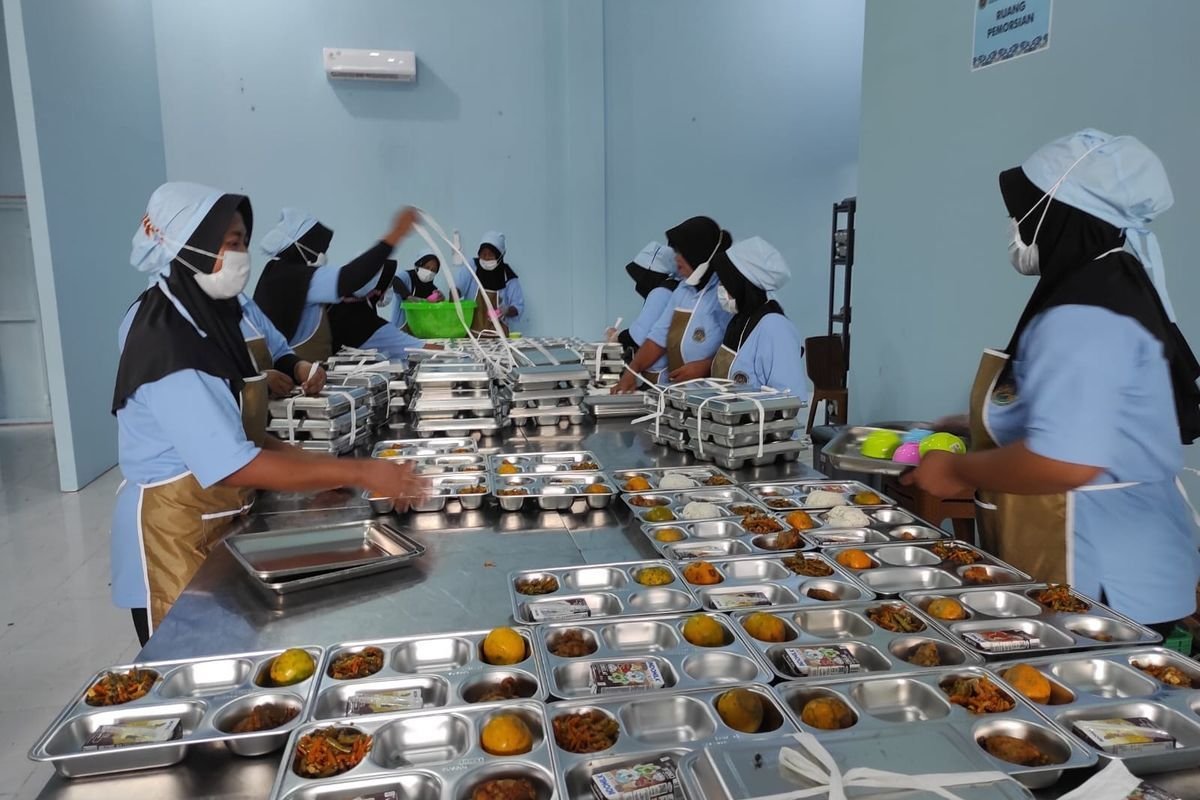
By October 2025, the government will have built 11,900 MBG kitchens to serve more than 35 million children and pregnant women. In addition to improving nutritional quality, this program also stimulates the village economy by involving smallholder farmers, fishermen, MSMEs, and cooperatives as primary suppliers.
The Head of the National Nutrition Agency (BGN), Dadan Hindayana, emphasized that the MBG program is a crucial intervention to ensure Indonesia does not miss out on its demographic dividend. The implementation of the MBG program also has a domino effect on the people’s economy. The government encourages food procurement from local MSMEs, cooperatives, and farmers near schools. Thus, this program not only improves children’s health but also stimulates the regional economy.
The success of the Free Nutritious Meal Program depends not only on the central government but also on the active participation of local governments, schools, businesses, MSMEs, healthcare workers, and the community. Cross-sector collaboration is a crucial foundation for effective, targeted food distribution and guaranteed quality standards.
Strict oversight is also needed to ensure transparent and compliant budget use. Furthermore, parental involvement can strengthen the program’s sustainability, as children still need the same nutritional support at home.
The Golden Indonesia 2045 vision demands the readiness of superior and competitive human resources. The MBG program serves as a fundamental strategy to achieve this. By providing adequate nutrition to children and vulnerable groups, Indonesia is building a crucial foundation for a future generation that is healthy, intelligent, strong, and ready to compete globally.
The MBG program is not just about food, but about the future. It symbolizes the country’s commitment to the quality of life of its citizens. If implemented consistently, measurably, and sustainably, the Free Nutritious Meal Program can become a milestone in the transformation of the Indonesian people towards progress.
Thus, the MBG Program is a social investment that produces multidimensional impacts, including improved health, economic growth, improved education, and strengthened food security. All of this contributes to one overarching goal: realizing a Golden Indonesia, a prosperous, advanced, and sovereign Indonesia.
*) The author is a contributor to the Indonesian Strategic Information Study Institute
