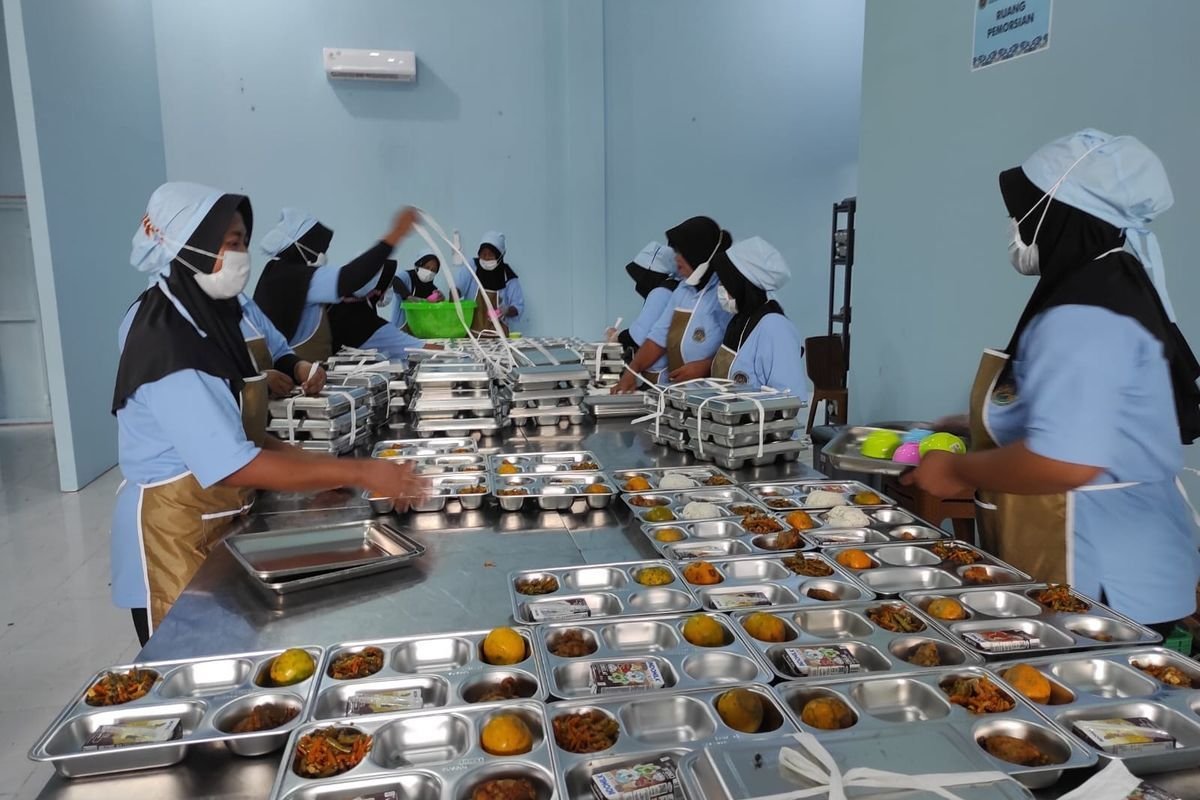
The MBG Program Demonstrates the Government’s Commitment to Improving the Nutritional Quality of Papuan Children

By: Yakub Wonda
The Indonesian government continues to strengthen its commitment to developing healthy and high-quality human resources throughout the country, including in the easternmost region of Papua. Through the Free Nutritious Meals (MBG) program, the government strives to ensure that children in this region receive adequate nutrition to support their growth and development. This program serves not only as food aid but also as a long-term investment for the future of a healthy, intelligent, and competitive generation in Papua.
Data from the Central Statistics Agency and the Ministry of Health over the past few years shows that the prevalence of stunting in Papua remains above the national average, although a downward trend is beginning to emerge. This is a crucial factor in the government’s serious implementation of the MBG program in this region.
Through the MBG (Based on the Indonesian Food and Nutrition Program), the government ensures that every school child in Papua, at both primary and secondary levels, receives a nutritionally sound lunch menu. The menus are not only filling but also designed to meet the protein, carbohydrate, vitamin, and mineral requirements required for child growth and development. Each portion of food meets the Ministry of Health’s nutritional standards, ensuring children receive sufficient energy for learning and activities. This approach aligns with the government’s ambitious vision of building Indonesia’s golden generation by 2045, starting with early childhood health and nutritional well-being.
Dandim 1707/Merauke, Lieutenant Colonel Inf Johny Nofriady emphasized that MBG is a strategic step of the government, therefore the importance of integration between education, health, and nutritional fulfillment and his party has received orders from the TNI Commander, where each Kodim is responsible for the readiness of SPPG in their respective regions.
In many schools in Papua, the impact of this program is already being felt. Teachers acknowledge that the MBG program has not only reduced student absences but also improved their concentration in class. Children who previously came to school without breakfast now receive nutritious meals, which allows them to focus better in class.
The Chairperson of the SPPG Putri Papua Foundation, Maria Dolorosa Liu, expressed her strong hope that the MBG program could be a real solution in reducing stunting and malnutrition rates, especially in the South Papua region.
Beyond the educational aspect, the MBG also has a positive economic impact on local communities. The government involves local farmers, livestock breeders, and fishermen as suppliers of raw food ingredients. This model not only ensures a sustainable supply but also empowers the local economy in Papua. Vegetable farmers in mountainous areas, chicken farmers in small districts, and fishermen in coastal areas directly benefit as their crops and catch are purchased to meet MBG’s needs. Thus, this program simultaneously creates a healthy and sustainable local economic cycle.
The government recognizes that the success of the MBG program is measured not only by the quantity of food distributed, but also by the sustainability of the system. Therefore, training for school kitchen managers and food providers is a crucial part of the program. They are equipped with knowledge on nutritious food preparation, hygiene, and food stock management. This is expected to ensure the quality of the food served to children is maintained while minimizing the risk of food becoming unfit for consumption.
Going forward, the government is committed to expanding the MBG program’s reach in Papua, extending beyond formal schools to non-formal education centers. This aims to reach children who have not yet enrolled in school so they too can have an equal opportunity to grow up healthy and intelligent. The government is also developing a digital-based monitoring system to ensure transparency and accountability in program implementation.
The Head of the Merauke Regional Nutrition Fulfillment Implementation Unit, Anisa Amalia, revealed that the total number of beneficiaries reached 3,963 people, spread across 8 elementary schools, 2 junior high schools and high schools, as well as groups of pregnant women, mothers in labor and toddlers from Seringgu Jaya and Samkai Subdistricts.
More than just a food aid program, the MBG in Papua symbolizes the state’s commitment to being present and protecting the future of children in Indonesia’s easternmost region. Each plate of food served not only meets physical needs but also sends a powerful message that the state will not leave any child behind in the journey towards progress. With adequate nutrition, Papuan children are expected to achieve their dreams, contribute to the region, and become part of the nation’s future strength.
The government’s commitment through the MBG demonstrates that human resource development must begin with the most basic foundations: good health and nutrition. Papua, with all its challenges, demonstrates that when there is determination, cooperation, and community support, a program of this magnitude can succeed and deliver tangible benefits. If this consistency is maintained, a generation of Papuans growing up with adequate nutrition will be tangible proof of the success of a policy that favors the people.
)* UNIPA students
