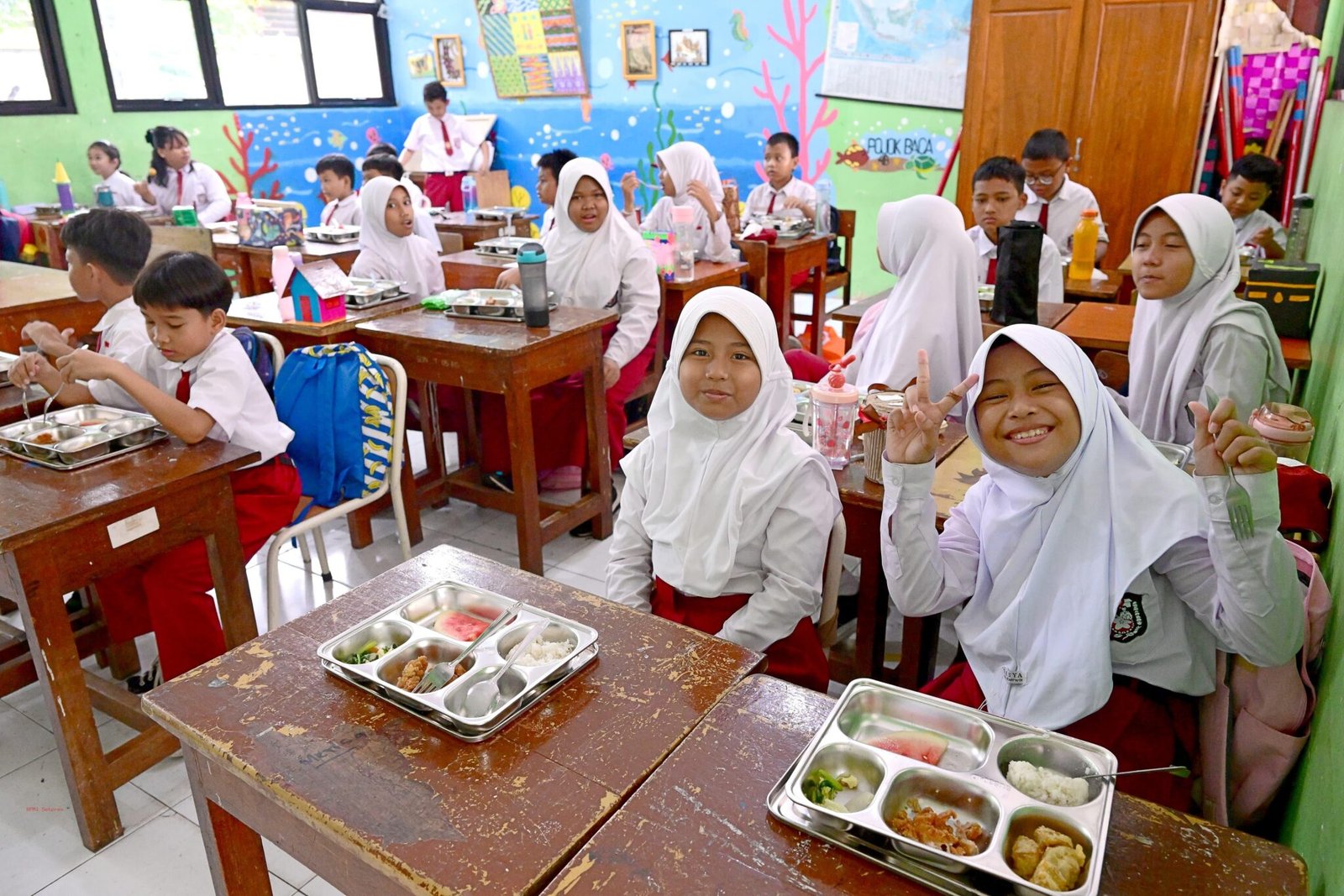
The MBG Program Simultaneously Promotes Nutritional Improvement and Stimulates the Local Economy

By: Ricky Rinaldi
The Free Nutritious Meals (MBG) program was designed by the government as a strategic policy to improve the nutritional status of the community while empowering the local economy. This program targets vulnerable groups, namely children, toddlers, pregnant women, and breastfeeding mothers, so that they can obtain adequate nutritional intake through nutritious food provided free of charge, while opening the local food supply chain through the involvement of farmers, producers, and Micro, Small, and Medium Enterprises (MSMEs). With this comprehensive design, the policy’s objectives are not only limited to meeting the community’s nutritional needs, but are also directed at building food security and strengthening the economic structure of communities in various regions.
The Head of the National Nutrition Agency, Dadan Hindayana, stated that the program has served more than 41.6 million beneficiaries through 14,773 MBG kitchens across Indonesia. New regulations ensure each kitchen serves a maximum of 2,500 meals per day, with priority given to schoolchildren and additional portions for pregnant women, breastfeeding mothers, and toddlers. This mechanism demonstrates the government’s efforts to ensure equitable access to nutritious food, maintain quality, and ensure fair benefits for each target group. With increasingly streamlined governance, MBG has become an instrument that not only provides direct services but also strengthens the national nutrition service infrastructure.
Local economic transformation is a crucial dimension in the implementation of the MBG. The use of raw materials sourced from local farmers and producers encourages the creation of new economic pathways. MSMEs are also involved in food supply, processing, and distribution, creating new business opportunities, stable demand, and additional jobs. This multiplier effect demonstrates that nutrition policies can be designed to be productive, not simply consumptive. When farmers gain purchasing power, local producers increase production capacity, and MSMEs achieve more stable incomes, the rural and urban economies move simultaneously. The MBG is thus a nutrition policy that produces tangible economic impact.
The government’s commitment to maintaining the quality of program implementation is also evident in the strict requirements regarding sanitation and food safety. Dadan Hindayana emphasized that all MBG kitchens are required to implement procedures for sterilizing eating utensils, use clean and filtered water, and complete hygiene and sanitation certification, including halal certification. These standards ensure that the program focuses not only on portion quantity but also on the quality of the food received by the community. These steps are a crucial foundation for ensuring that the food distributed is truly safe, hygienic, and meets public health standards.
Meanwhile, Deputy Minister of Health Benjamin Paulus Octavianus emphasized that the government also conducts regular monitoring to ensure each kitchen continues to meet service standards. This oversight includes routine audits, monitoring the quality of raw materials, and evaluating the effectiveness of menus in meeting the nutritional needs of children and mothers. With the active involvement of the Ministry of Health, the MBG implementation system is more accountable, measurable, and can be periodically evaluated to ensure maximum benefits.
The real impact of MBG is felt directly by vulnerable groups, especially children and pregnant and breastfeeding mothers. Regular access to nutritious food helps meet essential nutritional needs that are crucial for children’s growth and development, improves concentration in learning, and strengthens the immune system. For pregnant and breastfeeding mothers, adequate nutrition plays a crucial role in maintaining maternal health and the quality of breast milk, the primary source of nutrition for children. Thus, MBG not only provides food but also contributes to the development of a healthier, stronger, and more productive future generation.
The combination of social benefits and economic impact demonstrates that MBG is a model for sustainable socio-economic intervention. The active participation of communities and local actors in the operation of MBG kitchens is also an indicator of the program’s success. By empowering MSMEs as raw material suppliers and ready-to-eat food producers, local economic capacity increases as the supply chain expands, involving multiple parties. In various regions, the presence of MBG kitchens has also created new collaborative spaces for communities, strengthened social solidarity, and increased community ownership of government programs.
Given its structure and impact, the MBG deserves recognition as a policy that offers multiple benefits. This program not only provides nutrition for millions of people but also builds local economies, strengthens food security, and creates a foundation for higher-quality human development. The success of the MBG also demonstrates that public policy can be designed with a collaborative, measurable approach that directly addresses the needs of the community.
The MBG program is concrete evidence of the government’s success in producing policies that favor the people. With its well-thought-out design and measurable implementation, this program demonstrates proactive government leadership in addressing nutrition issues while simultaneously stimulating the local economy. The MBG is a modern public policy model that effectively integrates social and economic aspects, providing direct benefits to millions of people, and demonstrating that the government’s development vision is truly present at the grassroots level.
*)Strategic Issues Observer
