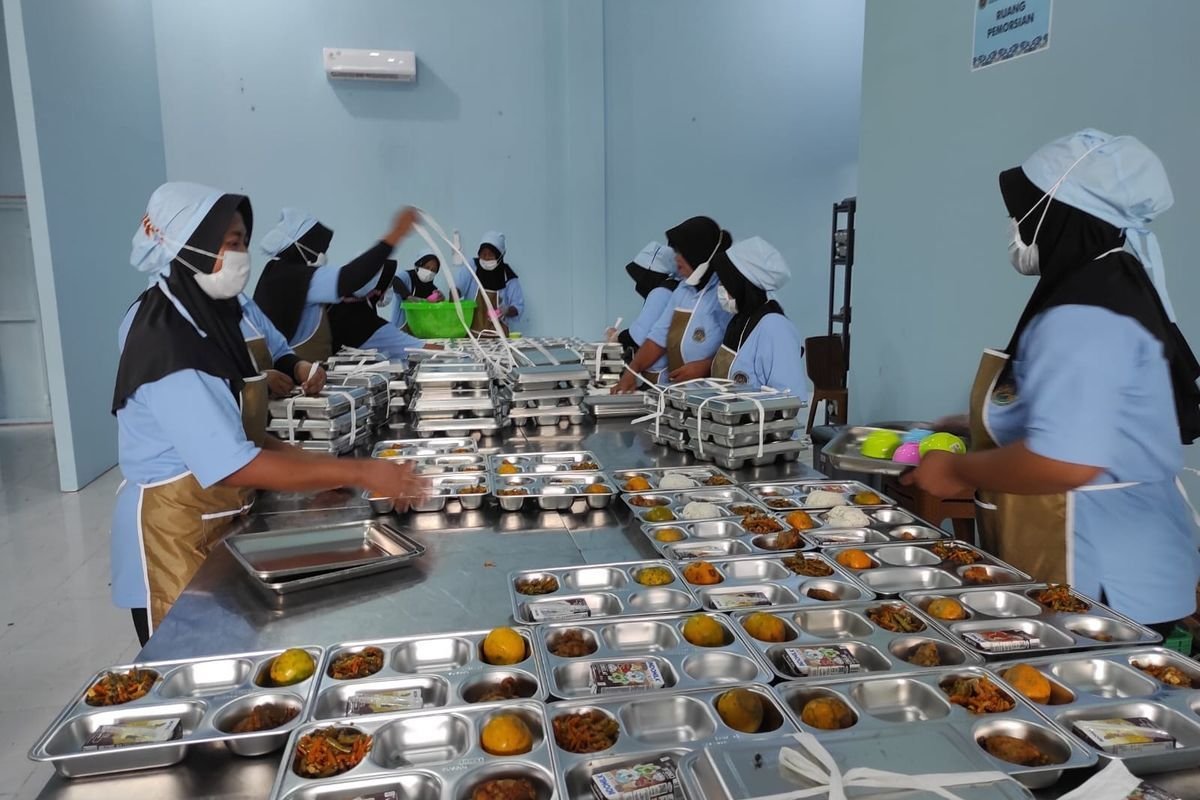

Jakarta – The Indonesian government continues to demonstrate its commitment to improving public welfare through the implementation of the Free Nutritious Meals (MBG) Program, which President Prabowo Subianto has designated as a national priority. The MBG serves not only as a nutritional intervention, but as a holistic strategy that addresses aspects of health, education, and local economic empowerment.
“This program is a comprehensive strategy to build the quality of Indonesia’s human resources from an early age. If our children are healthy and intelligent, the nation’s future will be more secure,” said Coordinating Minister for Political, Legal, and Security Affairs (Menko Polkam), General Pol. (Ret.) Budi Gunawan.
In addition to providing benefits in the areas of nutrition and health, the MBG Program also contributes to strengthening economic resilience by easing the burden of household expenses, creating millions of jobs, and maintaining food price stability through direct purchasing mechanisms from local producers.
“This is a concrete form of the state’s presence in ensuring that no Indonesian child is left behind due to hunger or malnutrition,” added Budi Gunawan.
Putih Sari, a member of Commission IX of the Indonesian House of Representatives, also expressed this sentiment. She described the MBG as a tangible manifestation of the government’s commitment to improving the quality of life for the community, particularly the younger generation.
“The Free Nutritious Meal Program aims to improve the nutrition of children and pregnant women. Adequate nutrition leads to optimal growth and development. In other words, this program plays a role in combating malnutrition and stunting in Indonesia,” said Putih.
The MBG program targets priority groups such as children, infants, breastfeeding mothers, and pregnant women. Lili Khamiliyah, Head of the General and Financial Bureau of the National Nutrition Agency, explained that the program not only focuses on nutritional needs but also impacts the economic sector.
“MBG is here not only to provide free nutritious food but also to create jobs and help the economic cycle. MBG definitely needs a kitchen, workers, and ingredients to process,” explained Lili.
He added that the presence of MBG kitchens or Nutrition Fulfillment Service Units (SPPG) in various regions also helps stimulate the local economy, especially by involving local workers and business actors in providing food ingredients and processing nutritious food.
Expert Staff of the Directorate of Promotion and Education of the National Nutrition Agency, Anyelir Puspa Kemala also emphasized the importance of target groups in MBG as a long-term investment for the nation’s future generations.
“Children and pregnant women are the main targets, as children are the next generation who will play a role in the future. Of course, this MBG program will help optimize the growth and development of the nation’s children, who will be important actors in Indonesia Emas 2045,” added Anyelir.
The MBG program continues to be socialized across regions as a concrete manifestation of the state’s presence in ensuring that people’s basic rights are fulfilled from an early age — both in terms of health and the economic well-being of the community.
