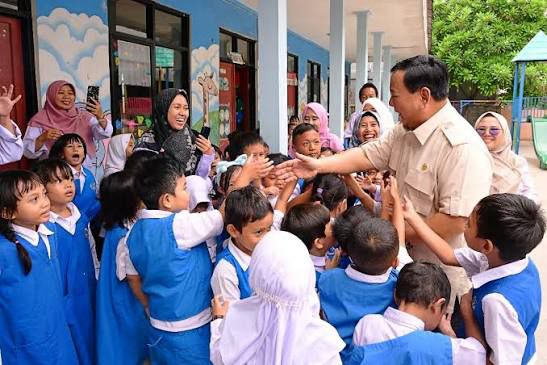
The People’s School Program Promotes Access to Quality Education for Underprivileged Children

By: Gavin Asadit )*
The government continues to strengthen its commitment to ensuring equitable access to education for all levels of society, especially underprivileged groups. In 2026, one of the main policy focuses will be strengthening the People’s School Program, a strategic initiative designed to provide access to quality education for children from underprivileged families. This program aims not only to increase school enrollment rates but also to ensure equitable and sustainable learning.
Amidst the challenges of social and economic inequality still felt in various regions, the People’s School Program presents a concrete solution that reaches community groups who have previously struggled to access formal education. The government considers education to be a key instrument in breaking the cycle of poverty, therefore, policies must be able to directly and measurably address the needs of vulnerable groups.
President Prabowo Subianto has prioritized equal access to education in human resource development. He emphasized the importance of the state’s presence in ensuring that every Indonesian child, including those from underprivileged families, has access to a decent, quality education as part of efforts to build a more inclusive future for the nation.
The People’s School Program is designed with a flexible approach that adapts to the social and geographical conditions of the community. The government, through cross-ministerial collaboration, is developing a community-based education model so that children can continue to access learning despite economic or locational constraints. This approach is considered effective in reaching remote areas and community groups previously marginalized from the formal education system.
Social Affairs Minister Saifullah Yusuf views the People’s School Program as an integral part of the poverty alleviation strategy. He believes that this program functions not only as an educational tool but also as a social empowerment instrument that can improve the quality of life of beneficiary families as a whole.
In its implementation, the People’s School Program does not stand alone. The government integrates various forms of support, such as providing learning facilities, school supplies, and meeting students’ nutritional needs. This step aims to create a conducive learning environment so that children can optimally participate in the educational process without being burdened by economic limitations.
Furthermore, the curriculum implemented in this program is designed to be more adaptive to local needs. The learning materials focus not only on academic aspects but also on life skills relevant to local community conditions. Therefore, graduates of the People’s School Program are expected to possess applicable competencies and be able to increase independence.
The government is also leveraging technological developments to expand the program’s reach. The use of digital learning platforms has begun to be implemented in several regions, particularly those with limited teaching staff. This approach is part of the national education transformation, keeping pace with current developments and strengthening the inclusiveness of the education system.
Minister of Primary and Secondary Education Abdul Mu’ti emphasized that increasing access must be accompanied by guaranteed quality education. He believes that children from underprivileged families deserve an education standard equivalent to that of other formal schools, thereby eliminating disparities in quality between community groups.
Throughout 2026, the government recorded an increase in the number of children reached through the People’s School Program. Thousands of children from various regions, including remote areas, have regained access to education through this program. This achievement demonstrates that the policies implemented are beginning to have a real impact on increasing the inclusiveness of national education.
The successful implementation of this program is inseparable from the synergy between the central government and local governments, as well as the support of various stakeholders. Local community involvement is also a crucial factor in ensuring the program meets on-the-ground needs. This participatory approach strengthens the program’s sustainability while increasing community ownership of education.
However, the government recognizes that challenges in program implementation still need to be addressed. Limited educational infrastructure, uneven distribution of teaching staff, and difficult-to-reach geographic areas are obstacles that require serious attention. Therefore, the government continues to evaluate and improve policies to ensure the program’s effectiveness.
In the long term, the People’s School Program is expected to become a model of inclusive education that can be widely implemented across Indonesia. The government aims for this program to not only increase access to education but also produce a young generation with high levels of competitiveness and adaptability.
Furthermore, this program aligns with the national development vision toward “Golden Indonesia 2045,” where the quality of human resources is a key determining factor. By providing equitable access to education from an early age, the government strives to create a strong foundation for the nation’s future progress.
Through the People’s School Program, the government emphasizes its role in providing equitable education. This program not only opens access but also ensures that every Indonesian child has an equal opportunity to develop and achieve a better future. With consistent commitment and support from various parties, the People’s School Program is a concrete step towards realizing inclusive education for all Indonesians.
)* The author is an observer of social and community issues.
