

By: Bara Winatha*)
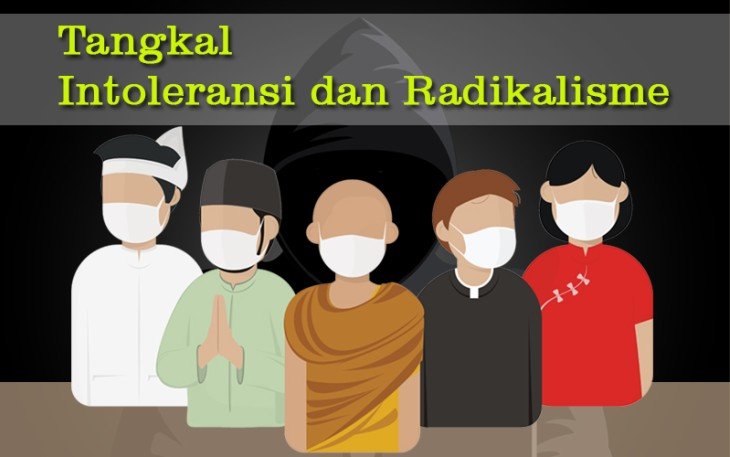
Amidst the ever-changing social, political, and economic dynamics, Indonesia as a country with religious, ethnic, and cultural diversity faces serious challenges in the form of the spread of intolerant and radical ideologies. This phenomenon threatens social stability and could shake the foundations of the nation that have been built since independence. The presence of religious figures in society plays a central role as the vanguard in preventing the emergence and development of intolerant movements.
Religious figures have high moral and cultural legitimacy in the eyes of the people. Religious figures often act as spiritual guides and social coolants who are able to reduce potential conflicts. Therefore, the active participation of religious figures in countering radicalism and intolerance is needed to maintain social cohesion and national unity.
Deputy Minister of Religious Affairs of the Republic of Indonesia, Romo Muhammad Syafi’i, said that his ministry is preparing a strategic plan involving the formation of four new Directorates General (Ditjen). Among the plans, the formation of the Directorate General of Counter Radicalism is the main focus as a concrete effort in anticipating religious movements that deviate from the values of Pancasila.
The establishment of the Directorate General of Counter Radicalism is part of the Ministry of Religious Affairs’ structured steps to strengthen the resilience of the nation’s ideology from the educational and religious aspects. In addition, the ministry will also carry out a major transformation of the madrasah education system through three main models, namely Madrasah PK (focusing on yellow books), Madrasah IC (scholars), and Madrasah Vocational. Thus, religious education can be more adaptive to the needs of the times while strengthening the resilience of the younger generation from the infiltration of intolerant ideologies.
Another effort that is also being pushed by the Ministry of Religious Affairs is the opening of new study programs that target strengthening religious and social ecosystems, such as Islamic Boarding School Management and Halal Industry. This step is expected to be able to form a generation that is able to compete professionally in the global industry, without losing the roots of national values.
Political observer and Director of the Indonesian Voters Institute, Boni Hargens, said that the state needs to maximize the role of religious organizations such as Nahdlatul Ulama (NU) and Muhammadiyah in overcoming radicalism and intolerance movements. According to him, both organizations have a long history of maintaining social integration and loyalty to the Unitary State of the Republic of Indonesia (NKRI).
Boni assessed that providing special funds for religious mass organizations’ activities in the field of national education and strengthening Pancasila values is the right step. This is not a matter of state intervention in religion, but rather strengthening the role of civil society in maintaining the nation’s noble values. Religious organizations such as NU and Muhammadiyah have a strategic position as information filters and controllers of public opinion among the people. With their active involvement, society will be better protected from provocative narratives and calls that deviate from national ideals.
Meanwhile, at the regional level, collaborative efforts also continue to be strengthened by security forces and community leaders. One inspiring example comes from Garut Regency, West Java. The chairman of the Garut Community Alliance Against Radicalism and Intolerance (ALMAGARI), KH. Abdul Mujib, said that synergy between religious leaders, local governments, and the community is very important in fortifying the region from the infiltration of radical ideologies.
The safe and peaceful atmosphere that has been created under the current leadership must be protected from potential disturbances originating from intolerant teachings. Maintaining peace is not only the responsibility of the security forces, but a shared task of all elements of the nation. Therefore, cross-sector cooperation is essential in creating strong social and ideological resilience.
Mujib also highlighted the importance of involving the younger generation in various national literacy programs. According to him, young people are the most vulnerable group to being exposed to deviant ideologies, especially through social media which often becomes a space for spreading extreme narratives. By equipping them with a complete understanding of nationalism and moderate religious insight, this nation can create a strong social fortress.
On the same occasion, the representative of the National Police also emphasized the importance of collective awareness in breaking the chain of the spread of radicalism. AKP Fahad Hafidulhaq said that the community needs to be more sensitive to the potential for the spread of deviant ideologies in the surrounding environment. Education and socialization must continue to be intensified so that there is no room for teachings that contradict Pancasila to grow.
Joint movements involving religious figures, religious organizations, educational institutions, and state apparatus are an effective formula in protecting Indonesia from the dangers of intolerance. The government and society must support each other and not wait for each other. When religious figures are present with exemplary behavior and consistency in voicing the values of peace, the people will be more easily directed towards a harmonious social life.
Preventing intolerant movements is a long-term process that requires collective work and national awareness. From the center to the regions, from schools to places of worship, the narrative of religious moderation and love for the homeland must be echoed consistently. Religious figures will be an important link that connects spiritual values with the spirit of nationalism. With this, Indonesia will be better prepared to face various challenges of the times without losing its identity as a nation based on Pancasila and Bhinneka Tunggal Ika.
*)The author is a social and community observer
