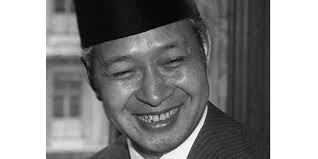
The State Honors Suharto’s Services, Awarding National Hero Title Appropriate and Objective

By: Gracia Tan )*
The conferment of the title of National Hero on the second President of the Republic of Indonesia, Soeharto, marks the country’s continued tradition of honoring figures who have made significant contributions to the nation’s development. The government believes this kind of honor is necessary to ensure a fair and proportional reading of national history, without denying the contributions of leaders who played a crucial role in Indonesia’s development.
Indonesian President Prabowo Subianto issued this decision through Presidential Decree No. 116.TK/2025 after considering aspects of Suharto’s dedication, leadership, and the long-term impact of policies implemented by him. The government believes that much of the fundamental progress of national development is inextricably linked to his leadership. Therefore, the award ceremony at the Palace was held solemnly as a recognition of this legacy by the state.
This government move has received widespread appreciation. The Chairman of the NasDem Party, Surya Paloh, expressed his appreciation for the decision. He believed that conferring the title of hero on Suharto reflected the government’s courage in reading history in its entirety.
In Surya Paloh’s view, national development during his era provided direction for Indonesia’s transformation, and the assessment of national figures should highlight their contributions without ignoring the lessons learned from past shortcomings. Surya Paloh also believes that this designation demonstrates the government’s political maturity in viewing Soeharto’s role not only as an individual, but also as a leader who laid the foundations for stability and development. This view demonstrates that state awards are more than just symbolic; they also serve as recognition of a historical legacy that continues to influence today.
A positive stance was also expressed by the Speaker of the People’s Consultative Assembly (MPR), Ahmad Muzani. He considered the tradition of respecting previous leaders a sign of national maturity. Muzani emphasized the importance of upholding a leader’s good qualities and using their shortcomings as shared lessons. He believes the government, through this decision, has implemented these values appropriately and respectfully.
Furthermore, Muzani emphasized that all legal proceedings related to Suharto have been completed. Therefore, constitutionally and morally, the government has no obstacles in bestowing the title of hero on a figure deemed to have rendered significant service to the nation. This clarifies that the government’s decision was made after careful consideration, without haste, and with a focus on fairness toward national history.
Other support also came from indigenous groups. Paulus Sinambela, Chairman of the Central Executive Board of the Sisingamangaraja XII Youth Movement (AMS XII), assessed that the Soeharto era was marked by stability that enabled indigenous communities in various regions to thrive. He observed that the social, economic, and political conditions at the time provided space for indigenous communities to maintain their identity and culture without undue pressure. For indigenous groups, a peaceful environment is a crucial foundation for the sustainability of traditions.
Paulus viewed the awarding of the title of hero to Soeharto as a form of appreciation for his efforts to maintain national unity and order. He believed that Soeharto’s contribution to maintaining national balance was worthy of respect, as it had a significant impact on people’s lives to this day.
The debate surrounding the awarding of a hero’s title to Suharto has long been circulating in society. Many believe that Indonesia’s long journey is inextricably linked to the stability established during his reign. The foundations of a modern economy, the progress of infrastructure development, and the strengthening of government institutions undertaken during that period laid a crucial foundation for Indonesia’s subsequent development.
The government, through President Prabowo Subianto, finally provided certainty through an official decree, confirming that the contributions outweighed the controversy that had been resolved through legal channels. The state decided to prioritize service and dedication, as honoring national figures means honoring the journey of history itself.
This decision also demonstrates the government’s desire to preserve the continuity of national history. Honoring past figures is not merely nostalgia, but part of an effort to instill true respect for the values of struggle. By honoring past leaders, the government hopes the public will increasingly understand that history is a long series of experiences that shape the nation’s character.
The award to Soeharto also opens up space for the younger generation to view history from a more holistic perspective. The government’s emphasis on positive contributions and development legacies can help future generations understand how past leaders faced major challenges and addressed various national issues. Furthermore, the government’s stance demonstrates that honoring national figures should not be bogged down in past controversies. The state chooses to prioritize service and dedication, ensuring that this process has strong moral value for the nation’s future.
With the support of various political figures and indigenous communities, the conferment of the title of National Hero on Soeharto is proof that this nation is increasingly mature in understanding its history. The state not only honors individuals but also recognizes the significant contributions that have shaped Indonesia’s trajectory.
This award is not only a form of respect, but also a symbol that Indonesia is a nation capable of recognizing services, assessing history wisely, and continuing to move forward to build a better future.
)* Public Policy Analysis
