The State Remains Present: President Prabowo’s Resolve to Ensure Citizens Gradually Recover from the Sumatra Disaster

By: Moeini Syakir)
Disasters do not only destroy homes, roads, and rice fields. They also shatter a sense of security, sever family bonds, and leave deep emotional wounds that are often invisible in statistical reports. In West Sumatra, one of the most moving moments in the series of flood response efforts occurred when a refugee—a middle-aged man who had lost his entire family—directly conveyed his heartfelt plea to the President of the Republic of Indonesia, Prabowo Subianto.
With a trembling voice and tear-filled eyes, the man asked that his devastated village be rebuilt as soon as possible. “I live alone now, Sir. Please rebuild our village quickly.” The incident took place when President Prabowo visited the evacuation post at SD Negeri 05 Kayu Pasak, Palembayan, Agam Regency, on Thursday, December 18, 2025. Tears were shed in front of the Head of State as Prabowo walked through the shelter and greeted the evacuees one by one.
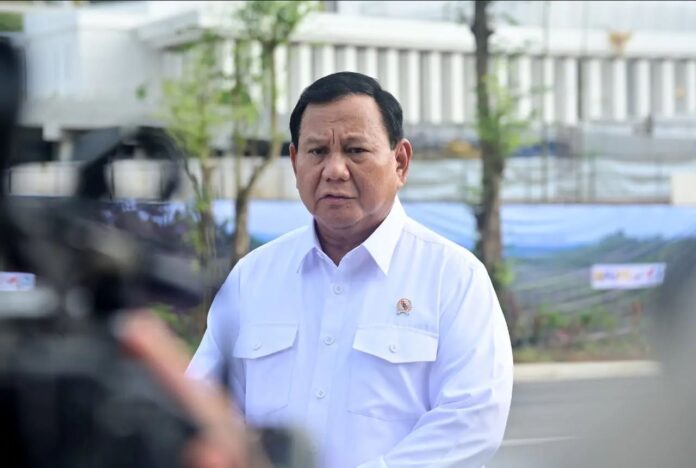
President Prabowo Subianto did not interrupt the man’s story. He listened attentively, then gently patted the man’s shoulder as a gesture of empathy and support. In the context of public policy, this moment is significant because it shows that the presence of the state does not stop at procedures and reports, but reaches the most human dimension of a crisis—listening to and acknowledging the suffering of victims.
After speaking with the evacuees, the President continued his inspection of the shelter and joined them for a simple breakfast of fried rice with a fried egg. Prabowo remarked that the meal was delicious. He even joked with Indonesian Army soldiers and volunteers, saying it was as if they knew he had not yet had breakfast. This simple gesture conveyed a symbolic message that the leader did not distance himself from citizens who were facing hardship.
On that occasion, President Prabowo Subianto openly expressed his appreciation to all parties involved in the disaster response. He thanked volunteers, the National Search and Rescue Agency (Basarnas), the Indonesian National Armed Forces (TNI), the National Police (Polri), as well as relevant ministries and institutions working in the field. Prabowo also conveyed his respect to the residents, especially the mothers in the evacuation shelters, who continued to welcome him warmly despite their difficult circumstances. He described the joy of children amid limitations as a shared source of moral strength.
This empathetic approach was then reinforced by concrete policy measures. Minister of Social Affairs Saifullah Yusuf, commonly known as Gus Ipul, explained that the government had prepared assistance for household furnishings for families affected by flooding in Sumatra. The assistance, amounting to Rp3 million per family, is intended to replace damaged or lost household items such as kitchen equipment, tables, chairs, and other basic necessities.
According to Minister Saifullah Yusuf, the assistance is part of efforts to restore the lives of affected families so that they can resume their daily activities in a dignified manner. He conveyed this following a coordination meeting on disaster response in Sumatra with the Coordinating Ministry for Human Development and Culture.
In addition to household furnishing assistance, the Ministry of Social Affairs also discussed the provision of subsistence support for disaster survivors. Saifullah Yusuf explained that the proposed amount of subsistence assistance is Rp10,000 per person per day. If a family consists of five members, the assistance could reach Rp50,000 per day and is planned to be provided for three months, with adjustments based on field conditions and cross-ministerial recommendations.
Furthermore, the government has also prepared post-disaster economic empowerment programs. Under this scheme, each affected family is planned to receive assistance of Rp5 million to help them recover economically. In addition, the Ministry of Social Affairs is providing death compensation of Rp15 million per person for deceased victims and compensation of Rp5 million per person for those who suffered serious injuries. In Aceh, such compensation has already been distributed to 31 heirs of deceased victims whose verification process has been completed.
Saifullah Yusuf emphasized that the data on aid recipients remains dynamic and continues to be updated based on assessments conducted by local governments and the National Disaster Management Agency (BNPB). The government, he said, is committed to ensuring that all assistance is well-targeted and reaches citizens who truly need it.
From a public policy perspective, this series of events and policies demonstrates the state’s effort to be fully present—emotionally, administratively, and structurally. The President’s presence at the evacuation shelter was not merely symbolic, but part of a broader policy framework oriented toward restoring human dignity. The tears of a citizen who lost everything were not allowed to dissipate into the air; they were answered with empathy and followed by systematic, cross-ministerial action.
Disasters may not be entirely preventable. However, the way the state responds determines whether citizens feel abandoned or embraced. In West Sumatra, the state has shown that it chooses to listen, to be present, and to work together with its people to rise again.
*) The author is a public policy observer.
