
By: Prita Lestari)*
The government has reaffirmed the overarching direction of national energy development by placing energy sovereignty and energy security at the core of its agenda for the 2026–2030 period. This reaffirmation is not merely a political slogan, but a strategic response to global pressures, dependence on energy imports, and the demands of long-term development that require certainty of national energy supply.
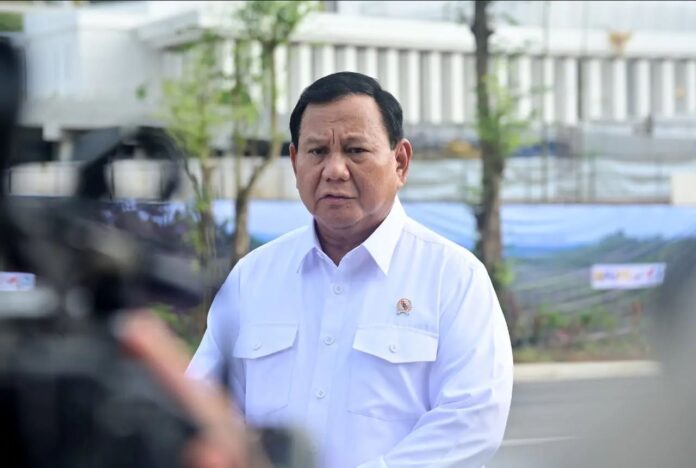
The inauguration of the National Energy Council (DEN) by President Prabowo Subianto on 28 January 2026 marked an important milestone in the consolidation of national energy policy. Through a strengthened, cross-sectoral DEN structure, the government has demonstrated its seriousness in ensuring that energy policy is no longer fragmented, but instead integrated with fiscal, industrial, food, transportation, research, and environmental protection policies.
President Prabowo has consistently promoted the vision of energy self-sufficiency as a foundation of national sovereignty. Dependence on imported fuel is viewed as a risk to economic stability and national security, particularly amid global geopolitical uncertainty. Therefore, the agenda to end fuel imports has become one of the main objectives, accompanied by efforts to optimize domestic production and strengthen energy processing infrastructure.
Minister of Energy and Mineral Resources Bahlil Lahadalia, appointed as the Daily Chair of the DEN, regards the inauguration as the beginning of a new chapter in national energy policy. He emphasized that the President has given a clear mandate to the DEN to formulate policy directions and an energy roadmap oriented toward sovereignty, security, independence, and energy self-sufficiency. According to him, Indonesia still imports tens of millions of kiloliters of fuel each year, a condition that does not align with the country’s vast energy resource potential.
In the context of energy security, the government has set a target to increase national energy reserves to support domestic needs for up to three months. This standard represents a significant leap from the current condition, which stands at around 21 days. Bahlil assessed that achieving this target requires the construction of large-scale energy storage infrastructure and the strengthening of domestic refinery capacity, both of which have been incorporated into the 2026 state budget planning.
The agenda of energy sovereignty does not stop at the oil and gas sector. The government is also encouraging energy diversification through the development of agriculture-based bioenergy, such as the utilization of palm oil and ethanol, to replace part of fossil fuel consumption. This approach is considered strategic because it not only strengthens energy security but also stimulates the agricultural sector and downstream national industries.
At the same time, the transition toward clean energy remains part of the national agenda, although it is being pursued in a realistic and gradual manner. The government is targeting the share of new and renewable energy to reach approximately 27–30 percent by 2030. The preparation of a greener Electricity Supply Business Plan (RUPTL) for 2026–2030 serves as an important instrument to accommodate the expansion of renewable-based power generation without compromising the reliability of the national electricity system.
From a regulatory perspective, political support has also strengthened. The People’s Consultative Assembly (MPR) has designated the acceleration of the enactment of the New and Renewable Energy Law as a priority agenda for 2026. This step is viewed as crucial to overcoming investment barriers, providing legal certainty, and accelerating the development of clean energy domestically.
President Prabowo has emphasized that energy independence is a prerequisite for a nation’s true independence. On various occasions, the Head of State has stressed the importance of building national self-confidence and ending dependence on external energy supplies. He has also demonstrated a strong commitment to improving governance in the energy sector, including eradicating corruption, import manipulation, and untrustworthy resource management practices, particularly within state-owned energy enterprises.
The inauguration of strategic projects such as the Refinery Development Master Plan (RDMP) Balikpapan stands as a concrete symbol of this direction. The project not only increases domestic processing capacity, but also strengthens Indonesia’s position within the regional energy supply chain. The President views this transformation as part of efforts to uphold national dignity through energy independence.
Support for the energy sovereignty agenda has also come from youth groups and stakeholders. Chairman of the Central Executive Board of Angkatan Muda Pembaharuan Indonesia (AMPI), Jerry Sambuaga, assessed the presence of the DEN as tangible proof of the state’s commitment to safeguarding energy sovereignty. He views the energy sector as a strategic sector that indeed deserves high priority from the government.
Jerry also considered the appointment of Bahlil Lahadalia as Daily Chair of the DEN as a reflection of the President’s confidence in the Minister of Energy and Mineral Resources’ performance and leadership capacity. Bahlil’s experience and track record are seen as important assets in orchestrating complex, cross-sectoral energy policies that involve diverse interests.
With an increasingly well-directed policy foundation, Indonesia’s energy agenda for 2026–2030 is moving toward a single convergence point: energy as an instrument of sovereignty, resilience, and national sustainability.
This orientation positions energy not merely as an economic commodity, but as a key pillar of state stability, industrial competitiveness, and national dignity amid the changing global geopolitical landscape.
Implementation challenges are certainly significant, ranging from large financing needs and cross-sectoral regulatory consistency to infrastructure readiness and human resource capacity. However, firm policy direction and strong political leadership open space for stronger national consolidation, as well as major opportunities for Indonesia to truly stand on its own feet in the energy sector and determine its future in a sovereign manner. (*)
)* The author is a public policy observer.
