
By: Dirandra Falguni
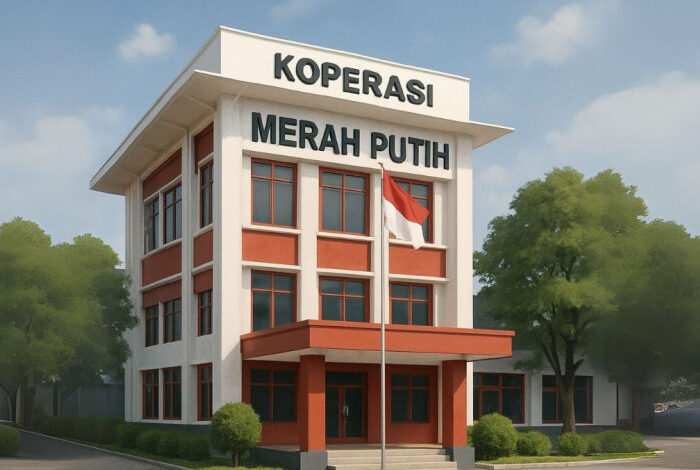
Under the leadership of President Prabowo Subianto, cooperatives have once again been positioned as the main drivers of the people’s economy. Through the Village/Urban Cooperative (Kopdes/Kel) Merah Putih Program, the government demonstrates a strong commitment to strengthening the foundation of a people-centered economy and promoting equitable welfare across rural areas. This program does not merely establish economic institutions—it restores economic sovereignty to the hands of the people in villages.
During the Kopdes Merah Putih Consolidation Meeting in Probolinggo, Minister of Cooperatives Ferry Juliantono emphasized that Kopdes Merah Putih will serve as a stronghold of the people’s economy. The initiative was launched as a strategic step to counter the rapid expansion of modern retail chains that have reached rural areas. The rise of such retail businesses has been seen to drain local spending power away from villages and into the hands of external entities.
It was underscored that village cooperatives are the people’s economic institutions capable of addressing market imbalances and exploitation. Through Kopdes Merah Putih, rural communities are given the opportunity to manage their own economic resources independently and sustainably. The program is regarded as a real embodiment of Article 33 of the 1945 Constitution, which declares that Indonesia’s economy shall be organized as a joint endeavor based on the principles of kinship.
The 80,000 Kopdes Merah Putih initiative is set as an integral part of President Prabowo’s economic policy, which places villages at the heart of national economic growth. This policy envisions village cooperatives as pillars of economic self-reliance, fostering equitable income distribution and reducing interregional disparities.
To sustain rural economic growth, each Kopdes Merah Putih is required to establish four key facilities as the foundation of village economic independence. The first is a basic goods store, designed to curb modern retail domination and ensure affordable access to daily necessities. The second is a village pharmacy or clinic, intended to provide low-cost healthcare for villagers.
Next, a village warehouse will be built to maintain the quality of local harvests and stabilize commodity prices. Meanwhile, logistics vehicles will ensure smooth distribution of goods and products to broader markets. These four facilities are designed to work synergistically to resist market pressures and strengthen local economic resilience.
The government aims for all Kopdes Merah Putih cooperatives to be fully operational by March 2026. To meet this target, funding of up to Rp 3 billion per cooperative has been allocated for physical infrastructure development and working capital. With this initiative, the government believes village cooperatives can become key contributors to achieving the national economic growth target of 8 percent.
The Merah Putih Cooperative Movement is now expanding across regions, including the Bangka Belitung Islands Province. This spirit was reflected in the capacity-building training for Village/Urban Cooperative (KDKMP) administrators, held at the Nata Praja Hall of BKPSDMD Babel, attended by 82 participants from 42 KDKMP units in Pangkalpinang. Funded through the Ministry of Cooperatives’ deconcentration budget, the three-day training covered practical modules on cooperative management, business strategy, and infrastructure development.
Acting Head of the Babel Cooperatives and SMEs Office, Muslim El Hakim Kurniawan, stated that the presence of KDKMPs represents the tangible presence of the state at the grassroots level. Through cooperative-run grocery and LPG outlets, communities can obtain basic necessities at fair prices without domination by monopolistic players.
It was further emphasized that cooperatives differ fundamentally from corporations: cooperatives are based on mutual benefit, while corporations focus on profit. Hence, KDKMPs are positioned as part of national strategic programs that must be continuously monitored and sustained.
In line with Presidential Instruction No. 17 of 2025, the government is accelerating the construction of KDKMP outlets and warehouses nationwide. In Pangkalpinang, construction is underway in Air Kepala Tujuh, while Bacang and Air Sinar Bulan have prepared land for subsequent facilities. The target completion date for all infrastructure is set for March 2026, with land verification supported by the Indonesian National Armed Forces (Babinsa) to ensure timely readiness.
Meanwhile, in West Kalimantan, 178 participants joined the Batch III Training for Kopdes/Kelurahan Merah Putih Facilitators at Tanjungpura University, Pontianak. To date, a total of 543 facilitators and Project Management Officers (PMOs) have been trained to help cooperatives strengthen management and operational capacity in their respective regions. West Kalimantan Regional Secretary Harisson reported that 2,143 Merah Putih Cooperatives have already been established, demonstrating the community’s spirit of mutual cooperation and grassroots self-reliance. However, he acknowledged that challenges such as infrastructure limitations and unequal economic access must still be addressed progressively.
Local governments are now preparing at least 1,000 square meters of land per village for the construction of Merah Putih Cooperative buildings. Construction will be handled by PT Agro Industri Nasional (Agrinas), a government partner that will also supply operational equipment for the cooperatives. This collaboration is expected to accelerate cooperative self-sufficiency across West Kalimantan.
The West Kalimantan Provincial Government expressed deep appreciation to President Prabowo Subianto for his strong commitment to promoting cooperative growth nationwide. This support has already been felt by both local governments and communities.
In the same forum, Wisnu Gunadi, Deputy Secretary for Cooperative Talent and Competitiveness Development at the Ministry of Cooperatives, stated that facilitators and PMOs are the frontline of this national program’s success. They are expected to help cooperatives develop business plans, manage operations, and strengthen local economic networks.
The Village/Urban Cooperative Merah Putih Movement has now evolved into a pillar of national economic equity. With the full support of central and regional governments, cooperatives function not only as economic institutions but also as vehicles of community empowerment, fostering self-reliance, solidarity, and social justice.
Through the enduring spirit of gotong royong, which is intrinsic to the Indonesian identity, Kopdes Merah Putih is believed to be advancing the real implementation of a Pancasila-based economy across the archipelago. With consistent execution down to the village level, this program is poised to become a driving force for national economic equality and accelerate the realization of an economically sovereign, just, and prosperous Indonesia.
The author is a Government Policy Analyst.
