

By: Silvina Martha *)
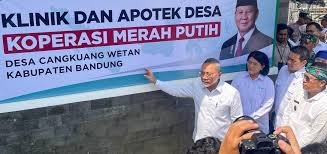
The Indonesian government has shown its seriousness in improving health services to remote villages by launching village pharmacy units as part of the major Red and White Village Cooperative (Kopdes) program. This step not only reflects the state’s attention to access to medicines and health services for rural communities, but is also an integral part of a strategic policy to encourage village progress as a whole.
The village pharmacy that will be established throughout Indonesia is one of seven mandatory business units initiated in the Kopdes Merah Putih structure. Its existence is a symbol that development is not only focused on the economic aspect, but also pays attention to the basic health needs of the community. The government understands that health services should not be a luxury item that is only available in cities. With a cooperative approach, village pharmacies will be managed independently but remain within the corridor of affordable and equitable public services.
This program also reflects President Prabowo Subianto’s vision to develop villages from all sides, including health as the main foundation for improving the quality of life of the community. Through Kopdes Merah Putih, the government distributes capital assistance of up to IDR 5 billion per village, some of which is allocated to establish and manage units such as village pharmacies, clinics, grocery stores, and logistics systems. This is a breakthrough step, not only in terms of the budget, which reaches IDR 400 trillion for 80 thousand villages, but also from the political courage to directly intervene in village development through a modern cooperative structure.
The government does not just provide funds. The approach used is comprehensive, including coaching, regulation, and implementation supervision. Minister of Villages, Development of Disadvantaged Regions and Transmigration Yandri Susanto, for example, emphasized that for villages that have not received assistance from the region, village funds can be used up to 3 percent for the formation of cooperatives. This shows the flexibility of the policy that remains based on the principles of accountability and siding with underdeveloped villages.
Village pharmacies under the auspices of Kopdes Merah Putih are expected to be at the forefront of providing essential medicines and pharmaceutical services that were previously difficult for rural communities to access. The government realizes that without adequate health facilities, the productivity of villagers will continue to be hampered. Therefore, the existence of these pharmacies is not just a physical facility, but a strategic instrument to shorten the distance between villagers and their basic right to health.
Deputy Minister of Cooperatives and SMEs Ferry Joko Juliantono emphasized the importance of seven mandatory business units including village pharmacies as the backbone of cooperatives. According to him, the existence of these units is designed to mutually revive, drive the local economy while ensuring the fulfillment of basic community needs. Village pharmacies, in this case, play a dual role, namely serving health needs while opening up economic opportunities for local residents, for example by employing pharmacists from the village or involving cooperatives in the distribution of generic drugs.
In Central Java, the implementation of this program has shown significant progress. Governor Ahmad Luthfi said that almost half of the villages in his region have formed the Merah Putih village cooperative. He is optimistic that in the near future all villages in Central Java will adopt this model. The provincial government has even issued special regulations to accelerate the formation of the cooperative, emphasizing the region’s commitment to making the central agenda a success.
The success of implementing village pharmacies is highly dependent on orderly and responsible governance. The central government has emphasized that all cooperatives must comply with legal procedures and operate professionally. With this approach, the village pharmacy program will not only be a short-term project, but a strong foundation for a sustainable community health system.
In addition, the integration of village pharmacies with other national programs such as Free Nutritious Meals (MBG) adds to the impetus for human resource development in villages. The government has allocated a total of Rp1,100 trillion in funds spread through various village programs, including the People’s Business Credit (KUR) of Rp300 trillion. Collaboration between pharmacies and the MBG program can strengthen efforts to prevent stunting and malnutrition, so that state investment in this sector truly has a long-term impact.
In terms of implementation, the government also opens up space for local innovation. Kopdes is allowed to add other business units that are considered relevant and profitable, as long as the seven main units are still running. This means that village pharmacies do not stand alone, but are part of the village service and economic ecosystem that continues to be developed. This provides flexibility and great room for growth, while maintaining the consistency of the direction of national policy.
The village pharmacy program is a concrete answer to the challenges of access and quality of health services in villages. Through an integrated approach between the central and regional governments, as well as cooperative-based management, the government is building a system that is not only responsive, but also inclusive and sustainable. This is not just a policy, but a real form of the state’s support for the people, especially those living in remote villages.
With this step, the government is not only placing hope, but also planting certainty that quality health services are no longer only available in urban areas. Village pharmacies prove that development starts from the grassroots, and health is a foundation that cannot be ignored.
*) Sukabumi Health Worker / Member of the United Indonesian Nurses Forum
