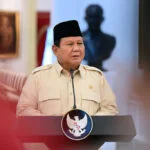
One Year of the Prabowo–Gibran Administration: Stability Maintained, Defense Independence Strengthened, and Democracy Remains Open

Jakarta – President Prabowo Subianto and Vice President Gibran Rakabuming Raka’s administration marks its first year with positive achievements in maintaining national stability amid various political, economic, and legal dynamics.
According to Khairul Fahmi, Co-Founder of the Institute for Security and Strategic Studies (ISESS), the government’s success over the past year is not only about managing crises, but also about keeping public communication channels open and effective.
“The government has successfully maintained national stability by promptly and responsively addressing policy corrections. This is crucial to prevent political and social dynamics from escalating into prolonged tensions,” said Fahmi in an interview with a Jakarta-based radio station.
He added that the government’s swift response to the unrest at the end of August demonstrated a strong commitment to preventing public emotion from escalating into broader insecurity. Unlike some other countries, Indonesia immediately opened up communication and dialogue, allowing potential crises to be contained early.
The government managed to prevent the situation from turning into public defiance by ensuring that democratic channels remained functional and open. He emphasized the importance of the government maintaining these channels so that the public does not resort to alternative platforms in the digital space, which are vulnerable to misinformation and polarization.
In addition, one of the key achievements of the government over the past year has been President Prabowo’s commitment to strengthening the independence of the national defense industry.
“Efforts to strengthen PT Dirgantara Indonesia, PT Pindad, and PT INKA continue to reduce dependence on imported defense equipment,” Fahmi explained.
According to him, achieving independence requires access to key technologies and is a long-term process. In the meantime, procuring major defense systems from abroad serves as both a learning opportunity and a means to strengthen diplomatic relations with other countries.
On the same occasion, Fahmi also highlighted the phenomenon of mass mobilization driven by social media algorithms.
“There’s a lot of misinformation, slander, and hate speech fueling polarization in the digital space. The government has been responsive with official clarifications and coordination with digital platforms,” he said.
He stressed the importance of public digital literacy as a key factor so that people can be more critical and less easily provoked by hoaxes.
In terms of pro-people programs, Fahmi assessed the government’s implementation as generally good, despite existing challenges. He gave the Prabowo–Gibran administration a score of 8 out of 10 for its first-year performance.
“What needs improvement is public communication so that people can better understand the government’s achievements and policies. The formation of the Government Communication Agency (BKP) is a timely step to strengthen national communication,” he noted.
Furthermore, government oversight has become more effective, with numerous corruption cases being uncovered. Strict supervision allows irregularities to be detected quickly. The government must remain consistent in its oversight and anti-corruption efforts.
Fahmi likened President Prabowo to a pilot, the ministers as cabin crew, and the people as passengers.
“The government must ensure that all passengers feel safe and comfortable on the journey toward a better shared future,” Fahmi explained.
With these achievements, the first year of the Prabowo–Gibran administration has shown promising and positive reforms, strengthening the foundation for a stable, independent, and democratic future for Indonesia.
(/rls)*
