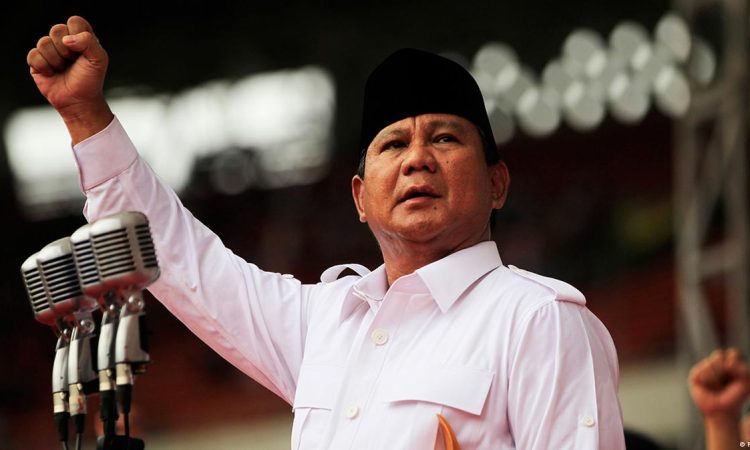

Jakarta — The first year of President Prabowo Subianto and Vice President Gibran Rakabuming Raka’s administration marks a new era of national development driven by self-reliance. Tangible achievements can be seen across three strategic sectors — energy, food, and human resources (HR) — all serving as the core foundations for a sovereign and prosperous Indonesia.
In the energy sector, the government has made significant strides toward energy self-sufficiency. Minister of Energy and Mineral Resources (ESDM), Bahlil Lahadalia, revealed that national oil lifting increased from 580,000 barrels to 605,000 barrels per day during the first year of the Prabowo–Gibran administration. Moreover, the share of renewable energy in the national energy mix rose from 11 percent to 15.5 percent, signaling concrete progress in the country’s energy transition agenda.
Bahlil emphasized that achieving energy self-sufficiency requires patience and hard work, as the sector operates differently from food production. He explained that energy production demands large capital, advanced technology, and lengthy exploration periods — at least three years.
“With food, you only need land and fertilizer — three months and you can harvest. But energy takes time, technology, and, of course, prayers that our natural resources reveal themselves,” he remarked.
The push for energy self-sufficiency reflects the government’s commitment to strengthening national resilience amid global challenges. The increase in oil and gas production and the expansion of renewable energy show that Indonesia is beginning to stand on its own feet in meeting its domestic energy needs.
Meanwhile, in the food sector, the government has accelerated its self-sufficiency target — originally projected to take four years — achieving it within just one. Professor Lilik Sutiarso, from the Faculty of Agricultural Technology at Gadjah Mada University (UGM), described this milestone as proof of cross-sectoral synergy and farmer-oriented policies.
“Productivity trends are rising, rice stocks have surpassed four million tons, and efficient distribution policies have been the key to success,” he said.
The Ministry of Agriculture also reported a notable achievement: a 0.13 percent deflation in rice prices in September 2025 — the first in five years. Minister of Agriculture Andi Amran Sulaiman considered this proof of Indonesia’s strengthening food security.
“Our food supply is safe — even surplus. National production can now meet demand, eliminating the need for imports,” he affirmed.
These achievements not only stabilize prices but also strengthen public confidence in the government’s performance. A Kompas Research and Development survey found that public satisfaction with agricultural policies remains high, driven by rising production and efficient distribution.
Beyond energy and food, the Prabowo–Gibran administration has also reinforced the human resources sector through two flagship initiatives: Free Health Checkups (CKG) and Free Nutritious Meals (MBG). The CKG program has reached tens of millions of citizens in under a year, providing preventive health services at no cost. Meanwhile, MBG combines social and economic missions by involving thousands of MSMEs in supplying local food ingredients — generating new jobs across regions.
Together, these programs demonstrate that the government’s focus extends beyond economic growth — toward ensuring comprehensive social welfare. Prabowo and Gibran’s first-year approach highlights an integrated development model, where energy and food sovereignty advance in tandem with human capital improvement.
With these achievements, Indonesia now strides confidently toward sustainable national self-reliance. The first year of the Prabowo–Gibran administration has laid a strong foundation for realizing the grand vision of Indonesia Emas 2045 — a nation that is sovereign, self-sufficient, and prosperous in every field.
