

By: Dirandra Falguni
Chronic diseases such as diabetes, hypertension, and heart disorders continue to pose a major issue in Indonesia’s healthcare system. Many cases are detected too late, making their treatment more complex and expensive. Amidst these challenges, various free health check initiatives (CKG) from the government and private sector have emerged as real and effective preventive measures. This program serves as a proactive solution for early detection of health conditions that can have long-term impacts.
One concrete form of the free health check service, which was initially available only to people celebrating their birthdays, is now open to the general public with a daily quota of 30 people. Health Minister Budi Gunadi Sadikin revealed that this service covers comprehensive health checks for people of all ages, from infants to the elderly. To date, nearly 2 million Indonesians have taken advantage of this service at public health centers (puskesmas). However, two other concerning diseases, namely high blood pressure and diabetes, continue to raise alarm. These two diseases are known as “silent killers” that can cause serious complications if not addressed early.
The majority of participants are younger people, who are familiar with the “Satu Sehat Mobile” app. However, for elderly individuals who may struggle with technology, puskesmas staff offer direct assistance on-site. The health check examinations are tailored to different age groups. For infants, screenings such as congenital hypothyroidism (SHK) and heart defect detection are carried out. For productive-age individuals, vital signs checks (TTV) are performed, while those over 40 years old receive heart record examinations.
Additionally, dental health services, laboratory tests, and screenings for breast cancer and cervical cancer for women are available. Each patient needs approximately one hour, so the service is not only comprehensive but also thorough. However, challenges such as technological barriers and delays in sending SHK results to the nearest city center remain a concern.
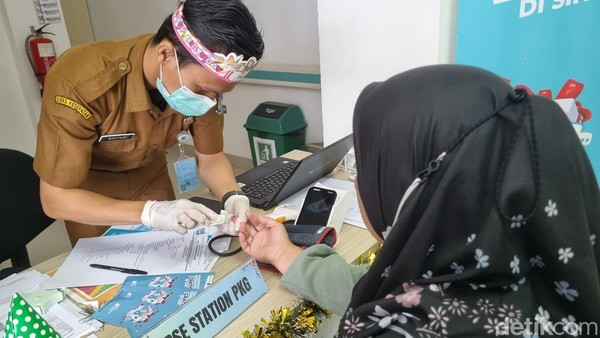
A similar initiative is being carried out by the local government with free health checks for all civil servants (ASN) within the Jombang Regional Revenue Agency (Bapenda). These checks include blood pressure, blood tests, and health screenings for the past two weeks.
The Head of Bapenda Jombang, Hartono, S.Sos., M.M., emphasized the importance of maintaining optimal health among ASN in order to continue serving the public effectively. Meanwhile, Joko Muji Subagyo from the Bapenda Secretariat added that this program serves as a concrete example for the public to pay more attention to their own health. This program not only boosts civil servants’ productivity but also fosters a healthy lifestyle culture within the government workforce.
Private sector support is also evident through the “Cek Segitiga” program, organized by PT Dexa Medica. Held at the Gelora Bung Karno (GBK) area in Jakarta, this program attracted over 1,000 participants from various backgrounds. The services provided include blood pressure, cholesterol, blood sugar checks, and free health consultations.
President Director of PT Dexa Medica, V. Hery Sutanto, explained that this event is a form of support for the national health program initiated by President Prabowo Subianto and the Ministry of Health. Hery emphasized that many people are unaware of their health conditions until it’s too late. Early detection helps reduce the risk of complications from the start.
The event also featured educational activities such as poundfit, interactive games, and online consultations through the D’Konsul app. Eight medical professionals, including two doctors from Husada Jakarta Hospital, were involved in the screening service. This year, the Cek Segitiga program aims to reach over 5,000 participants in eight major cities across Indonesia.
Senior Product Manager of the Office Group of Benefits (OGB) PT Dexa Medica, Gerry Nio, revealed that high cholesterol was the most common finding in the previous program. This highlights the importance of public education on routine screenings, especially for those with a family history of chronic diseases.
Starting in February 2025, all citizens, from infants to the elderly, will be able to take advantage of this program regularly. Routine check-ups are essential in maintaining good health and preventing chronic diseases from silently developing in the body.
Chronic diseases often develop without significant symptoms until they reach an advanced stage. Therefore, health screenings are the most effective way to prevent conditions from worsening. By knowing one’s blood pressure, cholesterol levels, or blood sugar early on, individuals can make lifestyle changes or receive treatment before complications arise.
The initiatives from various sectors show that public awareness of the importance of health is growing. The free health checks provided are not just direct assistance but also a strong educational campaign for the community to adopt healthy living habits.
The synergy between the government, private sector, and public healthcare facilities shows that the free health check program is not just a temporary project but an important foundation for achieving the vision of Indonesia Sehat 2045. A society that is aware of the importance of early detection will be more resilient in facing the threat of chronic diseases.
With various free health check programs reaching all age groups and professions, the hope is not only to reduce the incidence of chronic diseases but also to increase national productivity, as a healthy population is the key to the nation’s progress.
