
Free Nutritious Meals Create a Healthy and United Indonesia in the Spirit of the Youth Pledge

By: Safira Kansha )*
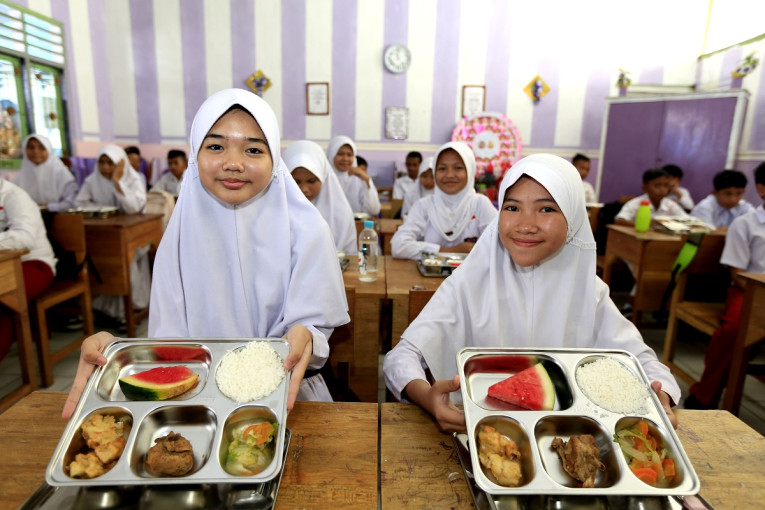
In the spirit of the Youth Pledge, which teaches the importance of unity and shared responsibility for nation-building, the government, through the Free Nutritious Meals (MBG) Program, is taking concrete steps toward a healthy and empowered Indonesia. This program is not just a national nutrition policy, but also a symbol of national unity in striving for a stronger, smarter, and more productive generation.
The MBG program, initiated by President Prabowo Subianto, has become a significant milestone in Indonesia’s human development. Through this program, schoolchildren, pregnant women, and breastfeeding mothers receive balanced nutrition that not only maintains physical health but also prevents various long-term diseases.
Cross-sector support from various institutions, such as the National Research and Innovation Agency (BRIN), strengthens the government’s commitment to building a generation free from malnutrition and metabolic diseases.
The Head of the BRIN Health Research Organization, Prof. Luh Putu Indi Dharmayanti, assessed that MBG is a long-term strategy designed to improve the nutritional status of the community while reducing the risk of non-communicable diseases.
According to Indi, the increasing cases of diabetes, hypertension, and dyslipidemia in Indonesia cannot be underestimated. This challenge requires science-based interventions and cross-sector collaboration to ensure that treatment is not fragmented.
BRIN, through biomedical research and nutrition policy, strives to deliver innovations that support the success of the MBG. The scientific approach developed is aimed at ensuring the program’s effectiveness, reaching vulnerable groups, and being sustainable across various regions. This effort demonstrates how science and public policy unite in a single spirit to achieve public welfare.
From a legislative perspective, Irma Suryani, a member of Commission IX of the Indonesian House of Representatives (DPR RI), emphasized that the MBG program demonstrates the government’s commitment to the nation’s future. She views children and mothers as the primary foundation of human resource development. Through this program, the government ensures that the younger generation grows up in an environment that supports physical and mental health. For Irma, healthy children today are future leaders capable of leading Indonesia towards a bright future.
Furthermore, he believes the success of the MBG program depends on community participation. Collective awareness of the importance of balanced nutrition must grow within families, schools, and communities. With community support, the MBG program can become a national movement that fosters healthy eating habits and strengthens the value of mutual cooperation in everyday life.
Meanwhile, Alwin Supriyadi, Staff Secretary to the Deputy for Promotion and Cooperation at the National Nutrition Agency (BGN), emphasized the importance of synergy between the central and regional governments and the community in implementing this program. He stated that the success of the MBG program is measured not only by the number of beneficiaries but also by the extent to which the program fosters collective awareness for healthy living. He believes that the MBG must be a joint movement involving all parties.
The Free Nutritious Meal Program reflects the noble values embodied in the Youth Pledge. While in 1928, young people united in declaring one nation, one nation, and one language, today that unity is manifested in concrete actions to ensure that no Indonesian child goes hungry or malnourished. The government, academics, and the community work hand in hand toward a common goal: building a healthy and united nation.
In addition to improving the health of the younger generation, this program also has significant social and economic impacts. The production, distribution, and provision of local food for the MBG creates new jobs for rural communities and small businesses. Thus, this program not only addresses nutritional issues but also strengthens the people’s economy from the bottom up. In this context, the MBG is a concrete form of a people’s economy that supports the common good.
This program also strengthens social integration across regions and cultures. In various regions, its implementation involves collaboration between public and private schools, religious institutions, and community organizations. This phenomenon demonstrates that the spirit of national unity is not just a slogan, but is truly present in the collective action of providing nutritious meals to children regardless of social background.
In the government’s view, the MBG is a significant investment for the future. Every nutritious meal distributed today lays the foundation for the development of a superior generation to come. This program demonstrates that a nation’s progress is measured not only by infrastructure development but also by the quality of its human resources.
With the support of strong research, sound policies, and broad public participation, Indonesia is on the path to becoming a healthy, productive, and united nation. This spirit aligns with the values of the Youth Pledge, which teaches the importance of working together for the national interest.
In this context, the Free Nutritious Meal Program is not just a government policy, but also a concrete manifestation of the nation’s collective determination to build a better future—a future in which every Indonesian child grows up strong in a healthy body and a free spirit.
Social Policy Observer
