

By: Zabilla Wulandari
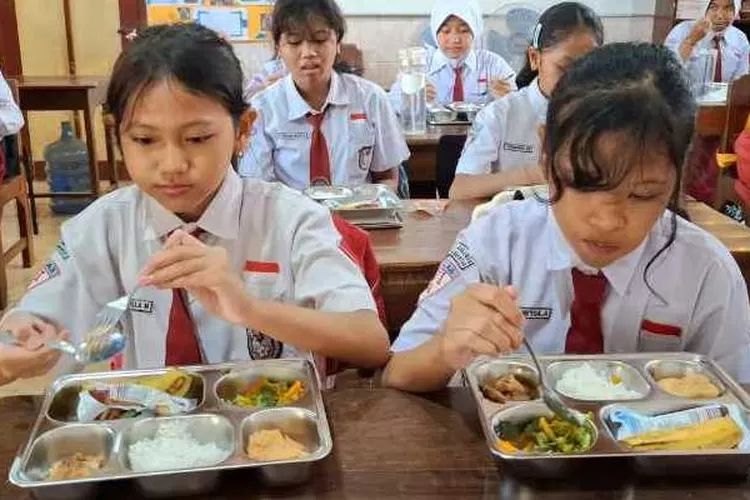
The Indonesian government is intensifying its commitment to reducing the prevalence of stunting through the Free Nutritious Meals Program (MBG). This program is considered a key strategy in addressing the stunting issue, given that data from 2023 shows that 21.5% of Indonesian children suffer from this condition. With the official launch of the program in early 2025, great expectations are placed on it to create a healthier and smarter generation.
The MBG program not only focuses on providing nutritious meals to school children but also extends its reach to pregnant women, breastfeeding mothers, and toddlers. The aim is to ensure that these vulnerable groups receive adequate nutrition to support optimal growth and development. The government is integrating this program with existing stunting prevention efforts, such as nutritional interventions during pregnancy and regular monitoring through Posyandu (Integrated Service Posts) and Puskesmas (Community Health Centers).
Coordinating Minister for Food Affairs Zulkifli Hasan (Zulhas) explained that there is a significant overlap between the goals of the MBG program and stunting prevention efforts. Therefore, strong synergy is required to ensure that both initiatives work effectively.
According to Zulhas, in addition to reducing the existing stunting rate, this program is also expected to prevent new cases of stunting from emerging. He added that the roles of Posyandu and Puskesmas are critical in monitoring public health status and ensuring that nutritional interventions are accurately targeted.
With more than 300,000 Posyandu and 10,000 Puskesmas across Indonesia, these institutions serve as key drivers in monitoring the nutritional status of the population, identifying stunting cases, and providing appropriate interventions. Data collected through Posyandu, such as “by name by address” information, helps determine priority areas and target groups that require more attention. This data-driven approach allows the government to distribute aid efficiently and effectively.
The Ministry of Population and Family Development is also actively involved in the program’s implementation. Minister Wihaji explained that the ministry has partnered with the National Nutrition Agency (BGN) through a memorandum of understanding for the program’s execution. This collaboration focuses on pregnant women, breastfeeding mothers, and toddlers as part of a strategic effort to reduce stunting.
The government will prepare data on the number of beneficiaries and distribute nutritious meals directly to their households. Nutritional status will be monitored through Posyandu, with a focus on identifying nutritional changes.
Wihaji emphasized that the MBG program faces its own set of challenges, as it differs from food distribution in schools. While providing meals to students can be done directly at educational institutions, distributing nutritious meals to pregnant women and toddlers requires more effort to ensure that the food reaches targeted households, especially in remote areas. However, the government remains optimistic that the technical scheme designed in collaboration with BGN will allow the program to be implemented effectively.
The Head of the National Nutrition Agency, Dadan Hindayani, also highlighted the importance of meeting nutritional needs in accelerating stunting reduction. According to him, the growing population in densely populated areas makes ensuring adequate nutrition a priority. The MBG program is seen as a strategic step that requires full support, as the future of the nation depends on a healthy and competitive young generation.
Dadan explained that his agency has identified over 200 pregnant women, breastfeeding mothers, and toddlers as the primary targets of the program. Monitoring and evaluation will be carried out regularly through Posyandu in each region.
In addition to distributing nutritious meals, nutrition education is an integral part of the program. Beneficiary families will be educated about the importance of healthy eating to ensure that positive changes in eating habits can be sustained. This education is expected to raise public awareness about the importance of balanced nutrition for children’s growth and development.
Another challenge faced by the government in implementing this program is environmental factors such as access to clean water, sanitation, and early marriage. However, the main focus remains on improving nutritional intake as the most strategic initial step. The government also ensures that the large budget allocation for the program, which is IDR 71 trillion at the beginning of 2025 and will increase to IDR 171 trillion by the end of the year, is used effectively to support various aspects of its implementation.
The program not only offers health benefits but also creates positive social and economic impacts. By reducing stunting prevalence, the quality of life for communities can improve, thereby boosting productivity and economic development. The success of this program also strengthens Indonesia’s position in achieving sustainable development goals, particularly in the areas of health and well-being.
President Prabowo Subianto has made the MBG program one of his administration’s top priorities. This program reflects the government’s commitment to the welfare of the marginalized and is part of a larger vision to create Indonesia’s golden generation by 2045. By investing in strong human resources, the nation is expected to be able to compete globally.
In conclusion, the Free Nutritious Meals Program is a concrete step taken by the government to create a healthier and more prosperous Indonesia. With full support from all stakeholders, including the government, educational institutions, society, and the private sector, this program is expected to continue to grow and have a positive and sustainable impact on all Indonesians.
)* Public Policy Analyst
