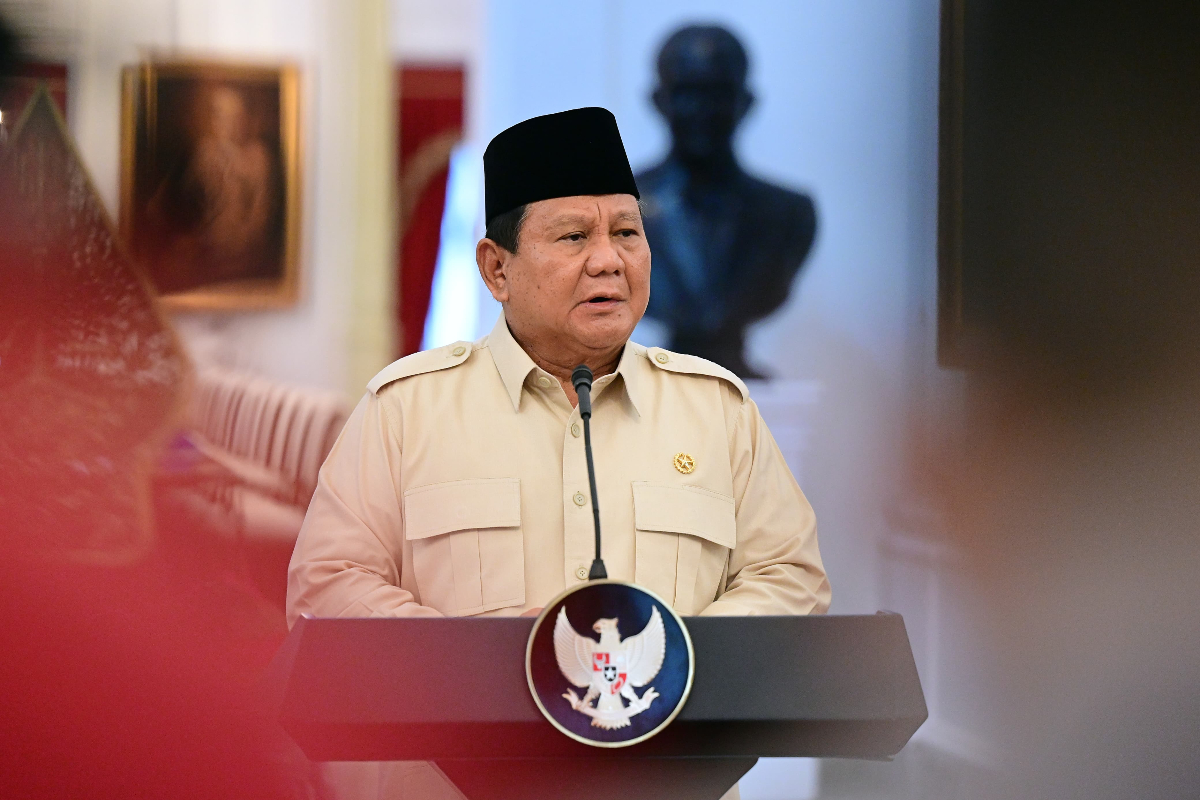
One Year of President Prabowo’s Asta Cita in Progress: Strong Food, Powerful Energy, and Resilient Human Capital

Jakarta — The first year of President Prabowo Subianto and Vice President Gibran Rakabuming Raka’s administration closes with a series of milestones across three key pillars of Asta Cita: food self-sufficiency, energy independence, and human resource development (HRD). Evaluations from researchers, academics, and policymakers indicate a rising trend of public trust, improved program infrastructure, and tangible socio-economic impact at the grassroots level.
Kompas Research and Development (Litbang Kompas) researcher Agustina Purwanti noted that the Ministry of Agriculture (Kementan) has demonstrated “visible results” in strengthening national food security. Public confidence in the Ministry’s ability to improve farmers’ welfare reached 77%, with 61.5% of respondents satisfied with the national food security programs.
“The satisfaction level toward the Ministry of Agriculture’s performance stands at 71.5 percent — quite a strong figure. This reflects how many of the Ministry’s initiatives are aligned with government-led food security programs,” said Agustina.
UGM Professor of Agricultural Technology, Prof. Lilik Sutiarso, linked these findings to practical field policies such as land optimization, distribution reform, and SPHP rice programs that benefit both farmers and consumers.
“The President has made it clear that food sovereignty is a pillar of national sovereignty. Therefore, this collaborative effort must be maintained and strengthened,” he stated.
At the upstream level, the Ministry of Agriculture activated the Information Acceleration Task Force, which maps food self-sufficiency issues, grain absorption, fertilizer availability, irrigation programs, and new rice field development — while reporting the absorption of 65 million tons of milled dry grain (GKP) from mills of various scales.
Senior Kompas Researcher Budiawan Sidik Arifianto reported that farmer satisfaction with the Ministry’s policies reached 84%, driven by the increase of the government purchasing price (HPP) for GKP from Rp5,500 to Rp6,500/kg, which helped sustain optimism and planting enthusiasm.
“Overall, 77 percent of respondents believe the HPP increase has improved farmers’ welfare. Among direct agricultural workers — farmers and livestock breeders — satisfaction is even higher, reaching 84 percent,” Budiawan explained.
The President’s statement at the UN General Assembly, setting Indonesia’s ambition to become the world’s food barn, further reinforces domestic programs. Cross-sectoral support followed suit: the Ministry of Environment and Forestry accelerated social forestry-based agroforestry across 8.3 million hectares, ensuring food supply without sacrificing sustainability. Meanwhile, Minister of Agriculture Andi Amran Sulaiman partnered with the National Cyber and Encryption Agency (BSSN) to secure digital transformation in agriculture, aligned with national sovereignty and food independence goals.
In the energy sector, Minister of Energy and Mineral Resources (ESDM) Bahlil Lahadalia recorded two major leaps within one year: oil production (lifting) rose from 580,000 to 605,000 barrels per day, and the share of renewable energy in the power grid increased from 11% to 15.5%.
“Through Ministerial Regulation No. 14 of 2025 on Cooperation in Managing Oil and Gas Working Areas, the government aims to improve governance of community-operated oil wells, ensuring order, safety, and sustainability,” Bahlil stated.
In financing, Danantara has prepared the transition investment pipeline. CEO Rosan Roeslani projected that waste-to-energy (PSEL) investments across 33 cities will reach Rp91 trillion.
“The total investment could reach around Rp91 trillion across 33 regions, depending on local waste capacity — about 1,000 tons per day on average,” Rosan explained.
In the human capital pillar, the National Nutrition Agency (BGN) confirmed that over 11,000 Nutrition Service Units (SPPG) are operational, with Head Dadan Hindayana targeting full SLHS certification to ensure food safety. BGN data shows 11,362 active SPPGs, while BKKBN Head Wihaji reported that 1.32 million pregnant and breastfeeding mothers and non-preschool toddlers have benefited from the Free Nutritious Meals (MBG) program as of September 17, reflecting expanded coverage for vulnerable groups.
The Free Health Checkup (CKG) program, aimed at 60 million beneficiaries this year, continues through community health centers (puskesmas), posyandu, schools, BPJS clinics, workplaces, and communities. In education, the Sekolah Rakyat initiative is being expanded nationwide. For talent acceleration, Minister of Science and Higher Education Brian Yuliarto targets 100 Garuda Schools to be operational by 2029 — 80 transformed and 20 newly established — as a “fast track” to nurture Indonesia’s next generation of researchers and industrial innovators.
“Through these schools, more Indonesian students are now gaining access to top universities both domestically and abroad,” Brian affirmed.
The HR ecosystem is also supported by salary reform policies. Presidential Regulation No. 79/2025 includes salary increases for civil servants — particularly teachers, lecturers, health workers, and agricultural extension officers — as part of the “Quick Best Results” program. Meanwhile, in micro-entrepreneurship, the Coordinating Ministry for Economic Affairs extended the 0.5% final income tax rate for MSMEs until 2029, helping sustain cash flow and expansion capacity.
