
Prabowo Effect Increases Investor Interest and Confidence in Anticipation of Economic Weakening

By: Rivka Mayangasari*)
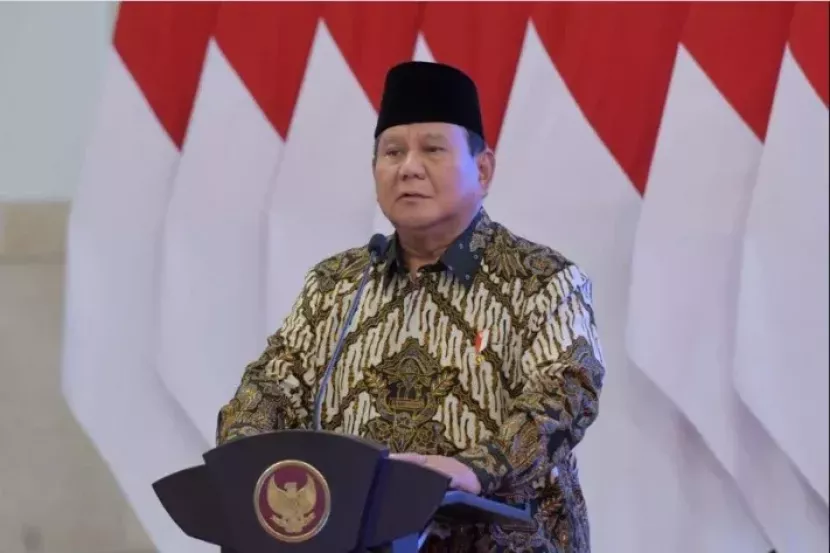
Amid increasingly complex global dynamics and the potential for a weakening world economy, Indonesia is actually showing strong signs of resilience and optimism. This is inseparable from the presence of the President of the Republic of Indonesia, Prabowo Subianto, who is considered to have succeeded in bringing fresh air to the world of investment and Indonesian economic diplomacy. This phenomenon is widely known as the Prabowo Effect, a term that refers to the increasing interest and trust of investors in Indonesia as a direct impact of President Prabowo’s leadership and strategic approach on the international stage.
Deputy Chairman of the Indonesian Chamber of Commerce and Industry (Kadin) for Technology and Digital Transformation, Teguh Anantawikrama, highlighted that President Prabowo’s presence with the Kadin delegation in various international forums has had a very positive real impact on the global perception of Indonesia. According to him, Indonesia’s image as an open, collaborative, and serious country in building strategic cooperation is further strengthened by President Prabowo’s active communication with world leaders and global business actors.
Teguh said that the steps taken by President Prabowo were not merely aimed at image building, but had an extraordinary effect that was directly felt by partner countries. He said that international partners were beginning to see Indonesia’s seriousness in building cross-sector collaboration.
He also explained that in the first four months of 2025, the value of foreign direct investment (FDI) commitments entering Indonesia recorded the highest record in history. According to him, this achievement is proof that the economic diplomacy strategy implemented by President Prabowo has succeeded in building a significant level of international trust. In addition, other driving factors are Indonesia’s large economic potential and the government’s commitment to opening up wide cooperation space.
Teguh added that Prabowo Subianto’s figure itself is one of the main reasons for the increase in international trust. According to him, Prabowo’s strong background in defense, his ability to speak foreign languages, and his presence in international forums with national business actors show that the Indonesian government is committed to building an inclusive and collaborative economic ecosystem.
Support for Prabowo’s leadership also came from strategic and academic circles. Founder and Deputy Chairman of the Supervisory Board of the Center for Strategic and International Studies (CSIS), Jusuf Wanandi, expressed his view that the public should assess Prabowo’s leadership objectively based on actual achievements and future challenges.
He said he still believes Prabowo is the best leader to lead Indonesia to face increasingly complex global challenges. Jusuf explained that he gave his support in the last presidential election because he considered Prabowo’s strategic approach to national development to be the most appropriate approach.
Jusuf also expressed his belief that Prabowo’s commitment to the people and the future of the nation is not just rhetoric. He considered that Prabowo’s figure, who is known to be firm, actually holds a humanitarian spirit and genuine concern for the welfare of the Indonesian people. He emphasized that he knows Prabowo personally and can guarantee the depth of this commitment to the people, the nation, and humanity as a whole.
In addition to highlighting the leadership aspect, Jusuf also assessed that the current fundamental condition of the Indonesian economy is relatively stable. He said that economic growth is still in the range of 5 percent and the budget deficit is controlled below 3 percent. This shows that the government is managing the national economy carefully and responsively to global challenges.
He explained that the current fiscal policy provides room for Bank Indonesia to lower interest rates. According to him, this step has the potential to encourage increased investment and domestic consumption. However, he continued to remind that Indonesia needs to pay attention to external challenges, including the dynamics of tariff policies from the United States that could affect the global economy.
Furthermore, Jusuf also assessed the Free Nutritious Meals (MBG) program initiated by President Prabowo as a strategic program that if implemented well, can have a broad impact on economic growth and community welfare. He explained that this program has the potential to create a multiplier effect, starting from strengthening the local agricultural sector to creating new income for the community.
According to him, the positive impact of the program will be felt not only in the short term through increased consumption, but also in the long term through improved child nutrition, strengthening human resources, and growth of the small business sector. However, he also emphasized that in order for the MBG program to be truly accepted and understood by the public, the government needs to provide a comprehensive explanation of the implementation mechanism and its governance.
Prabowo Subianto’s leadership at the beginning of his administration gave a strong signal that Indonesia was ready to enter a more resilient and inclusive phase of economic growth. What is called the Prabowo Effect is now not just an optimistic narrative, but a reality that is directly felt by economic actors, global investors, and the wider community.
With a combination of strategic leadership, active diplomacy, and policies that address the root of the problem, Indonesia is on the right track to anticipate the global economic downturn and instead maximize growth momentum.
*) Economic observer
