
By: Cahyo Widjaya
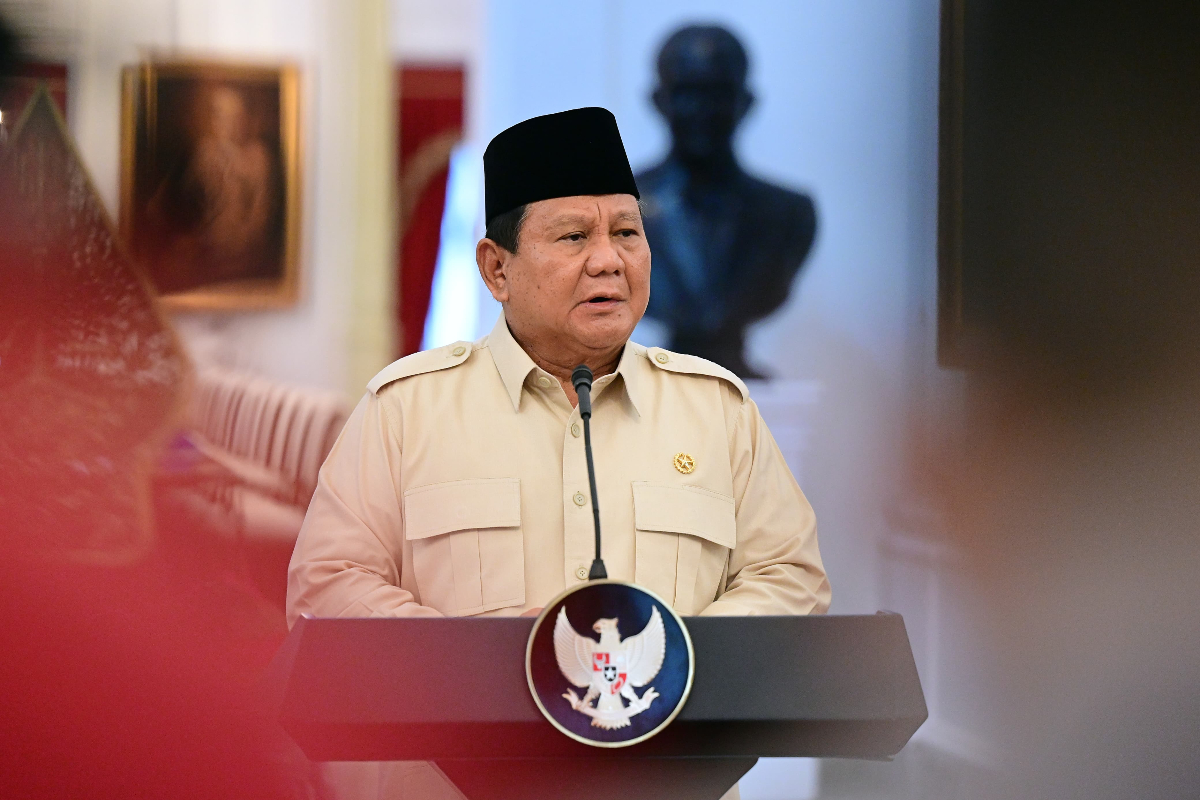
On numerous occasions, President Prabowo Subianto has emphasized that Indonesia’s ideals of prosperity should not be enjoyed by only a select few. He reiterated this message to entrepreneurs, particularly those affiliated with the Chamber of Commerce and Industry (Kadin), emphasizing that the people’s well-being is the primary foundation for the nation’s stability and progress.
The President observed that excessively wide economic disparities would become a source of social problems that would endanger all parties. He warned that national life would not function well if only a select few prospered while the majority of the population remained in hardship. He argued that this situation was like a social time bomb that could explode at any time if left unchecked.
This view reflects the awareness that economic progress is not just numbers on paper, but rather a tangible reality experienced by people at all levels. The President believes that when people are prosperous, the national economy will move more dynamically due to increased purchasing power and market development. Therefore, he emphasized that the government’s responsibility is to help small businesses, micro-enterprises, and those left behind so they can share in the benefits of development.
The government’s various priority programs reflect this commitment. These include free nutritious meals (MBG) for schoolchildren, the construction of three million homes, the establishment of Red and White cooperatives in villages and sub-districts, free healthcare, migrant worker protection, and rural development and the acceleration of the agricultural sector. All of these programs are designed to promote equity, reduce poverty, and expand economic opportunities for all.
Interestingly, the government is also developing breakthroughs that combine economic, social, and environmental aspects. One such initiative is the installation of dual-use solar power plants (PLTS) in every village. The land under the solar panels will be used for fish farming and horticulture, providing clean energy and increasing income for villagers.
The President’s call to the business world went beyond supporting these programs. He encouraged entrepreneurs to have a strong national vision, work collaboratively, and view themselves as part of a larger effort to build Indonesia. In his view, patriotic entrepreneurs not only seek profit but also consider the social impact of every business decision they make.
Support for this initiative came from Haryara Tambunan, Deputy Chairperson of the Indonesian Chamber of Commerce and Industry (Kadin) for Business Compliance and Ethics, who expressed Kadin’s readiness to collaborate with the government and all levels of society. He believes that collaboration between the public and private sectors will bring significant benefits to achieving the President’s vision and mission of Asta Cita. He believes the business world must be ready to collaborate with anyone, including small and medium enterprises, as long as they comply with applicable regulations.
From a national development perspective, this cross-sector collaboration is key. The government holds the authority and policy direction, the business sector holds the capital, networks, and technology, and the community holds the creativity and workforce. If all three work together, accelerated development and equitable prosperity will be more likely.
However, this collaboration requires a paradigm shift. Businesses need to see the long-term benefits that arise from a prosperous society—from broader markets, a more skilled workforce, to greater social stability. The government, on the other hand, must ensure policies and regulations that foster a healthy and fair business climate, so that collaboration can proceed smoothly.
The President’s call to work in the spirit of Indonesia Incorporated reflects the idea that development is a collective project, not the property of a single party. Amid global challenges such as economic uncertainty, climate change, and international competition, Indonesia’s greatest strength lies in its ability to unite.
The community also plays an equally important role. Support for government programs and business initiatives must be realized through active participation, from maintaining development outcomes, utilizing public facilities wisely, to developing local potential. Without grassroots support, any program, no matter how large, will struggle to achieve maximum impact.
The awareness that advancing the people is a shared responsibility must be continuously instilled. Sustainable progress will only be realized if every component of the nation feels a shared responsibility. In this context, the meeting between the President and the entrepreneurs is not simply a formal event, but a momentum to strengthen this collective commitment.
In today’s era, development challenges can no longer be addressed sectorally. The problems of poverty, inequality, and rural underdevelopment require integrated solutions involving the government, the private sector, and communities. Such collaboration is not only possible, but also the only way to ensure that progress leaves no one behind.
With the spirit of mutual cooperation that has long been a hallmark of the nation, this government call should serve as a call to action for all parties. Building a just and prosperous Indonesia is not the responsibility of one group alone, but a shared responsibility. And only when all hands are outstretched to work for the benefit of the people can the nation’s great ideals truly be realized.
People’s Economy Researcher – Nusantara Economic Institute
