

By: Rangga Prasetya
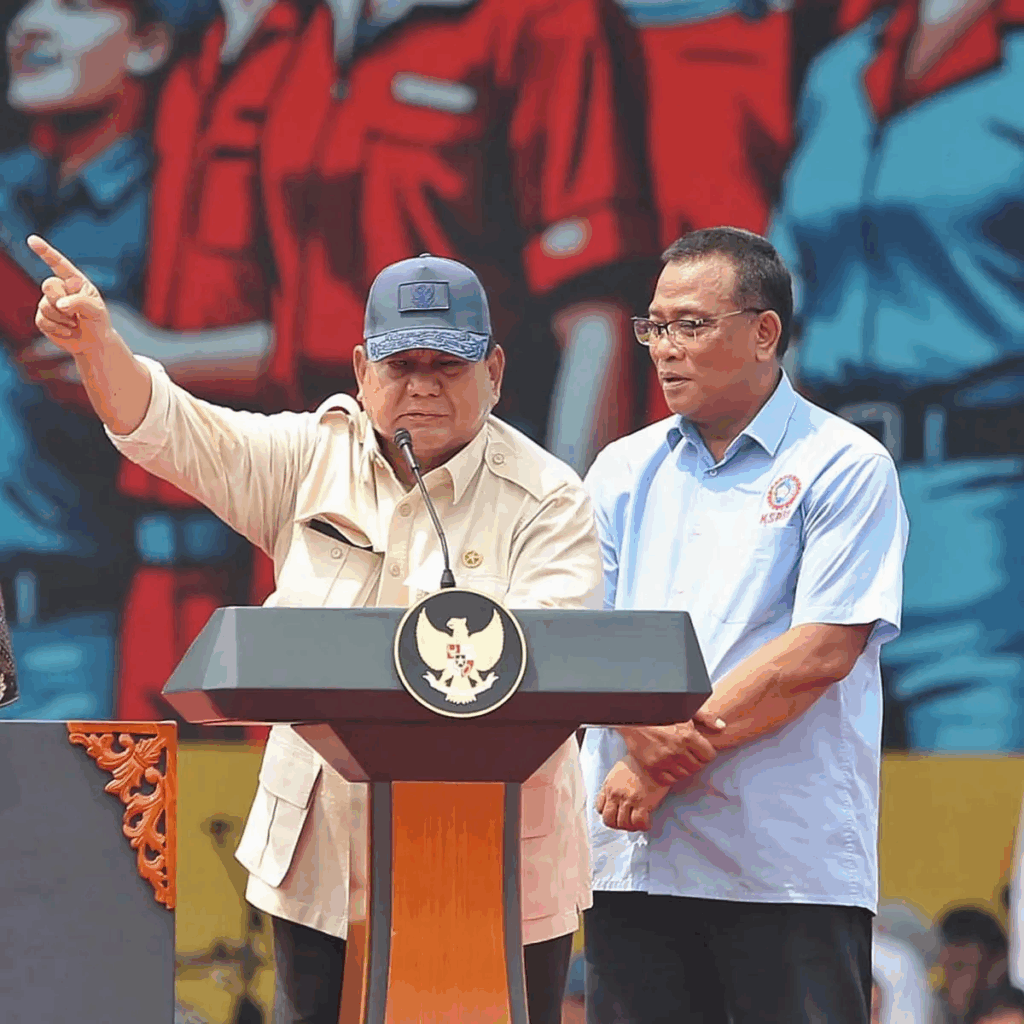
President Prabowo Subianto’s plan to eliminate outsourcing practices deserves broad support as a tangible manifestation of the state’s commitment to upholding workers’ fundamental rights. This decision is not merely a political promise but a strong signal of a new policy orientation that prioritizes social justice and labor protection. In the context of sustainable economic development, fair treatment of workers is not a burden—it is a solid foundation for inclusive growth.
Over the past two decades, outsourcing has remained a highly criticized issue. What was initially intended as an efficiency strategy has instead turned into a tool for stripping away workers’ rights. Many outsourced workers live in uncertainty, receive substandard wages, and lack adequate social protection. This creates a gap of inequality that runs counter to the spirit of holistic human development.
Minister of Manpower Yassierli emphasized the government’s intention to rectify labor practices that have been proven harmful to workers. President Prabowo’s commitment to evaluating the outsourcing system through the Ministry of Manpower and the Labor Welfare Council reflects a systematic and inclusive approach. Effective labor policies must be based on thorough analysis and stakeholder participation, including workers and labor unions.
On the other hand, labor organizations have also welcomed this policy direction. Mirah Sumirat, President of the All-Indonesia Workers Union Association (ASPIRASI), openly described outsourcing as a form of modern-day slavery. This condemnation is not an exaggeration, given the reality on the ground—outsourced workers often receive far lower wages than those paid to permanent employees by parent companies. These discrepancies create grey areas ripe for exploitation, further widening the gap of economic injustice.
Mirah emphasized that abolishing outsourcing is not a utopian idea. On the contrary, it is a realistic and urgent policy for creating a humane labor system. This statement aligns with constitutional principles that every citizen has the right to decent work and livelihood. In this context, the state must ensure that workers are not merely cogs in the production machine, but individuals whose dignity and contributions are respected.
Parliamentary support further strengthens the legitimacy of this policy direction. Edy Wuryanto, a member of Commission IX of the House of Representatives, stated that outsourcing has long perpetuated deep injustices for laborers. He argued that regulations such as Government Regulation No. 35 of 2021 have weakened labor protection and suppressed wages. In other words, regulatory reform is a strategic move to eliminate exploitative loopholes in the labor system.
It is important to note that eliminating outsourcing does not mean rejecting workplace flexibility. However, such flexibility must still prioritize legal certainty and worker protection. Businesses can still operate efficiently without sacrificing basic workers’ rights. This is the time to build a healthier, more transparent, and balanced industrial relationship between employers and workers.
Transforming labor policy will have a positive impact on both workers’ quality of life and national productivity. Workers who have job security and clear rights will be more motivated, loyal, and capable of contributing optimally to both corporate success and national economic growth. This is a key asset for Indonesia in becoming a competitive industrialized nation.
Implementation will not be without challenges. A structured transition process and intensive dialogue between the government, businesses, and labor unions will be essential. Strengthening oversight of labor practices is also critical—through firm legal instruments and accessible, responsive complaint mechanisms. The elimination of outsourcing must be accompanied by schemes that prevent mass layoffs or a decline in the business climate.
Furthermore, the role of media and academics is crucial in overseeing the transition toward a more just labor system. Honest, balanced, and data-driven reporting can help foster a healthy and constructive public discourse. In doing so, every segment of society will gain a deeper understanding of the urgency behind abolishing outsourcing and its long-term contributions to social stability and national economic progress.
This labor reform momentum can serve as a turning point in building an economically just civilization. Policies that prioritize labor protection are a reflection of the state’s allegiance to its most vulnerable citizens. This principle is in line with the national development vision—not only focused on growth figures but also ensuring equitable social welfare.
President Prabowo has demonstrated a progressive, pro-people direction. Now, cross-sectoral cooperation is needed to translate this commitment into concrete policies with broad impact. Through the abolition of outsourcing, Indonesia sends a clear message to the world: economic growth does not require sacrificing workers’ rights, and social justice is not just rhetoric—it is a constitutional mission that must be realized.
The author is an Industrial Relations Analyst.
