

By: Deka Prawira
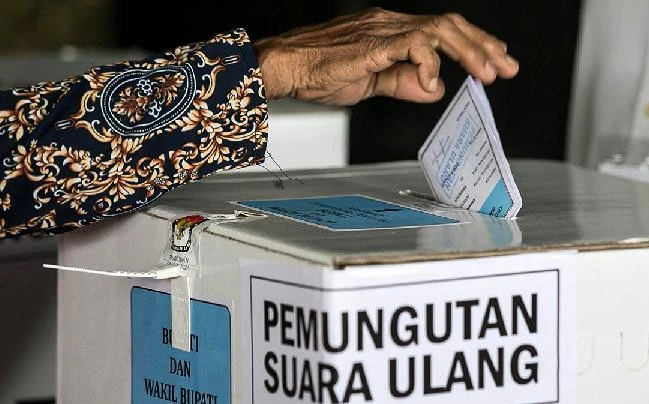
The recent implementation of the Pemungutan Suara Ulang (PSU) (Re-voting) has once again captured national attention, but this process should not be seen as a failure. Instead, it serves as a testament to Indonesia’s commitment to maintaining the integrity of its democracy.
The PSU reflects the firm stance of the General Elections Commission (KPU) and the government under President Prabowo Subianto’s leadership to uphold free, fair, and transparent elections, while ensuring that every citizen’s vote is counted properly.
This move demonstrates the political system’s bravery to self-correct. In a democratic system, addressing mistakes is not a sign of weakness, but rather a source of strength.
PSU has proven to be a constitutional instrument that shows that the electoral process does not end at the voting booth, but instead continues to be monitored and evaluated until the final result reflects the true will of the people of Indonesia.
Bima Arya Sugiarto, the Deputy Minister of Home Affairs, emphasized the importance of conducting a comprehensive evaluation of the PSU. He believes that improvements should be made from the very beginning, addressing the governance of the election process from the outset.
He pointed out that legal loopholes that could lead to disputes in the Constitutional Court (MK) must not be left unaddressed. Thus, the PSU is not just an administrative process, but a reflective moment to further strengthen the democratic system at its core.
Bima also highlighted that the implementation of PSU is politically charged. In this context, neutrality from all parties is essential to ensure that the election process is carried out with high integrity.
Together with Ribka Haluk, the Deputy Minister of Home Affairs, Bima actively monitored the PSU process, supported by the Directorate General of Regional Autonomy and the Directorate General of Regional Finance to ensure budget efficiency and transparency in public spending.
Ribka Haluk views the PSU as a clear demonstration of the government’s commitment to open and accountable democracy. She emphasized the importance of ensuring that the process proceeds smoothly without any non-essential findings that could undermine the legitimacy of the results.
According to Ribka, the hard work of all involved parties should be appreciated, as they ensured that the re-election process not only ran smoothly but also preserved the credibility of the national political system.
She further encouraged PSU to serve as a strategic lesson in improving future election administration. In other words, PSU is not merely a technical re-vote, but a fundamental correction that leads to permanent improvements in Indonesia’s electoral democracy.
Meanwhile, Parsa Harahap, a member of the General Elections Commission (KPU), directly assessed the implementation of the PSU in Bengkulu Selatan. He ensured that the process at 330 polling stations across 11 sub-districts and 158 villages was in full compliance with regulations.
A visit to polling stations such as TPS 03 Kelurahan Padang Kapuk and TPS 02 Desa Batu Lambang reinforced public confidence that transparency was being upheld on the ground.
Parsa, as he is known, also expressed hope that the PSU results would be accepted by all parties without causing new conflicts. He stressed the importance of coordination between KPU and the candidates’ witnesses to ensure that every stage, including vote counting, is open and accountable. For him, the presence of witnesses ensures that there is no room for manipulation or even suspicion during the process.
Moreover, Parsa noted the high voter participation as a positive sign. The enthusiasm of the people in exercising their right to vote in the PSU shows a growing collective awareness of the importance of their voices in democracy. This support indicates that the public is not merely a spectator but an active participant in ensuring that the election is both legally and morally legitimate.
The fact that the public remained enthusiastic about casting their votes in the re-election also indicates that trust in the electoral system remains strong. This reflects the combined efforts of all stakeholders who focus not just on the final outcome but also on maintaining a clean and integral process.
PSU has shown the face of Indonesian democracy, boldly acknowledging and correcting mistakes openly. Transparency in the process, active involvement from all parties, and strict supervision of implementation prove that the correction mechanism within the electoral system is not just a formality but a real safeguard for honesty and fairness in political contests.
The practice of PSU also challenges the public perception that elections are merely a ceremonial event every five years. The re-vote in certain areas illustrates that Indonesia’s democratic system has an internal mechanism capable of filtering out anomalies and returning the process to its rightful path. PSU is not just a technical re-vote but a manifestation of living electoral justice that is functional and ongoing.
Thus, the implementation of PSU should be seen as an important pillar in the democratization of elections in Indonesia. It proves that the national political system has the courage to be honest with its own processes, fair to all participants, and transparent to the public. Democracy is no longer just a constitutional slogan; it is a reality that is present in society through concrete actions like PSU.
The author is a Contributor at Jeka Media Institute
