
By: Bayu Sebayu)*
The government is further tightening food hygiene and safety standards in the implementation of the Free Nutritious Meals (MBG) program. This decisive action was taken following a surge in mass food poisoning cases in several regions, indicating weak hygiene standards in program kitchens. Now, every Nutrition Fulfillment Service Unit (SPPG) or MBG kitchen is required to have a Hygienic and Sanitary Certificate (SLHS) to continue operating.
Coordinating Minister for Food Affairs Zulkifli Hasan emphasized that certification is an absolute requirement to ensure all MBG kitchens meet strict quality standards and health requirements. He stated that it is mandatory for every SPPG to have a SLHS. According to him, the SLHS is written recognition from the Health Office that a kitchen has met proper hygiene and sanitation standards. The government will collaborate with local governments, schools, and the community to oversee its implementation. Relevant ministries and institutions must work together actively and not wait for each other.
This measure is part of a major overhaul of the MBG implementation following a significant spike in poisoning cases in the past two months. Data from the Indonesian Education Monitoring Network (JPPI) shows that victims increased from 1,376 cases at the end of June to 6,452 cases in the last week of September.
Presidential Chief of Staff Muhammad Qodari revealed that the main cause of these cases was the large number of MBG kitchens that lacked SLHS certification and failed to adhere to standard sanitation procedures. Of the 8,583 MBG kitchens operating as of September 22, 2025, only 34 had SLHS certification, while the remaining 8,549 kitchens were uncertified. This means that many kitchens still do not meet hygienic standards.
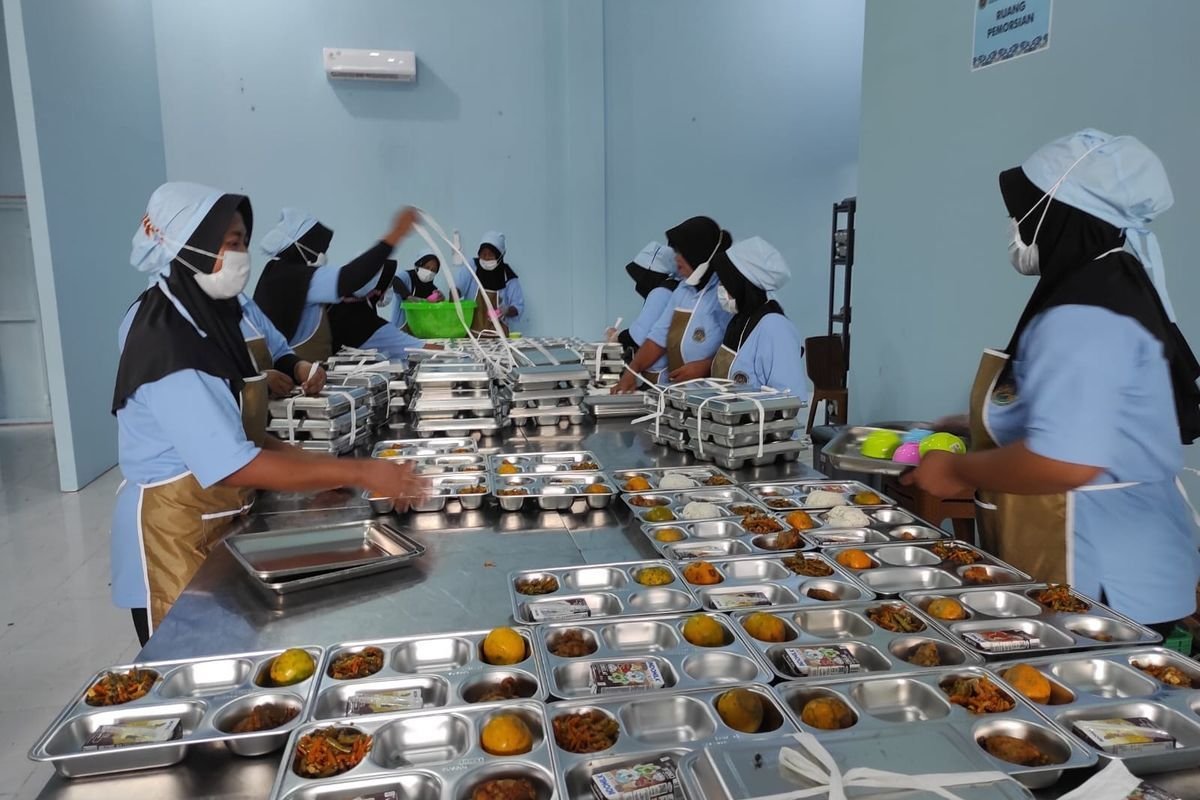
Amidst national efforts to enforce order, the Indonesian National Police (Polri) Food Safety and Sanitation (SPPG) has become an example of hygiene standards worthy of emulation. The Head of the Pejaten Polri SPPG, M. Iqbal Salim, explained that the Polri kitchen has implemented a multi-layered sanitation system at every stage of food processing. The washing process for cooking utensils and food containers, such as ompreng ( food trays ), is carried out in three stages: first, washing with hot water and soap to remove fat and oil; second, brushing and rinsing to remove soap residue; and third, a final rinse using running water without soap. After that, all utensils are dried using a drying oven that functions to kill bacteria.
This process is routinely monitored by the Health Department through environmental health inspections (IKL). The agency also holds a hygienic and sanitation certificate, ISO 2018, and implements the Hazard Analysis and Critical Control Point ( HACCP ) system, Good Manufacturing Practices ( GMP ), and the British Retail Consortium ( BRC ). Furthermore, food ingredients are stored in separate rooms for wet, dry, and seasoning ingredients to prevent cross-contamination. Since starting operations in March 2025, the Pejaten Police Food Service (SPPG Polri) has distributed approximately 3,400 portions of food daily to ten schools in the South Jakarta area. The high standards implemented by the Polri SPPG are proof that with strict kitchen management and compliance with all hygiene certifications, the MBG program can run safely and according to its objectives.
President Prabowo Subianto personally issued strict instructions to strengthen the hygiene monitoring system in all MBG kitchens. In a limited meeting with ministers at his residence on Jalan Kertanegara, Jakarta, Sunday evening (October 5, 2025), the President instructed that all MBG kitchens be immediately equipped with sterilization equipment, food hygiene test kits, and clean water filters.
Cabinet Secretary Teddy Indra Wijaya stated that President Prabowo is serious about food safety within the MBG program, which is a national priority. The President emphasized that cleanliness is paramount. It’s not enough to simply be nutritious; it must also be sterile and safe for consumption.
The President has tasked Dadan Hindayana, Head of the National Nutrition Agency (BGN), to ensure all hygiene equipment is installed by next week. This step is part of the government’s corrective efforts following the mass poisoning cases affecting several students in various regions.
During the meeting, the President also emphasized the importance of synergy between ministries and institutions, including the involvement of the Indonesian National Armed Forces (TNI) and the Indonesian National Police (Polri), to ensure effective oversight. Several ministers and high-ranking state officials were present, including Coordinating Minister for Food Zulkifli Hasan, Coordinating Minister for the Economy Airlangga Hartarto, and Head of the National Land Agency (BGN), Dadan Hindayana.
The government’s decisive steps demonstrate its commitment to restoring public trust in the MBG program, one of the Prabowo-Gibran administration’s flagship programs for improving the nutrition of schoolchildren and low-income communities. With the implementation of strict hygiene standards, from SLHS certification to the use of sterilization equipment and clean water filters, it is hoped that there will be no more poisoning cases that would tarnish the program’s implementation.
This policy also emphasizes that the government is not only focusing on nutritional aspects but also prioritizing the safety of beneficiaries. A combination of kitchen infrastructure improvements, cross-agency oversight, and education for field staff will be key to the long-term success of the MBG program.
President Prabowo even emphasized that every rupiah spent on this program must truly benefit the community. The MBG program is an investment in the nation’s future. We must not be complacent in maintaining its quality.
By implementing stricter hygiene standards and synergizing across institutions, the government is determined to ensure that the Free Nutritious Meals program is not merely a symbol of the state’s concern for its people, but truly becomes a key pillar in improving the quality of Indonesia’s human resources, making them healthy, intelligent, and competitive.
)* Nutrition and Health Observer
