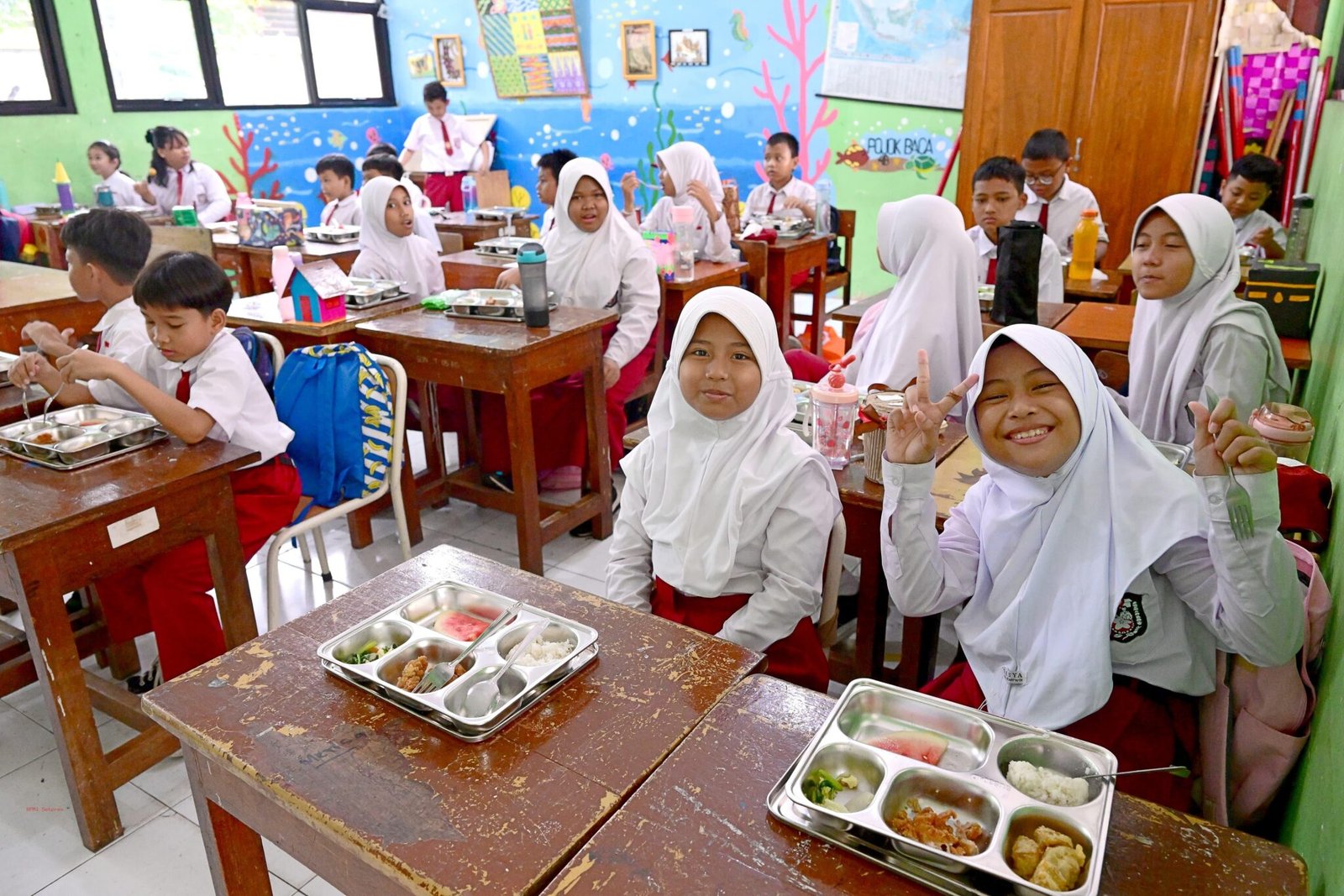

Jakarta – The Indonesian government, through the Ministry of Health (Kemenkes) and the National Nutrition Agency (BGN), continues to improve the monitoring system for the Free Nutritional Meal Program (MBG) by implementing strict daily audits to ensure food quality and safety for all beneficiaries.
Health Minister Budi Gunadi Sadikin revealed that one of the crucial steps in food quality monitoring is the implementation of rapid tests in MBG kitchens. These rapid tests aim to assess the quality of raw materials, water, and cooked food before serving it to the public.
“This rapid test has been implemented in various sectors, such as food for the president, state officials, and Hajj catering, and will now be applied to all food in the MBG kitchen,” said Budi.
According to Budi, the rapid test can detect various harmful organisms, such as salmonella and E. coli, as well as hazardous chemicals like cyanide and formaldehyde, which can harm consumers’ health. The government has ensured that all MBG food service kitchens will be equipped with the facilities to conduct this testing.
Not only that, the Ministry of Health is also committed to monitoring the implementation of this program routinely and internally.
“Daily supervision by BGN is crucial to ensure that the raw materials used in the MBG program are of good quality and safe for consumption, and we will continue to strive to ensure that every meal served to the public is guaranteed in terms of quality and safety,” Budi explained.
The National Food Security Agency (BGN) will directly monitor the entire process, from raw material receipt and processing to food distribution. Furthermore, the Ministry of Health, in conjunction with the Food and Drug Monitoring Agency (BPOM), will conduct external oversight to ensure compliance with applicable food safety standards.
The government has also established certification standards that must be implemented in every MBG kitchen. Three main certifications—the Hygiene Sanitation Certificate (SLHS), the Hazard Analysis and Critical Control Points (HACCP) certification, and the halal certification—will be implemented to ensure that distributed food meets applicable health, safety, and halal standards.
“The MBG kitchen certification process will be accelerated to avoid hindering the distribution of nutritious food,” Budi continued.
To improve the quality of this program’s implementation, Brigadier General Sony Sonjaya, Deputy Head of the National Nutrition Agency (BGN), revealed that the Ministry of Health and BGN are conducting mass training for volunteer food handlers. This training aims to improve understanding of hygiene and sanitation in MBG kitchens.
“This training is a crucial step to ensure all Nutrition Fulfillment Service Units (SPPG) meet established operational standards,” Sony said.
This
effort is all the more crucial given the food poisoning cases that have affected thousands of children in several regions. These incidents have become a starting point for the government to improve the quality of MBG kitchens so that they not only meet administrative standards but are also truly safe for consumers.
By implementing strict daily audits, a rapid testing system for food ingredients, and training for kitchen staff, the government hopes to realize the MBG program that is not only nutritious but also safe for all Indonesians.
