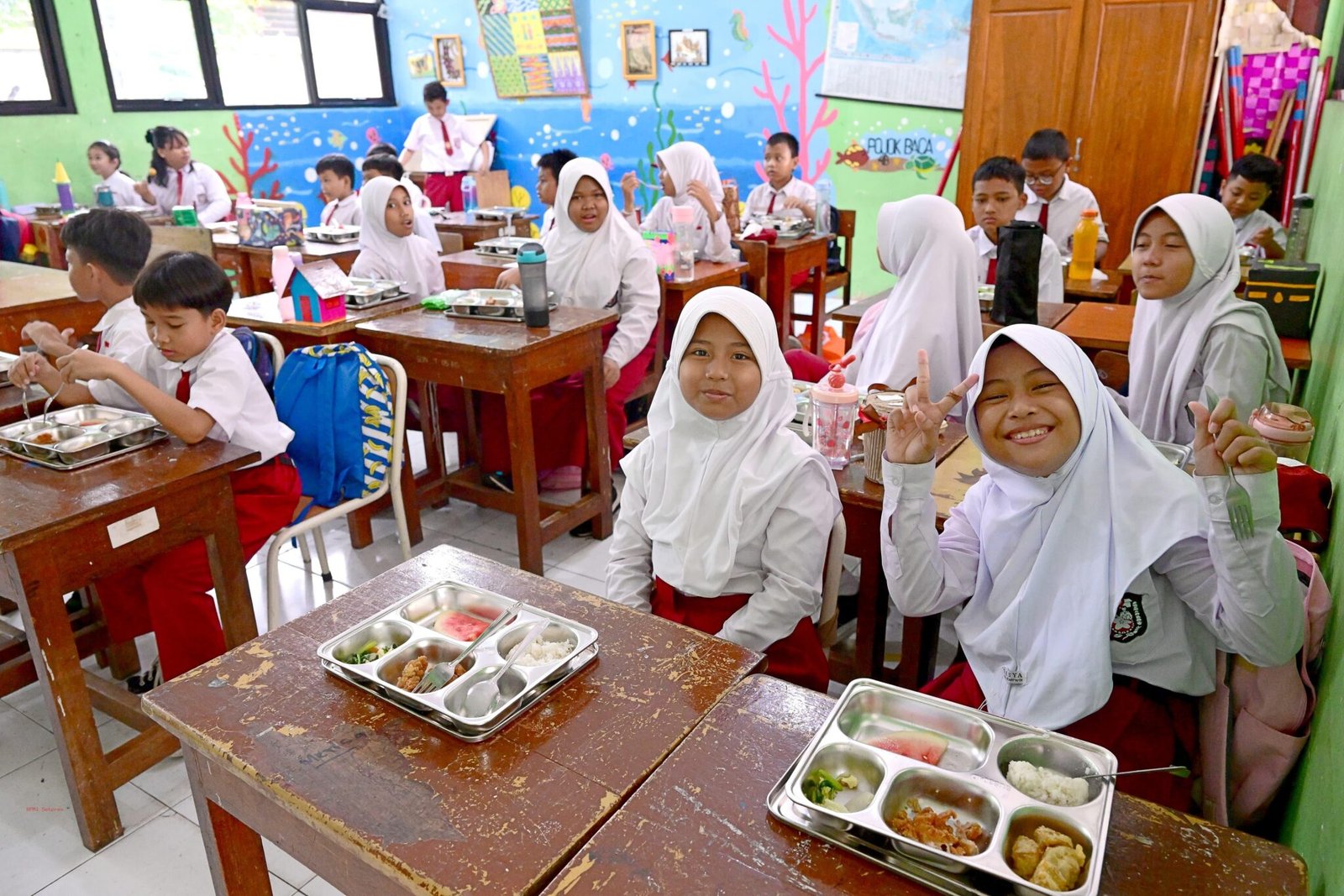

Jakarta — President Prabowo Subianto has promised to improve the sanitation of kitchens under
the Free Nutritious Meals (MBG) program with modern equipment to prevent food poisoning. He emphasized this following a number of food poisoning cases in several regions.
He stated that all MBG kitchens must be equipped with modern sanitation equipment, such as ultraviolet light washing machines, water filters, and test kits for food safety testing before delivery to beneficiaries.
“All kitchens must be equipped with powerful washing machines, using ultraviolet or gas, or very hot water. Water filters must be available, and pre-delivery food testing kits must be available. All kitchens must also have trained cooks,” President Prabowo emphasized.
President Prabowo highlighted the significant achievements of the MBG program, which has reached nearly 30 million beneficiaries across Indonesia. However, he acknowledged the need for hard work to address shortcomings in its implementation.
“It’s not an intentional deviation, but rather a deviation. This is quite encouraging, but of course we want to ensure there’s absolutely no poisoning. Therefore, we continue to work hard [to improve],” he said.
Recent cases of child poisoning in various regions have prompted the government to act quickly to improve the implementation of the MBG program. Accelerating the certification of kitchens or Nutrition Fulfillment Service Units (SPPG) is now a major task in the field.
Thousands of kitchens are now being rushed to obtain a Certificate of Hygiene and Sanitation (SLHS) and Hazard Analysis and Critical Control Point (HACCP), which are international standards in food safety management.
In addition to these two main certifications, the government also requires MBG kitchens to obtain halal certification. This ensures that the food served is not only clean and safe but also complies with halal principles.
Although many MBG kitchens do not yet have certification, there are also many MBG kitchens in the field that have implemented modern sanitation systems and are worthy of being used as examples, one of which is the National Police SPPG on Jalan Siaga, Pejaten Barat, Pasar Minggu, South Jakarta.
The Head of the Pejaten Police SPPG, M. Iqbal Salim, emphasized that sanitation is a top priority. The washing process for cooking utensils and food trays is carried out in layers.
“The first sink uses hot water and soap to dissolve any remaining grease and oil. The second sink removes the soap, and then the third sink rinses with running water. After that, the equipment is dried in the oven, killing bacteria,” Iqbal explained.
He explained that sanitation at the National Police SPPG is routinely monitored by the Health Service through Environmental Health Inspections (IKL). Furthermore, the facility holds various certifications, including SLHS, ISO 2018, HACCP, Good Manufacturing Practices (GMP), British Retail Consortium (BRC), and halal certification.
“The entire production and distribution process has implemented the National Nutrition Agency’s standard operating procedures (SOPs). We are committed to maintaining food quality, ensuring it remains hygienic, nutritious, and safe for consumption,” explained Iqbal
