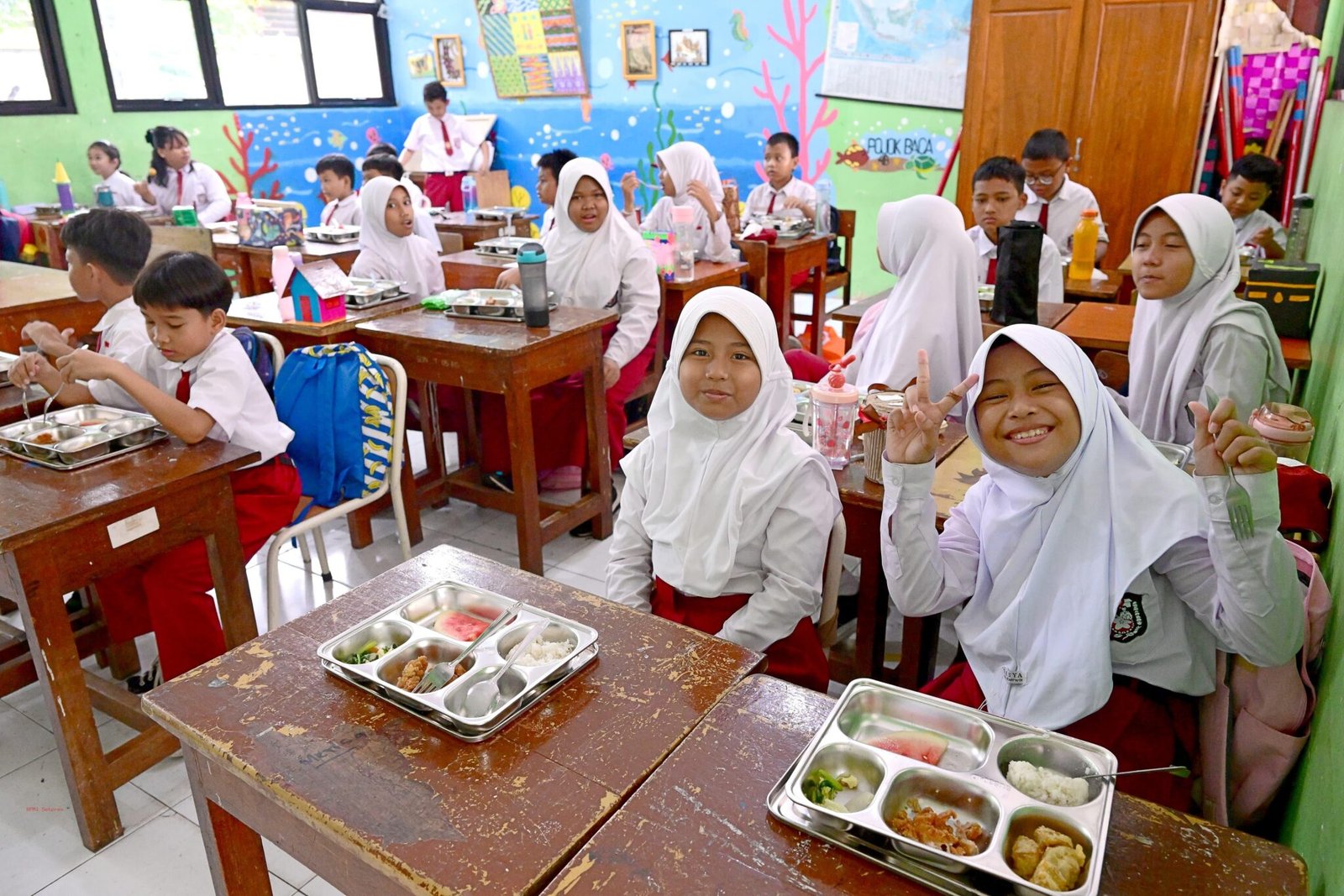
The MBG Presidential Decree is proof that the government is moving quickly to ensure the nutrition of Indonesian children

By: Anggita Prameswari*
The Free Nutritious Meals (MBG) program is one of President Prabowo Subianto’s priority agendas, offering great hope for improving the nutritional quality and future of Indonesia’s young generation. This program is more than just providing food; it is a major national strategy to develop superior human resources that are healthy, intelligent, and productive. The issuance of the Presidential Regulation (Perpres) on MBG Governance is a crucial step that underscores the government’s commitment to ensuring the sustainable and optimal operation of this strategic program.
Deputy Minister of State Secretary, Bambang Eko, emphasized that the President will soon sign this Presidential Regulation. He stated that the draft has been finalized and is awaiting ratification. The imminent target, set before October 5, 2025, demonstrates the government’s commitment to overseeing the sustainability of the MBG. This is clear evidence that the government is moving quickly, responding to the people’s needs, and providing stronger legal certainty for national nutrition governance.
The Head of the National Nutrition Agency, Dadan Hindayana, added that the Presidential Regulation on the National Nutrition Day Program (MBG) is highly urgent. The regulation not only regulates program implementation standards but also strengthens support for the supply chain, distribution management, and cross-ministerial and institutional coordination. This ensures that the MBG will be implemented in a structured, measurable manner, and will reach all levels of society, in line with its primary goal: ensuring that Indonesian children receive nutritious meals every school day.
The Speaker of the Indonesian House of Representatives, Puan Maharani, fully supports the issuance of this Presidential Regulation. According to her, the MBG program is a long-term investment that is non-negotiable, as it concerns the nation’s future. The Presidential Regulation is a crucial instrument for improving and integrating the entire program implementation process. This legislative support confirms that the MBG is a national consensus involving all elements of the state to collectively advance the nation’s children through quality nutrition.
The government has also demonstrated a strong commitment to coordination. Coordinating Minister for Food, Zulkifli Hasan, explained that the MBG Presidential Regulation will regulate the division of tasks among ministries, institutions, and regional governments. This is crucial to ensure all government elements can act in unison, ensuring programs are truly targeted and reach all regions of Indonesia. This spirit of synergy reflects a new governance model that is more efficient, transparent, and accountable.
Beyond coordination, the Presidential Decree also opens up opportunities for strengthening incentives for educators who spearhead the program’s implementation. The Minister of Primary and Secondary Education, Abdul Mu’ti, stated that a support scheme for teachers responsible for the MBG program in schools is being discussed in the Presidential Decree. This step emphasizes that the government is not only focused on providing nutritious food but also considers educators as strategic partners in the program’s success.
A broader perspective reveals that the Presidential Decree on MBG Governance reflects a new paradigm in national development. First, it provides a strong legal framework, ensuring a clear formal legal basis for all program implementation. Second, it ensures the existence of standard operating procedures (SOPs), including food certification, to ensure food quality and safety for Indonesian children. Third, it broadens participation, ensuring that all ministries, institutions, and local governments have clear roles in supporting the program.
President Prabowo Subianto demonstrated responsive and visionary leadership by prioritizing the signing of this Presidential Regulation. Amidst a busy state agenda, his attention to MBG governance reflects the government’s commitment to making child nutrition a key pillar of development. This swift action not only provides certainty for program implementers but also fosters public optimism that the government is fully present to meet the needs of the nation’s future generations.
The MBG program is not just a school meal program, but a long-term investment with far-reaching impacts. Health-wise, children will grow stronger and avoid stunting. Educationally, good nutrition will improve concentration, leading to optimal academic achievement. Socially, this program strengthens a sense of justice, as all children, without exception, have the right to adequate, nutritious food. Economically, the MBG creates opportunities for local farmers, small businesses, and the national food supply chain to develop through the procurement of raw materials.
With the issuance of the Presidential Regulation on MBG Governance, the government affirms that there is no room for doubt regarding the sustainability of this program. The Presidential Regulation is not merely a regulation, but a symbol of the state’s commitment and swift response to protecting and advancing the nation’s future generations. It also serves as a solid foundation for MBG not only to survive but also to continue to develop and adapt to the needs of the times.
The issuance of this Presidential Decree also demonstrates a new approach to national strategic program governance: swift, responsive, and future-oriented. Support from all elements of government, from the executive, legislative, and regional governments, further emphasizes that the MBG is a shared program shared by the entire nation. This is clear evidence that the government is not merely making promises but is taking concrete action for the future of Indonesia’s children.
Ultimately, the Presidential Decree on MBG Governance is a crucial milestone ensuring this strategic program continues to run according to the people’s expectations. It serves as evidence of the government’s swift response, strengthened national governance, and noble commitment to preparing Indonesia’s golden generation. With a strong regulatory foundation, the MBG will continue to thrive, delivering significant benefits, and becoming a monumental policy legacy for the nation’s future.
*The author is a government policy observer
