
By: Aditya Haryono )*
The Free Nutritious Meals (MBG) Program, initiated by President Prabowo Subianto, is one of the most visionary and humane policies in the history of Indonesian human development. Amidst the challenges of nutritional inequality and rising stunting rates, the MBG program represents a concrete manifestation of the state’s presence in ensuring the future of the younger generation. This program goes beyond simply providing food, but also represents a long-term investment in creating superior, healthy, and productive human resources. In the spirit of equitable prosperity, the government is committed to ensuring that every Indonesian child, regardless of social and geographic background, has an equal opportunity to grow with proper nutrition.
Support for the MBG program continues to flow from various community groups, academics, and political figures. One such support came from Usman Sitorus, a community leader and Secretary General of the United Development Party (PPP) for North Sumatra Province, who called the program a “humanistic and noble” policy. According to him, the MBG program is not only a manifestation of the state’s concern for its people, but also a symbol of leadership that cares about the nation’s future. Few countries seriously consider the future of their children as President Prabowo has through the MBG program. He views the MBG as a strategic step in improving the quality of Indonesian human resources from an early age, as the nation’s future is determined by the quality of its young generation today.
Usman also assessed that President Prabowo’s decisiveness in responding to various incidents on the ground is clear evidence of responsive leadership oriented towards systemic improvement. After several cases emerged in several regions, the President immediately ordered a comprehensive evaluation to ensure better and more targeted program implementation. The President’s swift action demonstrates a commitment to quality, not just quantity. The government is currently strengthening program governance by involving nutritionists, educational institutions, and independent supervisors. This collaborative approach emphasizes that the MBG program is not run solely bureaucratically, but also prioritizes participatory principles and public transparency.
In addition to support from community leaders, appreciation has also come from academics and research institutions. The Director of the Center for Justice and Resilience Institute (Sekata Institute), Andri Frediansyah, assessed that the implementation of the MBG (National Nutritional Supplement Program) is a concrete manifestation of the state’s concern for the nutritional quality of the nation’s children. He believes that the MBG is not merely a social policy, but rather an investment in sustainable human development. He emphasized that every rupiah allocated for children’s nutrition today will yield positive results in the nation’s productivity and competitiveness in the future. He believes this program aligns with the constitutional mandate to educate the nation by improving the physical and mental health of the next generation.
Andri also encouraged all elements of society, including the younger generation, to actively educate their surroundings about the importance of balanced nutrition and food hygiene. He believes that the program’s success is determined not only by food distribution but also by public awareness of healthy lifestyles. He believes that community participation is key to the sustainability of the MBG. The more people involved, the stronger the social foundation supporting this policy. Therefore, the MBG is not solely the government’s responsibility, but rather a collective movement of the entire nation to prepare Indonesia’s golden generation.
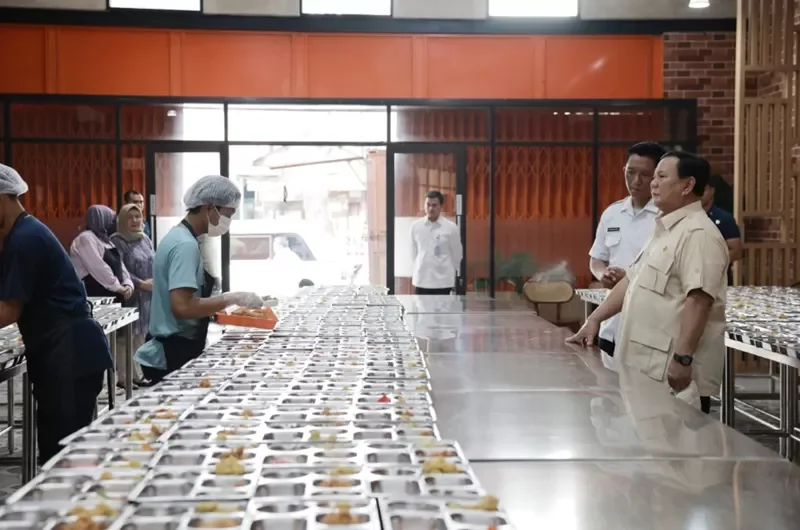
From a technical implementation perspective, the Head of the National Nutrition Agency (BGN), Dadan Hindayana, previously reported that the number of Nutrition Program Implementation Units (SPPG) operating has reached 9,615, serving more than 31 million beneficiaries throughout Indonesia. This figure represents a remarkable achievement in the short time since the program’s launch. This achievement reflects the strong synergy between the central and regional governments, as well as support from various sectors, from agriculture, education, health, to MSMEs providing local food supplies. The government also continues to strengthen monitoring and evaluation mechanisms to ensure that each stage of the MBG implementation is transparent, efficient, and on-target.
The implementation of the MBG has also had a positive economic impact on grassroots communities. Thousands of farmers, fishermen, and food MSMEs are now part of the supply chain of nutritious food for beneficiary schools. Thus, the program not only improves children’s nutritional quality but also stimulates local economic activity. In this context, the MBG is a multifunctional policy that addresses two issues simultaneously: human development and community economic empowerment. This integrative approach demonstrates that social policy can be designed effectively.sustainable development without sacrificing economic effectiveness.
More than just a social program, the MBG reflects the values of humanity, justice, and the state’s responsibility to the future of its citizens. President Prabowo prioritizes Indonesian children for national development, as the nation’s sustainability is at stake in their hands. With a measured and participatory approach, the government has proven that supporting the less fortunate can be achieved not only through cash assistance but also through nutrition- and education-based policies.
)* Public Policy Analyst for Social Welfare.
