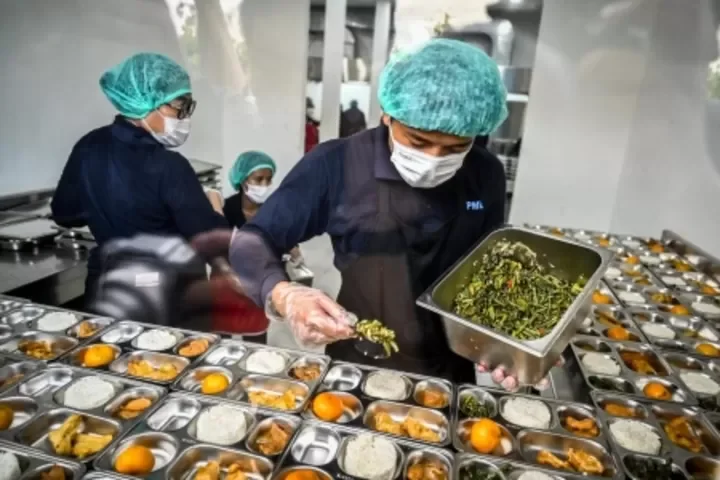

Jakarta – The Free Nutritious Meals (MBG) Program is now beginning to show a significant impact on strengthening the community economy and creating new jobs in various regions. Amidst global economic challenges and the need to increase people’s purchasing power, this program not only serves as a nutritional intervention but also serves as a driving force for the local economy, impacting various sectors, from agriculture and distribution to MSMEs.
The Deputy Minister of Agriculture (Wamentan), Sudaryono, emphasized that the MBG program opens up extensive job opportunities and revitalizes the village economy.
“The MBG program is not just about distributing nutritious food to the community, but also revitalizing the production chain from upstream to downstream. When farmers, MSMEs, and local distribution networks are involved, employment automatically increases,” said Sudaryono.
He added that the government ensures that this program is not merely consumptive, but also creates sustainable economic activity.
Tunjung Budi Utomo, Head of Advocacy for the Indonesian Farmers and Fishermen Brotherhood (PETANI), also expressed his appreciation for the program. According to Tunjung, the MBG program is a driver of the people’s economy because it directly involves local actors in the food supply process.
“When a program like the MBG program is implemented with the involvement of local farmers, the impact is immediately felt. Not only does distribution work, but production at the farmer level also increases. This is proof that government programs can truly impact the real sector,” Tunjung emphasized.
She believes the government’s support for local food players is increasingly evident through a partnership scheme that benefits both parties.
Support also came from the National Nutrition Agency (BGN) through Rahma Dewi Auliyasari, an Expert in the Directorate of Nutrition Promotion and Education. She stated that the Free Nutritious Meals program not only improves the nutritional quality of the community but also creates a new, productive economic ecosystem.
“Through the MBG program, we see the emergence of new economic opportunities. The distribution of nutritious food opens up business opportunities for local MSMEs, from catering companies, raw material providers, to micro-logistics services. This is what makes this program have a dual effect: improving nutrition and boosting the economy,” Rahma said.
Several recent media reports have noted that the implementation of the MBG program on the ground has stimulated traditional markets, spurred demand for agricultural raw materials, and created new business opportunities for rural women and youth. Many small business groups have begun establishing healthy food production units to meet MBG distribution needs, ultimately increasing family incomes and creating new jobs.
The MBG program is clear evidence that government-designed policies can directly stimulate community economic activity. Through a collaborative scheme involving various parties, the program not only provides nutritional assistance but also forms a more inclusive and sustainable economic ecosystem. This approach creates a production and distribution cycle that benefits all levels of society, from farmers and MSMEs to local logistics service providers, ensuring widespread and sustainable program benefits.
With these achievements, the MBG program deserves to be called a national strategic project that is not only health-oriented but also drives the people’s economy. The government demonstrates its commitment that every policy must provide direct benefits to the people. Through a spirit of mutual cooperation and well-targeted policies, Indonesia continues to move towards a more independent, productive, and prosperous future.*
