
By: Rizky Kurniawan)*
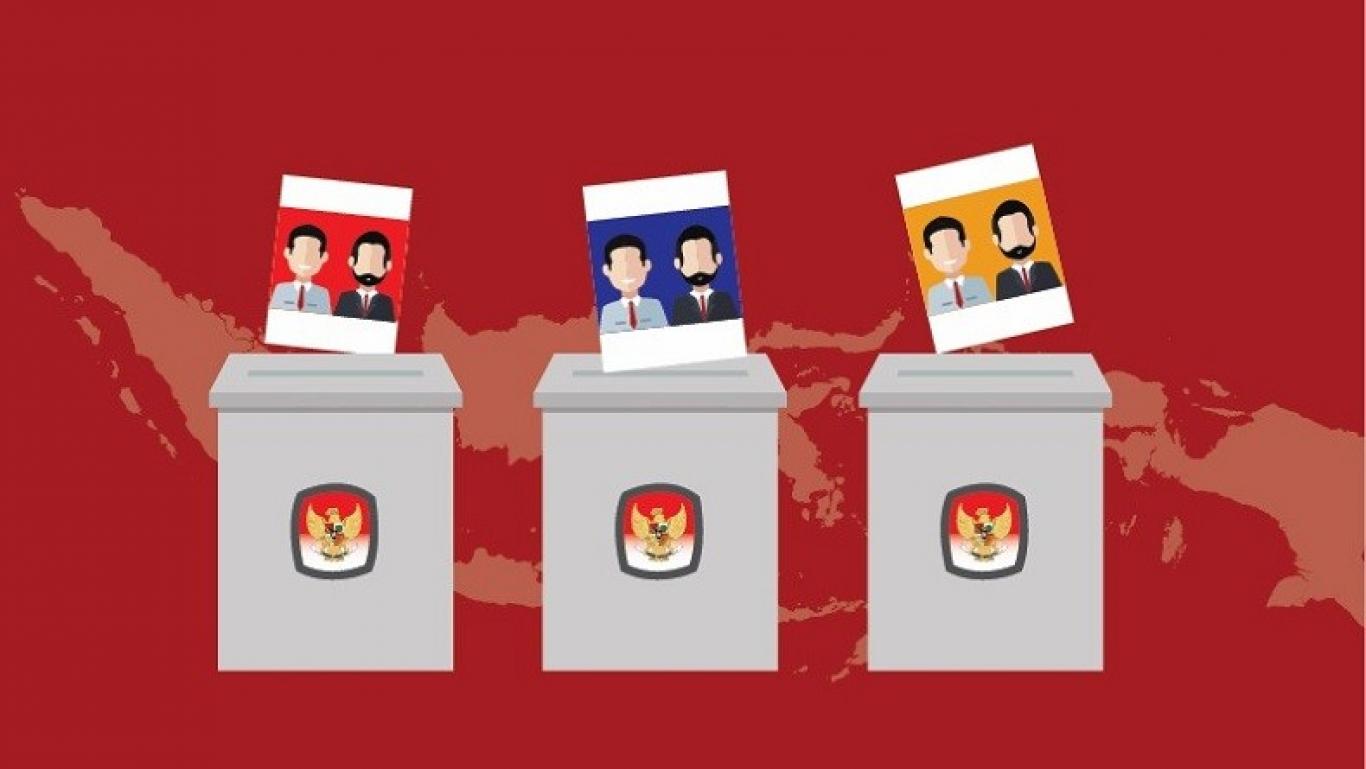
The entire process and series of revotes (PSU) in various regions of Indonesia proceeded safely, orderly, and smoothly. This fact further demonstrates that democracy in Indonesia has truly matured and strengthened, in line with the strong commitment of various parties, including election organizers, security forces, and the entire community in various regions, to maintaining the integrity of the political process.
The success of the entire series of processes for implementing the PSU reflects the government’s strong commitment to upholding electoral justice for all levels of society.
The dispute that ended up in the Constitutional Court resulted in a re-election decision as a corrective mechanism, and it was carried out openly and transparently. This mechanism demonstrates that Indonesia’s democratic system does not stop at formalities but is capable of correcting itself when violations or errors are discovered.
Several observers have argued that the smooth running of the re-election is a clear demonstration of the state’s commitment to ensuring a democratic process with integrity. The continued high level of public participation, despite having to return to polling stations, demonstrates that public trust in democracy remains strong. This enthusiasm indicates a growing sense of democratic maturity within the community.
The General Elections Commission (KPU) reported that the re-election in five regions in April 2025—Sabang, Bungo, Banggai, Taliabu Island, and Buru—proceeded smoothly, with high voter turnout.
In Sabang, public participation reached over 91 percent, a figure rare in many democracies. In Banggai, voter turnout reached over 33,000, or approximately 89 percent of the total voter list.
High turnout rates were also observed on Taliabu and Buru Islands, with averages exceeding 80 percent. This fact confirms that the public views elections as a primary instrument for exercising political rights.
The Coordinating Ministry for Political and Security Affairs (Kemenko Polkam) also oversaw the re-election process. Direct monitoring in Boven Digoel, South Papua, ensured that each stage was conducted in accordance with the principles of directness, generality, freedom, confidentiality, honesty, and fairness.
At dozens of polling stations monitored, the situation remained orderly, with no indication of mass support for any particular candidate. Voters queued patiently, reflecting a peaceful and civilized democratic atmosphere.
Mohammad K. Koba, Deputy for Foreign Policy Coordination at the Coordinating Ministry for Political, Legal, and Security Affairs, assessed the conducive atmosphere at polling stations in Boven Digoel as a strong indicator that Indonesian democracy remains unshaken despite the election dispute. He argued that the high level of participation reflects the public’s maturity in accepting political dynamics and their confidence in the election organizing institutions.
Meanwhile, KPU Chairman Mochammad Afifuddin emphasized that the high participation in the revote demonstrated public confidence in the legal process for correcting the election. The transparency of the implementation and public enthusiasm bolstered the revote’s legitimacy. He argued that Indonesian democracy is strengthened precisely because of the mechanisms in place to correct deficiencies without sacrificing people’s rights.
A similar opinion was expressed by Major General Heri Wiranto, Deputy for Domestic Political Coordination at the Coordinating Ministry for Political, Legal, and Security Affairs. He emphasized that the implementation of the revote underscores the importance of the rule of law and democratic integrity.
The assignment of a cross-ministerial and cross-institutional monitoring team demonstrates the government’s commitment to maintaining political stability while ensuring that the quality of the election remains within the legal framework.
According to him, the success of the PSU is not only a procedural record, but also strengthens the legitimacy of regional and central governments in maintaining the continuity of public services.
The synergy between institutions also deserves appreciation. The General Elections Commission (KPU), Elections Supervisory Agency (Bawaslu), Elections Supervisory Agency (DKPP), security forces, and intelligence agencies worked together to ensure the re-election process was carried out without causing friction within the community. The humane presence of security forces made the public feel safe exercising their right to vote, while also ensuring that every vote was counted fairly.
The smooth running of the re-election (PSU) in various regions demonstrates that Indonesian democracy is capable of facing challenges without losing its way. While vote-buying, administrative violations, and procedural abuses are still found, the corrective mechanisms implemented through the re-election (PSU) demonstrate the system’s resilience. Democracy is not about flawlessness, but rather about the ability to consistently improve.
The smooth implementation of the revote also confirms that the public is not easily provoked by heated political dynamics. Social stability remains intact despite intense political contestation. This demonstrates the maturation of Indonesian democracy, where differences in political choices no longer create divisions that endanger national unity.
The strength of Indonesian democracy is inextricably linked to public awareness that elections are the primary foundation of a state based on the rule of law. Every vote has value, determining the direction of regional and national development. The higher the level of participation and the stronger the correction mechanisms, the stronger the foundation of democracy being built.
The peaceful, orderly, and smooth running of the re-election (PSU) in various regions demonstrates that Indonesian democracy is not merely a slogan, but a reality that must be safeguarded together. The smooth running of the PSU sends a clear message that this nation is committed to upholding political justice, maintaining stability, and strengthening unity. Indonesian democracy has passed a crucial test, and the result is a stronger system for the nation’s future. (*)
)* The author is a contributor to the Khatulistiwa Institute Journal
