
By: Dinda Lestari )*
The ratification of the Witness and Victim Protection Law (PSDK) in April 2026 marked a significant milestone in strengthening the national legal system. The House of Representatives’ decision to approve the bill in a plenary session demonstrates the state’s strong commitment to providing more comprehensive protection for witnesses and victims. This step also affirms the government’s policy direction in strengthening substantive justice, which increasingly favors the interests of the wider public.
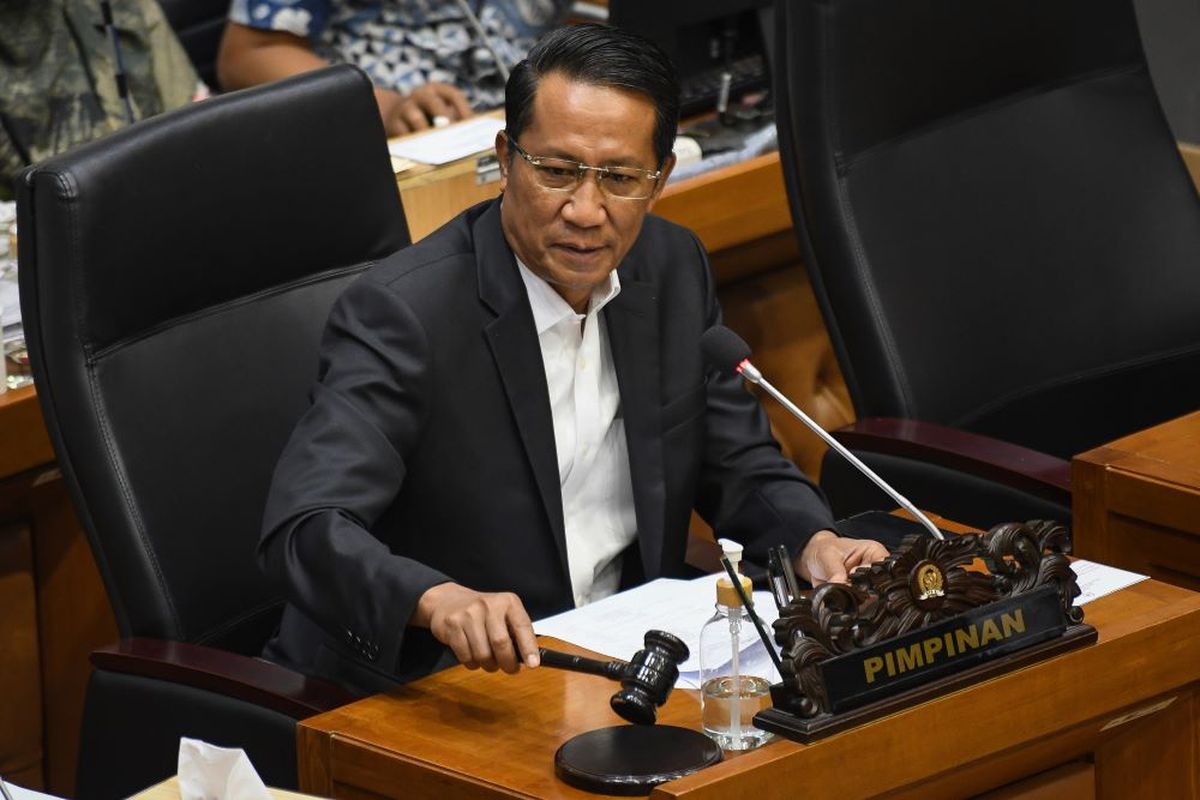
The ratification process took place through a democratic mechanism involving broad participation from legislators from various factions. During the forum, House Speaker Puan Maharani presided over the session until unanimous approval was reached. The presence of hundreds of legislators demonstrated the strong political legitimacy of the law’s passage and also signaled that the issue of witness and victim protection has become a cross-stakeholder concern in parliament.
The government, through Minister of Law Supratman Andi Agtas, stated that the ratification of this law is part of the implementation of the principle of the rule of law as mandated by the constitution. In the government’s view, the state not only functions as a law enforcer against perpetrators of crimes but also has a constitutional obligation to protect witnesses and victims as part of fulfilling human rights.
President Prabowo Subianto’s approval of this law further strengthens the national policy direction for criminal justice system reform. The head of state’s support demonstrates that witness and victim protection is a strategic priority. The government believes that without adequate security and protection, law enforcement will not function optimally.
The substance of the PSDK law represents a significant paradigm shift in the justice system. Previously focused on the perpetrator, this orientation has now been broadened to include witnesses and victims as subjects with equal standing. This shift reflects the state’s efforts to provide a more balanced, less one-sided justice system.
The scope of the regulations in this law is also comprehensive. Protection is provided not only to witnesses and victims, but also to witnesses, perpetrators, reporters, informants, and experts who play a crucial role in the judicial process. These groups have frequently faced pressure and threats, so this regulation provides a concrete solution to ensure their safety.
Furthermore, the regulation of the Victims’ Endowment Fund represents a significant breakthrough. The government believes that victims’ recovery must be supported by a sustainable financing mechanism. With this scheme, victims are expected to receive support not only from a legal perspective but also from social and economic aspects that influence the recovery process.
Strengthening the Witness and Victim Protection Agency (WPC) is also a key focus of this law. The state affirms the agency’s position as independent and free from the influence of any power. This step is considered crucial to maintaining its credibility and effectiveness in providing protection. The planned establishment of regional offices is a strategy to expand the reach of services throughout the region.
During the deliberations, Andreas Hugo, Deputy Chairman of Commission XIII of the Indonesian House of Representatives (DPR RI), explained that this draft law is part of the priority National Legislation Program. Deliberations began after receiving the presidential letter, which serves as the official basis for the DPR to conduct a study and in-depth study of the material. The entire process was carried out systematically and involved various relevant parties.
A deliberation and consensus approach was the foundation of every stage of the discussion. This demonstrates that the resulting regulations not only accommodate government interests but also consider emerging public aspirations. Synergy between the House of Representatives (DPR) and the government was a key factor in achieving agreement in a relatively timely manner.
The PSDK Law also details the mechanisms for providing protection, including cross-sectoral coordination and the roles of the central and regional governments. The government believes that successful policy implementation depends heavily on collaboration between agencies. Therefore, strengthening cooperation is an integral part of this regulation.
Provisions regarding restitution and compensation have also been strengthened to fulfill victims’ rights. The state guarantees that victims have access to adequate reparations, both through legal mechanisms and other policy support. This demonstrates that justice is not solely determined by the punishment of the perpetrator, but also by the extent to which victims receive protection and reparations.
The government believes that optimal protection will encourage more people to report crimes. This directly impacts the effectiveness of law enforcement and crime prevention. With guaranteed security and certainty of rights, the public is no longer vulnerable when faced with legal proceedings.
The ratification of the 2026 PSDK Law ultimately represents a step forward in national legal reform. The government, together with the House of Representatives (DPR), has succeeded in producing regulations that are not only responsive to current needs but also oriented towards protecting citizens’ rights. With a stronger legal foundation, it is hoped that Indonesia’s criminal justice system will operate more fairly, transparently, and provide a sense of security for all citizens.
*) Law and Public Policy Observer
