
By: Andhika Rachma )*
The internet opens up widespread access to education, entertainment, and limitless communication. However, behind these benefits, there are serious challenges that cannot be ignored, particularly regarding child safety and protection in the digital space. In this context, the enactment of Government Regulation No. 17 of 2025 concerning the Governance of Electronic Systems for Child Protection, also known as PP TUNAS, marks a significant milestone in the transition to a new era of digital platform compliance in Indonesia.
The TUNAS PP is not merely an administrative regulation, but rather a manifestation of the state’s commitment to ensuring that digital economic growth goes hand in hand with the protection of the younger generation. The government emphasizes that digital innovation must not compromise child safety, making child protection a key foundation of the national digital ecosystem.
The urgency of this policy is evident in the situation on the ground. The majority of Indonesian children have been connected to the internet since an early age—in fact, 9 out of 10 children over the age of 5 are actively online. Meanwhile, cases of digital crimes against children, such as exploitation and exposure to harmful content, continue to rise. This demonstrates that the digital space has become a tangible part of children’s lives and requires serious protection.
To address these challenges, PP TUNAS presents a comprehensive approach. This regulation requires digital platforms to classify risks, restrict access based on age, and ensure the security of children’s personal data. Furthermore, platforms are prohibited from profiling children for potentially harmful commercial interests. This regulation encourages platforms to be more responsible in designing features, algorithms, and content moderation systems.
The implementation of the TUNAS Regulation marks a paradigm shift in the technology industry, from a focus on user growth to one focused on security and compliance. Platforms are no longer simply competing to attract attention but are also obligated to create safe and child-friendly spaces. Regulatory adaptation is underway, though uneven; by March 2026, only platforms like X and Bigo Live have complied with the requirements by raising age limits and strengthening verification and moderation, while others are still adapting. This demonstrates that transformation requires time and collaboration, but the direction of change is clear, and compliance with child protection is imperative.
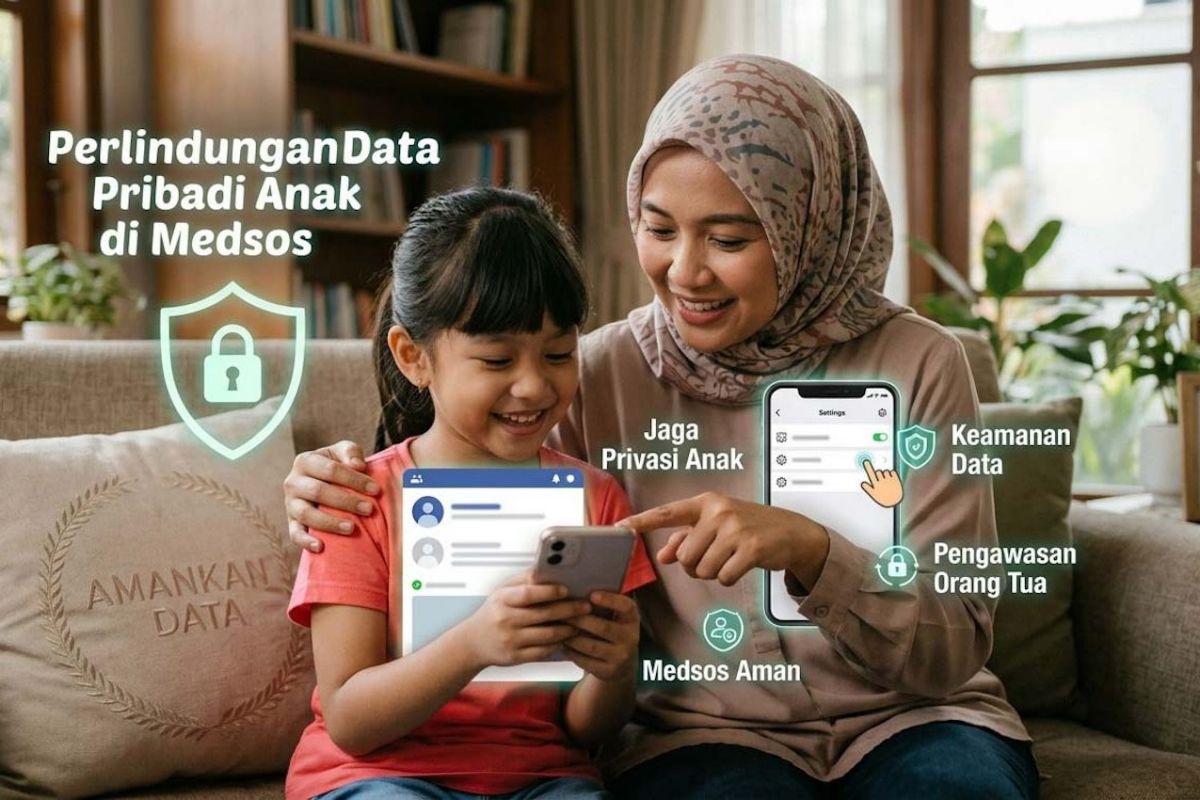
Minister of Communication and Digital, Meutya Hafid, stated that the importance of mothers’ role at home in keeping their children safe in the digital space is in line with the implementation of Government Regulation (PP) Number 17 of 2025 concerning the Governance of Electronic System Implementation in Child Protection (PP TUNAS).
It’s important to understand that the success of PP TUNAS depends not only on regulations and platform compliance. The role of parents, schools, and the community remains key. Digital literacy is a crucial foundation for children to use technology wisely and safely. Without adequate guidance, even the best protection systems will be ineffective.
This collaborative approach is the key strength of PP TUNAS. This regulation does not stand alone but is part of a multi-stakeholder protection ecosystem. The government provides the legal framework, platforms carry out technical responsibilities, and families and communities build awareness and a healthy digital culture.
Furthermore, PP TUNAS also reflects Indonesia’s position within global trends. Many countries are beginning to tighten regulations on digital platforms, particularly regarding child protection. Age restrictions, enhanced privacy, and content monitoring policies are becoming the new standard in various parts of the world. Indonesia, through PP TUNAS, demonstrates that it is not simply following trends but is striving to be part of the global solution in creating a safer digital space.
Nanci Laura Sitinjak, Head of the Legal and Cooperation Team of the Secretariat of the Directorate General of Digital Space Supervision at Komdigi, stated that the Tangerang City Government continues to promote child protection efforts in the digital space through widespread dissemination of the TUNAS PP to students. Most recently, the Tangerang City Government held a TUNAS PP socialization. Implementation of the TUNAS PP cannot be done instantly, and this cross-sector collaboration by the Tangerang City Government is the right step and deserves to be appreciated.
In the long term, the implementation of PP TUNAS has the potential to have broad positive impacts. Children who grow up in a safe digital environment will have a greater opportunity to develop optimally, cognitively, emotionally, and socially. They will not only become users of technology, but also a generation capable of utilizing it productively and responsibly.
PP TUNAS symbolizes that technological progress must not proceed aimlessly, but rather be grounded in humanitarian values and the protection of future generations. Challenges certainly remain, but with a shared commitment from government, industry, and society, a safe digital future for children is no longer just a hope, but a reality.
)* Public Policy Observer
